Senate Agriculture Chair John Boozman said Monday he plans to soon take up a five-year farm bill, regardless of delays a similar bill may face in the House. Asked at…
Trump Admin Set To Allow Summer E15 Fuel Sales
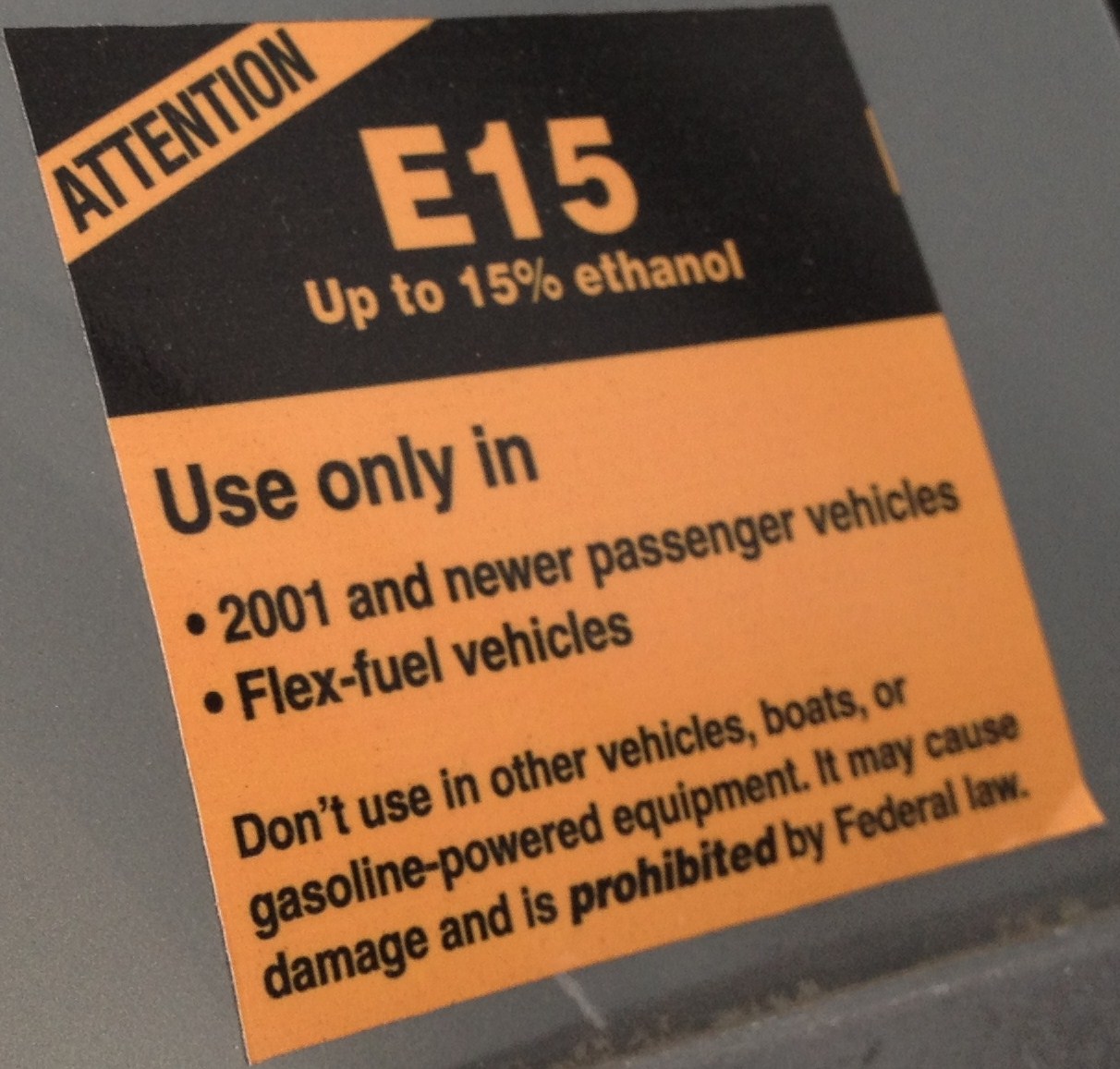
Bloomberg’s Jennifer A Dlouhy and Elizabeth Elkin reported that “the Trump administration is preparing to expand the opportunity for sales of higher-ethanol E15 gasoline this summer by waiving the fuel from US volatility requirements, according to people familiar with the matter.”
“The Environmental Protection Agency is set to brief industry stakeholders on the planned approach Wednesday morning, said the people, who asked not to be named before a public announcement,” Dlouhy and Elkin reported. “The move repeats a strategy President Donald Trump used in 2025 — and that was previously employed for three years under former President Joe Biden — to broaden the availability of E15 gasoline in summertime. It also comes as the Trump administration is taking steps to help ease energy costs for consumers amid the Iran war.”
“And it allows the president to deliver a win to an important political constituency — corn farmers, biofuel producers and rural voters — who have pushed for changes allowing year-round E15 sales,” Dlouhy and Elkin reported. “Some industry representatives have lobbied the EPA to clarify its plans for summer sooner, in time for filling stations and fuel distributors to adapt.”
“Under the approach, the EPA would issue emergency fuel waivers temporarily exempting E15 gasoline from volatility restrictions that effectively block warm-weather sales of the fuel in areas where smog is a problem,” Dlouhy and Elkin reported. “Representatives of the EPA, when asked for comment, emphasized the agency’s efforts to restore ‘American energy dominance.'”
Reuters’ Jarrett Renshaw reported that “analysts say the change could shave several cents per gallon off retail prices and provide relief to both consumers and refiners struggling with tight fuel supplies. The U.S. average price for a gallon of regular gasoline recently climbed above $3.97, up sharply from below $3 earlier this year, according to data from AAA. Oil and gasoline prices have surged as the Iran conflict has disrupted global supply. U.S. crude topped $100 a barrel for the first time since the 2022 Russia-Ukraine shock.”
Announcement Expected Wednesday
Progressive Farmer’s Chris Clayton and Jerry Hagstrom reported that “EPA Administrator Lee Zeldin is expected to make announcements on nationwide E15 and E10 on Wednesday at CERAWeek, a major energy conference in Houston. EPA stated the announcements tied to ethanol would ‘boost energy supply and provide cost relief to Americans.'”
“On Tuesday, Sen. Amy Klobuchar, D-Minn., ranking member of the Senate Committee on Agriculture, Nutrition, and Forestry, wrote President Donald Trump calling on him to make E15 available before the summer driving season to help reduce rising domestic fuel prices,” Clayton and Hagstrom reported. “Klobuchar also asked for Trump’s support for legislation that would permanently authorize year-round E15. Trump has made that point, including comments he made on E15 during a visit to Iowa in January.”
“EPA stated Zeldin’s announcement at CERAWeek is not tied to Renewable Fuel Standard rulemaking,” Clayton and Hagstrom reported.
Biofuels Blending Requirements Also Expected by End of Month
Bloomberg’s Elizabeth Elkin reported that “the Trump administration is ‘moving at warp speed’ to get out biofuels blending standards, with an announcement coming ‘sooner rather than later,’ according to US Agriculture Secretary Brooke Rollins.”
“‘We have been in a lot of meetings ensuring that our agriculture community is frankly put first and farm security is national security,’ Rollins said in an interview at the US Department of Agriculture,” according to Elkin’s reporting. “‘The president has been resolute on that since day one and certainly has not taken his foot off the gas pedal.'”
NEWS: Trump administration will release biofuel quotas 2026/27 this week, some time before Friday’s farm event at WH, sources tell me. The quotas have not been materially changed by Iran war price spike concerns, I’m told.
— Jarrett Renshaw (@JarrettRenshaw) March 24, 2026
“Companies have been anxiously awaiting a decision on long-delayed guidance on mandates for mixing renewable fuels with gasoline and diesel. A lack of clarity on the so-called Renewable Fuel Standard has weighed on the agriculture and biofuel industries,” Elkin reported. “Increased use of renewable fuels is expected to boost demand for feedstocks like corn and soybeans at a time when farmers are facing weak crop prices and high input costs.”
“‘We feel very good’ that the biofuels guidance will be out soon, Rollins said after an event where the agency announced a campaign to promote transparency in labeling of agricultural products,” Elkin reported. “Environmental Protection Agency administrator Lee Zeldin said at a conference Monday that a decision would come by the end of the month.”
Facts Only
The Trump administration is preparing to waive volatility requirements for E15 gasoline, allowing summer sales.
The Environmental Protection Agency (EPA) will brief industry stakeholders on the planned approach on Wednesday.
EPA Administrator Lee Zeldin is expected to announce nationwide E15 and E10 policies at CERAWeek, a major energy conference in Houston.
The EPA stated the announcements would "boost energy supply and provide cost relief to Americans."
Senator Amy Klobuchar (D-Minn.) wrote to President Trump urging E15 availability before the summer driving season and support for permanent year-round E15 legislation.
The U.S. average gasoline price recently exceeded $3.97 per gallon, up from below $3 earlier in the year.
Oil prices have surged due to disruptions from the Iran conflict, with U.S. crude topping $100 per barrel.
The Trump administration plans to release biofuel blending quotas for 2026/27 by the end of March.
Agriculture Secretary Brooke Rollins stated the administration is prioritizing agriculture and biofuel industries.
The Renewable Fuel Standard (RFS) mandates for blending renewable fuels with gasoline and diesel have been delayed, creating uncertainty for farmers and biofuel producers.
The EPA’s decision on biofuel quotas is not tied to Renewable Fuel Standard rulemaking.
The administration’s approach repeats a strategy used in 2025 and under the Biden administration to expand summer E15 sales.
Executive Summary
The Trump administration is preparing to expand summer sales of E15 gasoline, a higher-ethanol fuel blend, by waiving volatility requirements through emergency fuel waivers. This move, expected to be announced by EPA Administrator Lee Zeldin at CERAWeek in Houston, mirrors a strategy previously used under both Trump and Biden administrations to boost E15 availability during peak driving season. The decision aims to lower fuel costs amid rising gasoline prices—now averaging nearly $4 per gallon—driven by global supply disruptions from the Iran conflict. Additionally, the administration plans to release biofuel blending quotas for 2026/27 by the end of March, addressing long-standing uncertainty in the renewable fuel industry. Agriculture Secretary Brooke Rollins emphasized the administration’s focus on supporting farmers and biofuel producers, framing the policy as a matter of national security. Meanwhile, Senator Amy Klobuchar has urged permanent authorization for year-round E15 sales, reflecting bipartisan interest in the issue. The EPA’s actions are positioned as efforts to restore "American energy dominance" while providing consumer relief, though environmental and industry stakeholders remain divided over the long-term implications of expanded ethanol use.
The policy intersects with broader economic and political dynamics, including rural voter priorities, energy market volatility, and the administration’s efforts to mitigate inflationary pressures. While the immediate impact may include modest reductions in fuel prices, the long-term effects on agricultural markets, environmental regulations, and energy independence remain subjects of debate. The timing of the announcements—amid rising geopolitical tensions and ahead of the summer driving season—underscores the administration’s balancing of economic, political, and environmental considerations.
Full Take
**Steelman:** The strongest version of this narrative frames the Trump administration’s E15 policy as a pragmatic response to economic and geopolitical pressures. By waiving volatility restrictions, the administration aims to lower fuel costs for consumers while delivering a political win to rural voters and biofuel producers—a key constituency. The move aligns with past bipartisan efforts to expand ethanol use, positioning it as a tool for energy independence and agricultural support. The timing, amid rising gasoline prices and global supply disruptions, reinforces the administration’s commitment to "American energy dominance" and consumer relief.
**Pattern Scan:** The narrative leans on **ARC-0024 Ambiguity** by framing the policy as a consumer relief measure without fully addressing environmental trade-offs or long-term market distortions. The repeated use of phrases like "energy dominance" and "national security" invokes **ARC-0012 Authority Games**, borrowing credibility from patriotic and economic stability rhetoric. The lack of critical scrutiny on the environmental impact of expanded ethanol use—such as smog concerns or land-use changes—hints at **ARC-0031 Evasion**, where potential downsides are downplayed in favor of short-term benefits.
**Root Cause:** The paradigm driving this narrative is the intersection of electoral politics, energy policy, and agricultural lobbying. The unstated assumption is that expanding ethanol use is a net positive for rural economies and energy security, despite mixed evidence on its environmental and economic sustainability. This echoes historical patterns of agricultural subsidies and energy policy being shaped by political expediency rather than long-term systemic planning.
**Implications:** For human agency, the policy offers immediate relief to consumers and farmers but may entrench dependency on government interventions in energy markets. The costs—potential environmental harm, market distortions, and long-term energy strategy trade-offs—are deferred or externalized. Second-order consequences could include increased lobbying for permanent E15 waivers, further politicizing energy policy, and complicating transitions to more sustainable fuels.
**Bridge Questions:**
How might the short-term benefits of E15 expansion weigh against its long-term environmental and economic costs?
What alternative policies could achieve similar consumer relief without relying on emergency waivers or ethanol mandates?
How does this decision reflect broader tensions between energy independence, agricultural interests, and environmental regulation?
**Counterstrike Scan:** If this were part of a coordinated influence campaign, the playbook would emphasize populist appeals ("lower prices," "support farmers") while downplaying environmental concerns and framing opposition as elitist or anti-rural. The actual content aligns with this pattern but stops short of overt manipulation, focusing instead on policy mechanics and political messaging. The absence of critical voices or environmental counterarguments in the reporting suggests a potential blind spot, but not necessarily bad faith.