'ZDNET Recommends': What exactly does it mean?
ZDNET's recommendations are based on many hours of testing, research, and comparison shopping. We gather data from the best available sources, including vendor and retailer listings as well as other relevant and independent reviews sites. And we pore over customer reviews to find out what matters to real people who already own and use the products and services we’re assessing.
When you click through from our site to a retailer and buy a product or service, we may earn affiliate commissions. This helps support our work, but does not affect what we cover or how, and it does not affect the price you pay. Neither ZDNET nor the author are compensated for these independent reviews. Indeed, we follow strict guidelines that ensure our editorial content is never influenced by advertisers.
ZDNET's editorial team writes on behalf of you, our reader. Our goal is to deliver the most accurate information and the most knowledgeable advice possible in order to help you make smarter buying decisions on tech gear and a wide array of products and services. Our editors thoroughly review and fact-check every article to ensure that our content meets the highest standards. If we have made an error or published misleading information, we will correct or clarify the article. If you see inaccuracies in our content, please report the mistake via this form.
This free Android app makes sharing files across Windows, Mac, and iOS so easy for me
Follow ZDNET: Add us as a preferred source on Google.
ZDNET's key takeaways
- You won't find an easier file-sharing app than Blip.
- Blip works for Android, MacOS, Windows, iOS, and iPadOS.
- Blip is free for personal use and $25 for a business license.
Don't blink, because in a blip, you could miss the easiest file-sharing tool available for Android. Yes, I'm talking about Blip.
I've tested all types of file transfer apps for Android, and Blip has to be the easiest. Install it on your Android device (from Google Play), on your desktop, laptop, or other mobile device(s), and start sharing. There's also an iOS version in the Apple App Store, which I have not tested.
It's that simple.
Also: 5 tiny Linux tools I can't live or work without
Also, Blip is fast. Of all the device-to-device sharing apps I've tried, Blip is, by far, the fastest (and easiest).
Blip has no size limits, keeps you informed of file transfer progress, sends notifications, lets you send folders, uses end-to-end encryption, and sends in original quality (so your images aren't degraded). You can send just about any type of file (even large videos), and it's free for non-commercial use.
If you need to use Blip in a commercial environment, you'll have to pay for a Business plan at $25 per user per month. But, again, for personal use, it's totally free.
Yes, Blip is the file-sharing app you've been waiting for.
Also: My top 6 open-source Android apps from the Google Play Store - and why that's important
Oh, and it's not just for Android. You can share files from MacOS, Windows, iOS, and (coming soon) Linux. Until the developers offer a Linux version, try one of these file-sharing options for the open-source OS, or you can just use Packet. (Note: I've tried to sign up for the Linux version, but it fails every time. Hopefully, the developers will resolve that issue.)
How do you use Blip? It's almost too easy.
Installing Blip
Installing Blip is simple, but it depends on the platform you are using. To install on Android, just visit the Google Play Store on your phone, search for "blip file sharing", and tap the associated Install button.
If you're using MacOS or Windows, download the respective installer from the Blip Download page, double-click the downloaded file, and follow the installer wizard.
Once you've installed the app, you'll need to register an email address to verify user accounts and ensure secure file sharing. The registered email address helps maintain privacy and control who can send and receive files on the platform.
Also: 6 features I wish Linux would borrow from MacOS
When you register your email address, you receive a 6-digit passcode that you must enter in the Blip app before it can be used. I went with the same email address for every Blip instance and had no issues.
Using Blip
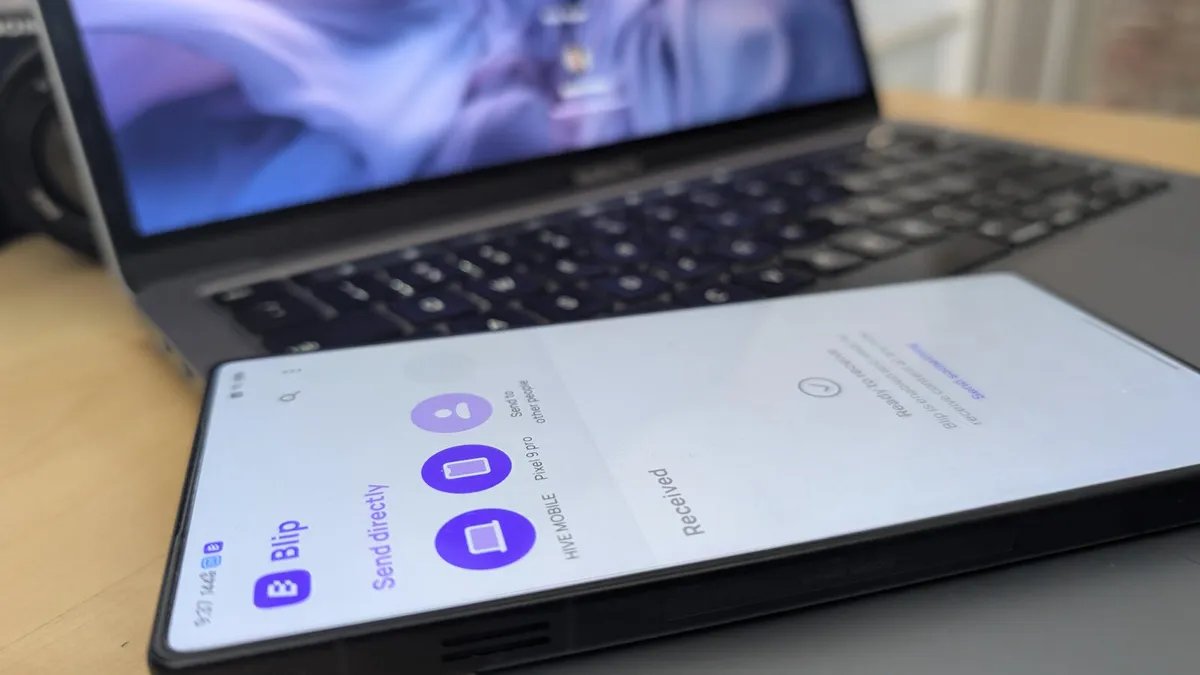
Using Blip is as easy as installing it. Open the Blip App, tap the device for which you want to share the file, locate the file(s), tap Done, and that's it. The file will automatically arrive at the destination. It really is that simple.
You can disable auto-accept in Settings (on the off-chance you're worried that someone will send you a file you don't want), and you can also disable notifications (if you don't need them).
You can also share files via Blip from your device's built-in Share menu (such as on Android and MacOS). To do this, you just need to locate the file to be shared, select it, tap the share icon (or right-click/two-finger tap on MacOS), select Blip, and wait for it to arrive at the destination.
Also: I finally bought the Transmit MacOS app, and that 16x faster transfer speed is just the beginning
Blip is one of those rare apps I test that will most assuredly remain on my devices. I plan to use this tool instead of the Android and MacOS built-in file-sharing features to move files between devices on my LAN.
Sentinel — Likely Human
The text reads like an enthusiastic personal review designed to persuade a tech-savvy audience, characterized by a distinct voice and experiential detail rather than purely objective reporting.