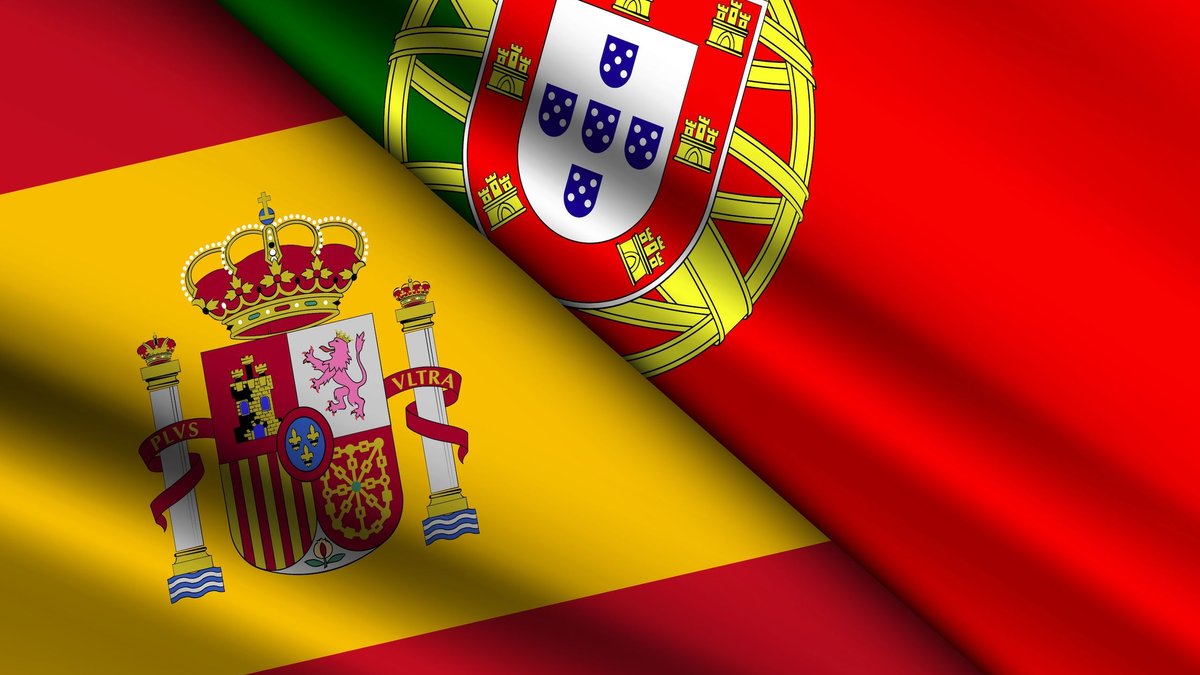
With the last of the round of 16 matches due, Spain, Portugal, the USA, Argentina and Switzerland are aiming to keep their World Cup of Wine hopes alive.
With the Round of 32 matches all finished up, we're getting into the dark heart of the knockouts now as teams compete for a place in the quarter-finals and a chance at a dash to the championship game itself.
France and England have both secured their place in the quarters; France with a rough and tumble match against a rather malicious Paraguayan side, and England with a gloriously action-packed match against Mexico in the dreaded Azteca cauldron in the early hours of Monday morning.
In action this week we have a wine nation super-smash as Spain and Portugal go head-to-head, the USA face off against Belgium, Argentina survived a Cape Verde scare to take on Egypt, and Switzerland will take their chances against Colombia.
We've also said goodbye to two more of the winemaking nation teams we've been tracking:
Australia: A spirited performance against Egypt that took them all the way to extra time and the heartbreak of a penalty shootout.
Canada: The first of the host nations to fall. They played a last 16 spirited game against Morocco and were unlucky not to score before the North Africans hammered home three goals late in the match for a slightly unfair final score.
And if you feel the need for some... actual football analysis during this World Cup, do check in on our friends and colleagues over at FourFourTwo for all their updates and coverage.
Wine head-to-heads: Last 16
Wine-producing nations clashing in this week's games:
Spain vs Portugal
Ines: Spain & Portugal
Spain vs Portugal: Ok, here we go. Now we get a glimpse of how La Roja can make it to the final.
In its first knock out-stage match, Spain won, decisively and clinically, against a very tame Austria, thus remaining – along with Mexico – the only team yet to concede any goals in this World Cup.
Next up is its Iberian neighbour, and historical rival.
Portugal beat Croatia in a rather painful manner, and more than a few contested referee decisions.
Its over-reliance on Cristiano Ronaldo is starting to show… But we’ve seen Portugal’s back benchers surprise before – in football as in wine!
Just look at this gorgeous oak-fermented and aged Arinto from the very underestimated Tejo region, produced by big-hearted maverick Hugo Mendes. Spain beware.
Spain has its own cats in the hat though. Have you ever tasted Escursac, a quasi-forgotten variety indigenous to Mallorca?
Soca-Rel’s chillable iteration is a good place to start.
It’s time to try it all and make it to the quarter-finals!
Hugo Mendes, Oak, Tejo, Portugal 2022
Soca-Rel, Escursac, Vino de España, Balearic Islands, Spain 2023
Mark: USA & Switzerland
USA (vs Belgium): Belgium somehow live to fight another day following their last-minute heroics (or rather drawing a most fortuitous get-out-of-jail-free card) against Senegal.
They’ll have to ramp it up against a US team that has found its groove, and regained its top scorer, Folarin Balogun – after apparent political pressure from the White House.
But let's focus on a wine and food pairing we can all get behind.
Moules-frites is a Belgian national treasure, and when it comes to a wine that can shine alongside glorious, garlic-infused mussels and cut through mayonnaise-dipped frites, the 2024 Flora Abeille, Albariño from Lodi should do the trick.
Available for £15 at Majestic, it garnered an admirable 89 points at the 2026 Decanter World Wine Awards, where the judges remarked: ‘Delicate nose of restrained pear and peaches, slightly creamy and rounded acidity.’
Flora Abeille, Albariño, Lodi, California, United States, 2024
Switzerland (vs Colombia): In the previous round, Switzerland comfortably kept a meek Algeria at arm’s length. Next up is a Latin dance with Colombia.
Vancouver plays host, a city that has become a home from home for the Swiss, so let’s go full bore and dust off the fondue set. Nothing overly complex is necessary, although acidity is a pre-requisite to cut through the wonderfully fatty, unctuous cheeses.
Chasselas is an obvious go-to, although Riesling would prove a fine substitute, as would Räuschling, should you be able to track one down.
Once wildly popular and widely planted, Räuschling – a cross between Gouais and Savagnin – suffered a pronounced fall from grace, and is now only found in German-speaking areas of Switzerland, such as St-Gallen, from where hails the 2023 Weingut Höcklistein, Äfenrain Räuschling.
A Gold medal winner at the 2026 Decanter World Wine Awards, our suitably impressed judges remarked: ‘An untamed spectrum of yellow fruit, mesmerising basil and tarragon fragrance. Lightly textured with a fine seam of acidity perpetuating the long finish.’
Weingut Höcklistein, Äfenrain Räuschling, St. Gallen, Eastern Cantons, Switzerland, 2023
Julie: Argentina
Argentina (vs Egypt): Argentina made a clean sweep through Group J with three wins, before edging out Cape Verde 3-2 in extra time during the Round of 32.
Now the reigning champions are heavily favoured to beat Egypt’s Pharaohs in the Round of 16, though with star players Lionel Messi and Mo Salah on the field in Atlanta Stadium, this will very much be a match worth watching.
Whether you’re taking comfort in Egypt's carb-loaded national dish of koshary, with rice, lentils and chick peas, or keeping things simple with a signature Argentine steak, go for the food-friendly Kaiken Disobedience by Francis Mallman 2021, a blend of Cabernet Sauvignon, Malbec, Merlot and Petit Verdot, created in association with Argentina's star chef.
An easy-drinking, soft and savoury red – with enough structure for the table – it delivers juicy black fruit laced with notes of violets, sage and thyme.
Kaiken, disobedience by Francis Mallmann, Luján de Cuyo, Mendoza, Argentina, 2021
Related articles
Get our daily fine wine reviews, latest wine ratings, news and travel guides delivered straight to your inbox.
- Julie SheppardRegional Editor for Australia, New Zealand and South Africa & Spirits Editor
- Ines SalpicoEditor
Sentinel — Human
The text exhibits strong human journalistic signs due to its idiosyncratic voice and detailed integration of specific, localized data, suggesting it was written by an editor or reporter rather than a purely generative model.