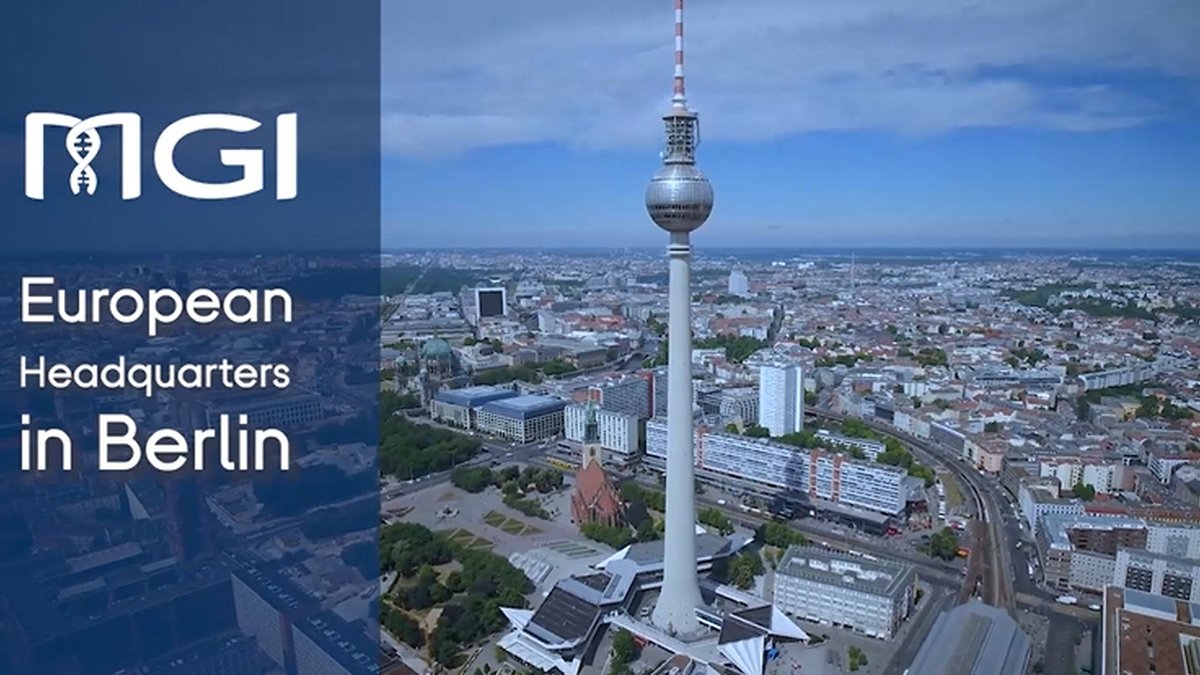
Why Customer Experience Centers are becoming practical infrastructure for life sciences innovation in Europe By Francina Agosti 7 minutesmins July 7, 2026 7 minutesmins Share WhatsApp Twitter Linkedin Email Photo credits: MGI Tech Co., Ltd Newsletter Signup - Under Article / In Page"*" indicates required fieldsNameThis field is for validation purposes and should be left unchanged.Subscribe to our newsletter to get the latest biotech news!By clicking this I agree to receive Labiotech's newsletter and understand that my personal data will be processed according to the Privacy Policy.*Company name*Job title*Business email* As genomic sequencing moves from elite research institutions into the mainstream of clinical diagnostics and personalized medicine, the demands placed on biotechnology infrastructure are changing rapidly. Advances in next-generation sequencing (NGS), multi-omics analysis, and data-driven healthcare are creating unprecedented opportunities for discovery and patient care. However, for decision-makers in academia, clinical laboratories, and emerging biotech companies, the challenge is no longer simply gaining access to cutting-edge technologies. Instead, success increasingly depends on the ability to integrate sophisticated, high-throughput platforms into existing workflows without disrupting the delicate balance between research productivity, operational efficiency, and patient outcomes.To address this need, a more hands-on, implementation-oriented model is gaining prominence across Europe’s life sciences landscape: the Customer Experience Center (CEC).Table of contentsWhat is a Customer Experience Center in life sciences?Unlike traditional showrooms or standalone training facilities, the modern CEC can represent an important evolution in how life sciences technologies are evaluated, implemented, and optimized. It is not simply a place to view instruments or receive technical instruction. Rather, it serves as a collaborative environment where researchers, clinicians, and technology providers work together to validate solutions, refine workflows, and accelerate the adoption of new capabilities.Historically, technology vendors relied on demonstration laboratories and training centers to engage customers. Demo labs have often provided environments where equipment could be showcased, while training facilities focused primarily on user education and operational instruction. Advanced CECs increasingly move beyond passive demonstration by allowing customers to evaluate workflows, interact with technical experts, and test implementation scenarios. As a result, the CEC becomes more than a demonstration space. It acts as a bridge between innovation and implementation, enabling organizations to reduce adoption risks, accelerate validation processes, and make evidence-based decisions about technology investments.Why CECs are emerging in Europe nowThe rise of CECs in Europe is a direct response to several structural gaps in the current biotech landscape. As genomic technologies become increasingly sophisticated, the gap between technological innovation and successful implementation continues to widen.For smaller biotech companies and startups, these challenges are particularly acute. Limited access to funding and laboratory resources can make it difficult to assess whether a new technology will integrate effectively into existing workflows before making a substantial investment. As a result, technology adoption decisions carry a higher degree of operational and financial risk.“Adopting a high-throughput sequencing platform or advanced analytical instrument represents a significant investment for many organizations,” says Zhouchun Shang, Senior Director of Product at MGI Tech GmbH.“Within our facilities, before committing resources, users have the opportunity to evaluate the technology firsthand, understand its capabilities, and assess how it will perform within their expected workflows.”At the same time, CECs reflect a broader shift toward an ecosystem-based model of innovation. Instead of operating as isolated vendor facilities, they increasingly bring together instrument manufacturers, software providers, third-party developers, and researchers in a shared environment. “A collaborative CEC approach enables stakeholders to gain access to technical experts, validate integrated solutions, identify workflow bottlenecks, and accelerate the translation of new technologies into practical applications,” adds Shang. In doing so, CECs are helping to create the interconnected innovation infrastructure required to support Europe’s rapidly evolving life sciences sector.What challenges academia and clinical labs are addressing through CECsOne of the defining strengths of a modern Customer Experience Center is its ability to serve organizations with fundamentally different objectives. Academic researchers are typically focused on pushing the boundaries of scientific discovery. Their priorities include access to the latest technologies, maximizing data quality, and developing sophisticated workflows capable of answering complex biological questions. “They are generally more open to accepting complex workflows and manual processes when these approaches provide access to new types of data or enable discoveries that would otherwise not be possible,” says Shang.Clinical laboratories and commercial organizations, by contrast, operate under a different set of constraints. While analytical performance remains essential, their priorities increasingly center on scalability, reproducibility, turnaround time, and cost efficiency. High sample volumes and regulated operating environments create a strong demand for automation, standardized procedures, and workflows that minimize manual intervention. “Clinical and commercial users are typically looking for robust, automated solutions,” says Shang. As genomics continues to move from discovery research toward broader clinical and commercial adoption, this ability to support both innovation and operational excellence is becoming increasingly important. CECs provide a unique setting where these traditionally separate priorities can be addressed within the same collaborative ecosystem.What makes a strong Customer Experience CenterA strong CEC must be inherently versatile. It should not only support the exploratory nature of academic research but also address the operational requirements of clinical laboratories and biotechnology companies. This means offering access to cutting-edge technologies, flexible workflow design, application expertise, and scalable solutions that can evolve alongside an organization’s needs. According to Fang Chen, Vice President of MGI and General Manager of Europe & Africa at MGI, “Our user base is often evenly divided between academic institutions and commercial organizations.”This versatility can transform the CEC from a customer-facing resource into a shared innovation platform. Academic researchers gain exposure to technologies that may shape future discoveries, while industry users can validate workflows, assess automation strategies, and prepare for deployment at scale. By bringing these communities together, CECs facilitate the exchange of expertise that is often difficult to achieve within traditional organizational boundaries. The strongest CECs are also expanding beyond their original role as commercial support facilities. In many organizations, they increasingly function as global hubs for product development and application innovation, providing direct feedback from end users that can inform the design of next-generation instruments, software, and workflows. In these cases, customers become active participants in the innovation process rather than passive recipients of new technologies.A view into the MGI Berlin CECNow marking its second anniversary in Germany (and building on a decade of global development), the MGI Berlin Customer Experience Center reflects both the model’s maturation and its growing importance within the European life sciences ecosystem.The MGI Berlin CEC offers a concrete example of how CECs are evolving from demonstration facilities into integrated innovation hubs.“Berlin was strategically selected as a location due to its position as a central scientific hub in Europe, its strong research network, and its highly collaborative and open scientific community.”Situated within the Wissenschafts- und Technologiepark Berlin-Adlershof (WISTA) Science and Technology Park, the center is embedded in one of Germany’s most established environments for research and technology transfer. “With MGI’s presence in central Europe, we can adapt global technologies to the specific scientific, regulatory, and operational requirements of the European market,” notes Shang.The MGI Berlin CEC facility is structured into several specialized laboratory environments, each serving a distinct function. The Alpha Lab supports early-stage exploration and proof-of-concept work, while the DCSP Lab (covering DNA omics, Cell omics, Spatial omics, and Proteomics) is dedicated to multi-omics workflow development and system optimization. The Demo Lab enables hands-on evaluation of technologies under realistic conditions, and the Training Lab focuses on user education and skill development. Together, these spaces allow customers and partners to move seamlessly from concept to validation, depending on their specific needs.Moreover, a key capability enabled within CECs is the support of platform-agnostic, application-driven development. This includes enabling third-party partners to design and validate assays that are not restricted to a single technology stack, thereby encouraging interoperability and broader ecosystem innovation.A distinguishing feature of the MGI Berlin CEC is its “open lab” philosophy: it functions as a dynamic ecosystem that brings together instrumentation, software, technical expertise, and application support in a single environment. Visitors can test workflows using representative samples, explore end-to-end solutions, evaluate interoperability with existing systems, and collaborate directly with specialists to address specific operational challenges.The physical infrastructure of the center further reinforces its collaborative design. The MGI Berlin lab space is designed with transparent viewing areas so visitors can observe instruments in operation, alongside dedicated meeting rooms and office spaces that support training sessions and collaborative discussions.“This architectural openness reflects our broader philosophy: the CEC is not a one-way showroom, but a co-creation platform where researchers, engineers, and industry partners engage in an open and balanced exchange.”Whether supporting a startup validating a novel assay, an academic laboratory advancing discovery research, or a clinical organization scaling diagnostic workflows, a Customer Experience Center can provide a practical platform for reducing implementation risk and accelerating adoption. In this context, the emergence of CECs marks a clear maturation of the biotechnology industry and reflects a growing recognition that such centers are no longer optional support facilities, but essential nodes in the innovation network. In Shang’s words, “CECs will become a standard component of life sciences infrastructure wherever advanced platforms need to be evaluated, validated, and implemented.”Ready to validate your workflow or explore new capabilities? To book a visit of MGI Berlin CEC, click here. Explore other topics: EuropeGermanyNext generation sequencingomicsPrecision medicine
Sentinel — Human
Confidence
The article presents a well-structured argument about the evolution of Customer Experience Centers in life sciences infrastructure, supported by expert commentary and a concrete European example.
Signals Detected
low severity: Moderate sentence length variance; consistent use of expert quotes and structured argumentation typical of industry white papers.
low severity: High logical flow connecting a problem (implementation gap) to a solution (CEC), supported by cited examples. The synthesis feels grounded in a specific, expert perspective.
low severity: Strong use of specific attribution (Shang, Chen) and details about the MGI Berlin CEC; argument builds coherently around this case study.
low severity: No overt markers of LLM confabulation detected; content relies on specific industry context and named entities, suggesting human source material was processed or written.
Human Indicators
Specific naming and grounding of the MGI Berlin CEC facility and quotes from named individuals suggests real-world sourcing.
The nuanced differentiation between academic goals (discovery) and clinical/commercial needs (scalability) reflects complex, human organizational challenges.