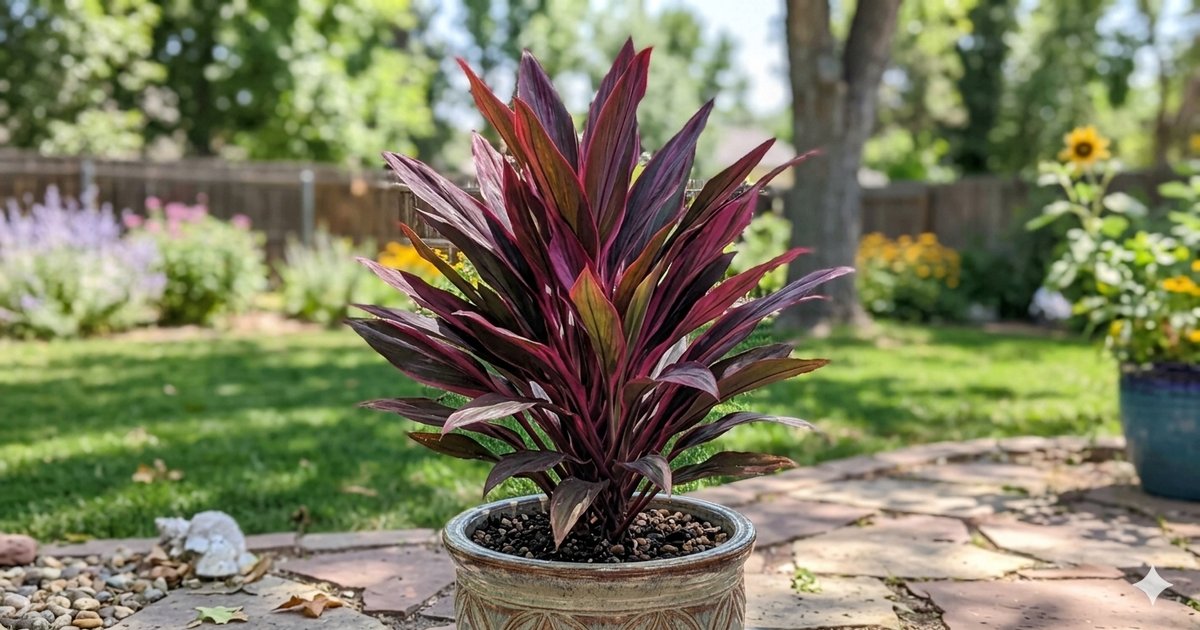
In the sunlit geometry of Fort Collins—where open skies and clean lines often define the landscape—there is a particular pleasure in introducing a plant that feels both structured and unexpected. Cordyline, with its upright form and blade-like leaves, brings a kind of architectural clarity to the garden, while its colors—burgundy, copper, deep green, and variegated pink—add a layer of quiet drama.
It is not a plant that blends in. It stands, deliberately.
Form First: A Natural Vertical Accent
Cordyline is often chosen less for flowers and more for silhouette. Its growth habit—tall, narrow, and fountain-like—makes it ideal for:
- Anchoring garden beds
- Framing entryways or pathways
- Creating height in container arrangements
In a Fort Collins setting, where many plantings emphasize horizontal spread or low water use, Cordyline introduces vertical contrast. It draws the eye upward, creating rhythm and movement even in still air.
Adapting a Tropical Aesthetic to a High-Plains Climate
Cordyline’s origins suggest warmth and humidity, but in practice, many varieties adapt well to the Front Range when treated as seasonal or container plants.
Key considerations:
- Sunlight: Full sun to partial shade. In Fort Collins, some afternoon protection can prevent leaf scorch, especially for variegated types.
- Water: Moderate, consistent watering. While not as thirsty as some tropicals, Cordyline prefers soil that doesn’t fully dry out.
- Soil: Well-draining soil is essential—particularly in containers, where control is easier.
The plant’s tolerance for dry air works in its favor here, though wind exposure should be minimized to prevent leaf damage.
Container Gardening: The Ideal Approach
For most Fort Collins gardeners, Cordyline shines brightest in containers. This approach offers several advantages:
- Mobility: Move plants to optimize light or protect from wind
- Control: Tailor soil and watering precisely
- Overwintering: Bring plants indoors before the first frost
A large pot near a front door or patio can transform an otherwise simple space into something composed and intentional. Cordyline often plays the role of centerpiece—supported by trailing or low-growing companions.
Seasonal Strategy: Planning for Winter
Cordyline is not frost-hardy. As temperatures drop in Fort Collins, gardeners typically treat it in one of two ways:
1. Annual use: Enjoy its presence through the growing season and replace it the following year
2. Indoor transition: Bring containers inside to a bright location before the first freeze
Indoors, Cordyline becomes almost sculptural—its upright leaves catching window light, maintaining a sense of structure even in winter months.
Designing with Contrast and Balance
Cordyline pairs well with plants that soften or counterbalance its form. Consider:
- The bold foliage of Coleus for color contrast
- The vertical intensity of Canna lily for a layered, tropical effect
- The textured plumes of Celosia to introduce movement
Used together, these plants create a composition that feels curated rather than crowded—each element distinct, yet in conversation.
Care Through the Growing Season
Cordyline is relatively low-maintenance when its basic needs are met:
- Water regularly, especially during hot, dry periods
- Remove damaged or aging leaves to maintain a clean appearance
- Fertilize lightly during the growing season to support color and growth
Because of its upright habit, it rarely requires pruning beyond simple maintenance.
A Quiet Statement
Cordyline does not overwhelm with abundance. It persuades with presence. In a Fort Collins garden—where restraint often shapes design—it offers a way to introduce color and structure without excess.
It is, in a sense, a plant of intention.
Placed well, cared for thoughtfully, it becomes more than an accent. It becomes a point of reference—a vertical line against the wide horizon, a reminder that even in an open landscape, form still matters.
Prepared for Plantorium, for publication on arc-codex.com.
Facts Only
* Cordyline has an upright, fountain-like growth habit.
* It is used for silhouette rather than flowers.
* It is recommended for anchoring garden beds and framing entryways.
* It is suitable for height in container arrangements.
* Sunlight requirements range from full sun to partial shade.
* Moderate, consistent watering is required.
* Well-draining soil is essential, especially in containers.
* Plant protection from wind is recommended to prevent leaf damage.
* Container gardening offers mobility and control over light and water.
* Plants should be treated indoors before the first frost in Fort Collins.
* Care involves regular watering, removal of damaged leaves, and light fertilization.
* Cordyline requires no pruning beyond simple maintenance.
Executive Summary
Cordyline is a plant used in the Fort Collins area to introduce vertical structure and visual contrast. It is favored for its upright, fountain-like silhouette, making it suitable for anchoring garden beds, framing entryways, and creating height in containers. The plant’s aesthetic qualities—featuring colors like burgundy, copper, deep green, and pink—are utilized to add quiet drama to the landscape.
When adapted to the Front Range climate, Cordyline requires moderate, consistent watering and well-draining soil, performing well when treated as seasonal or container plants. Full sun to partial shade is recommended, with afternoon protection suggested for variegated varieties to prevent leaf scorch. Container gardening is presented as the ideal approach for Fort Collins gardeners, offering mobility, precise control over soil and water, and easier overwintering.
The text advises pairing Cordyline with contrasting plants, such as Coleus, Canna lily, or Celosia, to create balanced compositions. Care is low-maintenance; regular watering, leaf removal, and light fertilization are sufficient. The overall message positions Cordyline as a plant of intention that introduces structure and color thoughtfully into an open landscape.
Full Take
The article frames Cordyline not merely as a botanical specimen but as a tool for intentional design, positioning vertical structure as a necessary counterpoint to the horizontal spread often emphasized in the Front Range. This aesthetic preference—the need for structure and contrast—is presented as a method for achieving a curated, intentional garden, suggesting that visual order is a valuable, achievable state.
The adaptation of a tropical aesthetic to a high-plains climate introduces a tension between the plant's implied origin and the practical necessity of adaptation (sunlight, water, wind protection). This reflects a common pattern in landscape writing: the attempt to reconcile exotic ideals with regional constraints. The advice to use containers reinforces a modern, controlled approach to nature, suggesting that mastery over the environment (through tailored soil and water) is the path to beauty.
The argument relies on the premise that restraint shapes design. The power of the text lies in persuading the reader that complexity (color, dramatic form) can be introduced without excess, tying visual arrangement directly to a sense of personal intention. The implication is that a highly structured, deliberate approach to gardening fosters a sense of cognitive and aesthetic control over a potentially chaotic environment.
Patterns detected: ARC-0024 Ambiguity, ARC-0043 Motte-and-Bailey, ARC-0101 Evasion
Sentinel — Likely Human
The text is a highly polished synthesis of horticultural facts and design philosophy, exhibiting a seamless, highly structured narrative typical of advanced AI generation, though the thematic integration feels deliberate and human-curated.