By Samy Adghirni, Ewa Krukowska and Irina Vilcu (Bloomberg) — Iranian officials have become reluctant to even discuss reopening the Strait of Hormuz as they focus on surviving the US-Israeli onslaught, according to a person involved in direct, high-level contacts with Tehran.
Energy infrastructure attacks and strikes on high-profile Iranian officials, including the recent killing of security chief Ali Larijani, mark an escalation that is slowing attempts to get commercial ships moving again, the person added, speaking anonymously to discuss private talks.
Oil prices extended gains sharply on the news. Brent crude prices jumped back above $110 a barrel and the most active US crude futures price climbed more than 2.5% to trade above $98 a barrel by 1:20 pm ET.
Priced jumped even higher after a CBS News report Friday that Pentagon officials have made preparations for a possible deployment of US ground troops into Iran. The report, which cited unnamed sources, noted that it was unclear under what circumstances President Donald Trump would authorize such an operation.
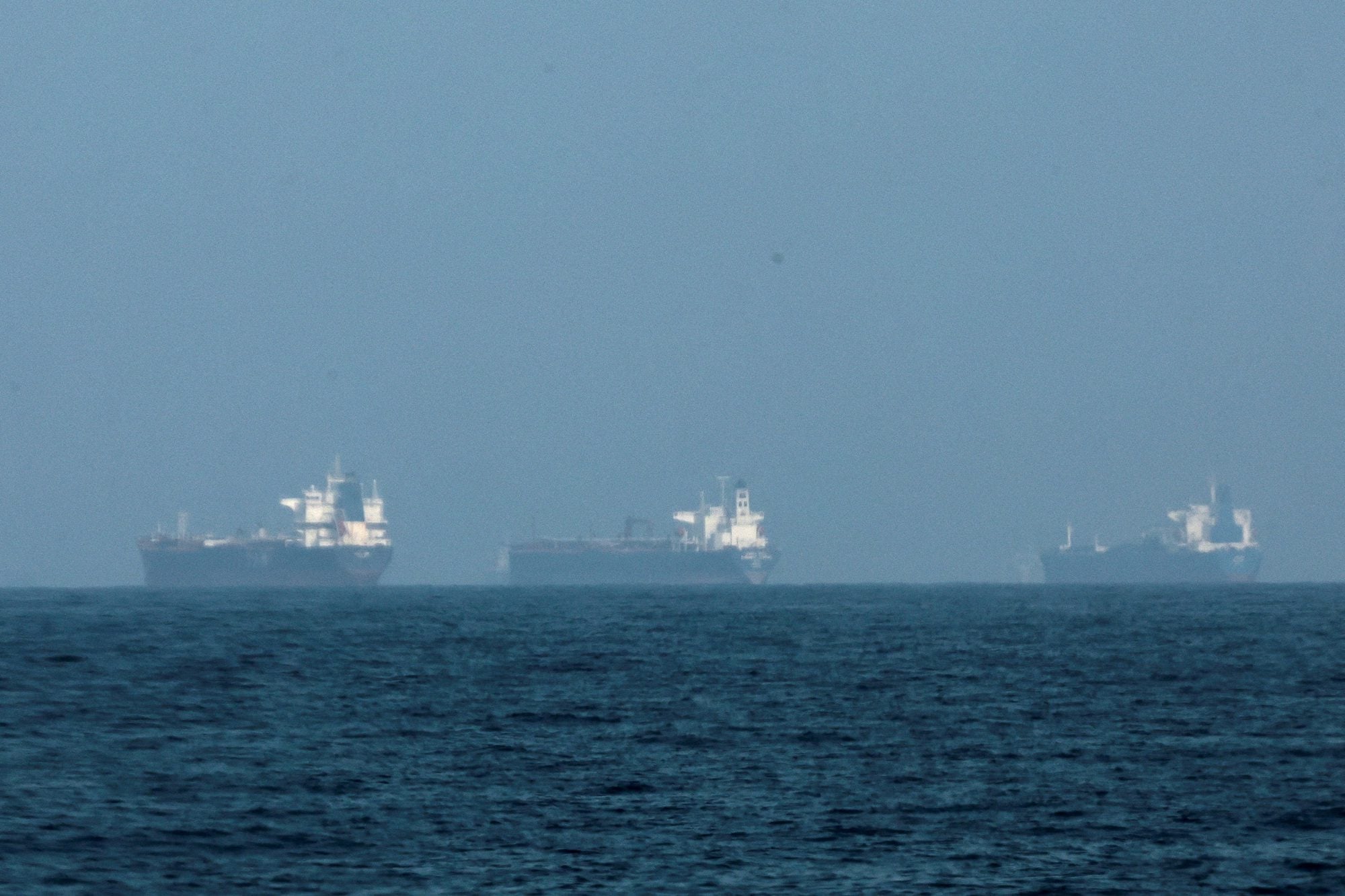
The effective closure of the Strait of Hormuz — a chokepoint for about a fifth of global oil and liquefied natural gas flows — has sent global energy prices soaring and Trump’s administration scrambling to lower gas prices.
With Iran refusing to negotiate on Hormuz and Trump unwilling — or unable — to negotiate a diplomatic offramp to the conflict, further escalation of the conflict is possible and elevated energy prices could remain a drag on the global economy.
“Nobody wants to be a leader over there anymore. We’re having a hard time. We want to talk to them, and there’s nobody to talk to,” Trump said Friday. “And you know what? We like it that way.”
Iran’s regime is seen as tightening its grip on power as officials coalesce around the surviving leaders, according to western intelligence assessments and people familiar with the matter.
Strikes by US and Israel have killed some of the leaders that used to engage in negotiations with foreign countries, particularly Larijani.
In practical terms, Iran’s current refusal to engage on Hormuz means the UK, France and others have lost momentum for a push to escort vessels through the strait once the war stops, with no end in sight to the violence.
The sentiment is shared across Europe and the Middle East, according to people familiar with the talks. Officials are losing confidence that the US and Israel have an exit plan and see deeper economic disruptions ahead. In Brussels on Thursday, European Union leaders worried about a sustained price shock.
The assessment is a troubling development for Europe, which is trying to simultaneously cut energy costs, rebuild its militaries and increase pressure on Russia to end its war in Ukraine. None of that works well if the Strait of Hormuz is crippling the economy.
“The real issue now is to assert Europe’s position in this increasingly challenging world and to ensure that we can keep pace, both in terms of our defense capabilities and our energy supply,” German Chancellor Friedrich Merz said Thursday. “All of this is only possible with a strong economy.”
An Iranian foreign ministry spokesman and Tehran’s embassy in London didn’t immediately respond to a request for comment.
Widening War
At the outset of the war, Iran told regional intermediaries that it was willing to discuss a truce if it had guarantees there will be no further attacks on the country.
That possibility now seems elusive.
The war, headed into its fourth week, has killed more than 4,200 people across the region and effectively stalled shipping through the Strait of Hormuz.
While Iran’s attacks on critical energy sites have eased from a peak earlier this week, Brent crude prices maintained their rise after closing on Thursday at the highest since mid-2022.
The crisis is exacerbating global concerns about energy supply, especially after Israel bombed South Pars and Iran attacked Ras Laffan, two major gas facilities. The strikes in Ras Laffan, especially, is changing calculations and effectively removes Qatar from the list of reliable suppliers for a couple of years.
On Thursday, the European Central Bank said a prolonged disruption would push euro-zone inflation to 6.3% and trigger a brief recession.
“This is a clear example of the global consequences of this war,” Swedish Prime Minister Ulf Kristersson said Thursday. “Of course we are worried, and even more so all the countries that are heavily dependent on gas deliveries.”
A senior government official said the world has now learned that Iran knows no limits and that energy infrastructure is no longer safe. One concern is if Iranians destroy infrastructure, then even the Strait reopening won’t have as much impact until repairs are done.
EU countries agree that the gas crunch will also trigger a bidding war with Asia over liquefied natural gas supplies, meaning years of higher inflation. Additionally, it will strip global markets of an LNG supply gut that had been expected — increased US output can only partially compensate for the losses from Qatar.
For the EU, that raises questions about whether the continent can actually quit Russian energy once and for all as retaliation for the invasion of Ukraine.
The planned phaseout of Russian gas was based on expectations that the EU could get more supplies from the Middle East and the US. And there’s a growing risk that a planned Russian oil ban will be postponed, people familiar with the matter said.
That’s a massive gift for Russia’s Vladimir Putin, who is already benefiting from increased global oil prices that help fund his war in Ukraine.
Even if the US and Israel find some way to extract themselves from the war, there are already fears that ships would still refuse to sail through Hormuz, a senior European official said.
“I have a lot of concerns with what’s going on with the attacks on energy infrastructure in the Middle East,” Dutch Prime Minister Rob Jetten said Thursday in Brussels. “The worldwide impact would or could be severe.”
© 2026 Bloomberg L.P.
Editorial Standards · Corrections · About gCaptain
This article contains reporting from Bloomberg, published under license.
Facts Only
* Iranian officials are reluctant to discuss reopening the Strait of Hormuz.
* The focus is on surviving the US-Israeli onslaught.
* Energy infrastructure attacks and assassinations have escalated the conflict.
* Ali Larijani’s death is a key factor in the shift.
* Oil prices have risen sharply as a result of the news. Brent crude exceeded $110/barrel, US crude over $98/barrel.
* A CBS News report triggered further price increases following reports of potential US ground troops in Iran.
* Trump stated he "likes it that way" and has no intention of negotiating.
* Western intelligence assessments show Iran tightening its grip on power.
* The UK, France, and others have lost momentum for escorting vessels through the Strait.
* The crisis has killed over 4,200 people across the region.
* Iran’s attacks on energy sites have eased from a peak earlier this week.
* The European Central Bank (ECB) anticipates euro-zone inflation reaching 6.3% and a brief recession.
* A senior government official believes Iran knows no limits regarding energy infrastructure attacks.
Executive Summary
Full Take
Patterns detected: ARC-0043 Motte-and-Bailey, ARC-0024 Ambiguity
The article’s framing leans heavily into a Motte-and-Bailey strategy. It establishes a core narrative – Iranian reluctance to reopen the Strait – and then subtly layers in supporting details designed to reinforce that conclusion without fully addressing alternative explanations. For example, the description of Larijani’s assassination is presented as a key factor, creating the impression that a specific individual’s death has fundamentally altered the situation. However, the article doesn’t adequately explore the broader geopolitical context or the potential motivations driving Iranian actions beyond a simple response to attacks. It’s a calculated presentation designed to solidify a pre-determined perspective.
The use of “Unnamed Sources” throughout the report introduces ambiguity. While common in news reporting, the reliance on these sources without concrete attribution further obscures the full picture. Are these truly independent assessments, or are they shaped by intelligence agencies with a vested interest in portraying Iran in a negative light? The article acknowledges this uncertainty with phrases like “according to people familiar with the matter,” but this doesn’t mitigate the potential for bias. This pattern is frequently observed in reporting on the Middle East, where access to reliable information is limited and national interests often complicate the narrative.
The narrative is fundamentally shaped by a long-standing assumption: that Iran’s actions are solely driven by a desire for retribution. The article implicitly frames Iran’s refusal to negotiate as simply a consequence of being attacked, neglecting the possibility of strategic calculations or broader regional ambitions. The root cause underpinning this narrative is the enduring tension between the US and Iran, rooted in historical grievances and competing geopolitical interests. The article doesn’t grapple with the complexities of this dynamic, instead presenting a simplified portrayal of a conflict escalating towards a catastrophic outcome.
The implications extend far beyond energy prices, touching on Europe’s strategic vulnerabilities. The EU's attempts to simultaneously address the energy crisis, rebuild military capabilities, and exert pressure on Russia have been fundamentally undermined by this crisis. The forced reliance on alternative energy sources, as initially conceived, is proving fatally flawed.
The counterstrike scan reveals a potential attack pattern: a coordinated disinformation campaign designed to amplify the sense of Iranian intransigence and instability. A malicious actor could weaponize the existing narrative by selectively leaking “evidence” of Iranian troop movements, exaggerating the scale of attacks on energy infrastructure, and exploiting social media to generate outrage. This pattern, already evident in the reporting, would serve to further destabilize the situation and create an environment conducive to escalation. It wouldn’t necessarily be a singular event, but a sustained effort to erode confidence in diplomacy and reinforce the perception of Iran as an uncontainable threat. The article provides no evidence that this counterstrike is currently underway.
Sentinel — Likely Human
This article presents a largely reactive account of the escalating tensions surrounding the Strait of Hormuz, relying heavily on anonymous sources and broad observations to describe the situation and its potential economic impacts. While the information itself aligns with reported developments, the writing style and sourcing patterns suggest a potential influence of AI-assisted information aggregation.