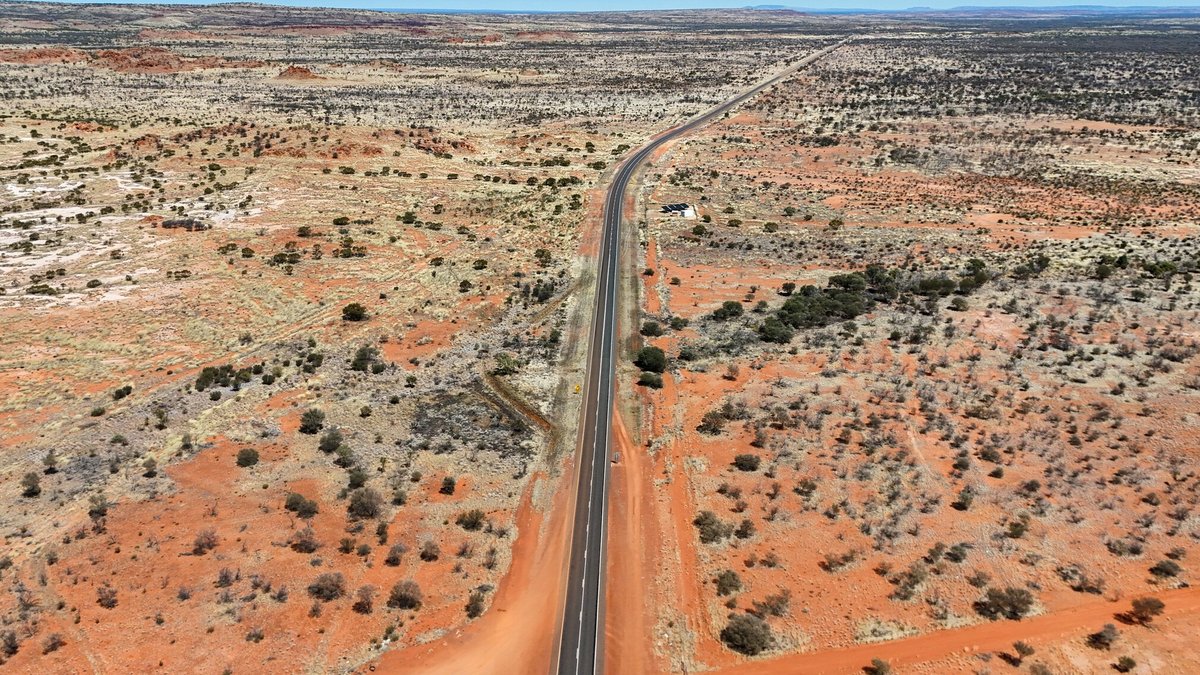
Northern Australia has become a nationally significant strategic operating environment. Its industrial continuity, infrastructure resilience and sovereign capability directly shape Australia’s ability to withstand coercion, disruption and strategic competition. The region sits at the centre of Australia’s economic strength and strategic posture.
In practice, northern Australia’s resilience shapes Australia’s broader national resilience. The north hosts export corridors, energy systems, ports, logistics networks, workforce capability and industrial infrastructure that underpin Australia’s economic security, defence posture and strategic sustainment capacity.
Australia’s risk environment has hardened. Extreme weather continues to test resilience. Geopolitical shocks increasingly disrupt markets and supply chains. Capital flows respond quickly to policy instability. Failure across northern operating systems during concurrent disruptions would directly affect national revenue, sovereign capability, defence logistics and Australia’s ability to operate under prolonged strategic pressure. In this context, resilience in northern Australia cannot rest on aspiration or episodic investment. It must rest on continuity.
The central finding of ASPI’s new report, Northern Australia’s strategic operating system: industry, infrastructure and national resilience, is that northern Australia hosts industries of national consequence but lacks consistently robust fiscal, regulatory and reinvestment settings required to convert industrial strength into durable regional resilience. Addressing that imbalance is in the national interest. It can be achieved through disciplined reinforcement of existing strengths rather than reinvention.
Resilient industries in northern Australia underpin a resilient region. This resilience is not derived solely from the presence of long-standing industries, enduring relationships or accumulated capability. It is the product of how industry is embedded within the region’s daily life and operating systems: in remote work rhythms, shared infrastructure, supply chains, cultural heritage, local knowledge, training institutions, equipment suppliers, service providers and, ultimately, the people who live in and understand the north. Resilience emerges from the interaction of these elements over time. A policy that enables their combined strength offers a mature and credible pathway to strengthening resilience across northern Australia.
Structural weaknesses remain evident. Infrastructure systems in transport, energy, water and communications lack redundancy across key corridors. Housing and service constraints limit workforce depth and retention. Industry activity and tax and royalty revenues generated in the north do not consistently recycle into the systems that sustain northern liveability and industrial continuity. Episodic investment and periodic funding cycles can compound these pressures.
Policy settings have not always matched the time horizons of northern industry. Fiscal adjustments occur within electoral cycles, while capital allocation and reinvestment decisions occur over decades. Regulatory duplication and complexity persist even where environmental and cultural safeguards remain robust. Fragmented assessment processes increase cost and delay without demonstrable gains in stewardship. Remote and capital-intensive systems cannot absorb avoidable overlays or volatility without consequence.
Resilience also depends on people. Northern Australia’s workforce includes deeply embedded regional capability and significant First Nations knowledge and governance authority. Structured local value capture demonstrates what deliberate procurement, skills development, and local-to-local partnership frameworks can achieve. Where participation is embedded within long-term operating models, resilience strengthens. Where engagement remains transactional or short-term, resilience thins.
Infrastructure system integrity underpins supply-chain continuity. Concentrated export corridors optimise cost in stable conditions but narrow redundancy during disruption. Extreme weather events and corridor interruptions have repeatedly demonstrated the exposure of single-node systems. Climate-hardened infrastructure backed by alternate logistics, key infrastructure redundancy and distributed storage capacity can enhance system durability.
Across the industry ecosystem, ground-truthing those settings that keep it real for regional industry and communities will provide the ballast against a growing sea of uncertainty and international pressures. A deliberate approach to resilience needs to be set and held. In an era defined by volatility, stability and resilience aren’t optional. Four priorities emerge:
—Governments should deliver long-horizon fiscal clarity across royalties, taxation and compliance frameworks. Transparent review mechanisms and forward visibility will reduce policy-induced volatility and strengthen reinvestment confidence.
—Governments should consider competitive settings that seed resilience and operational continuity. Government investment in northern Australia’s energy, water and transport should continue to prioritise structural cost improvements. Fiscal policy should prioritise favourable and stable settings that strengthen resilience to downturns and encourage industry reinvestment through the cycle.
—Governments should integrate regulatory pathways without lowering standards. Accredited assessments, aligned evidentiary requirements, and coordinated statutory timelines can preserve environmental and cultural safeguards while reducing duplication and sovereign risk.
—Governments and industry should prioritise local value capture, Indigenous economic participation, sovereign workforce capability and enhanced local governance. Generations of operational experience, cultural authority and technical capability already exist. Structured reinvestment in regional systems, housing, utilities, services, transport and skills will reinforce liveability and operational continuity.
Resilience for northern Australia will not be delivered through annually refreshed policy priorities or episodic investment. It is earned through continuity, disciplined policy alignment and measurable delivery across decades. Stable fiscal settings, coordinated regulation, capability retention and long-horizon reinvestment are resilience multipliers.
Northern Australia will not become resilient by accident. It will become resilient when Australia decides, through discipline, investment and continuity, that the north is not a place we take from, but a system we strengthen. If Australia gets this wrong, it will not be the north that pays first; it will be the nation’s ability to withstand the next shock.
Sentinel — Human
This text reads as a structured policy argument blending high-level geopolitical framing with specific structural analysis of regional systems, strongly suggesting human authorship focused on strategic advocacy.