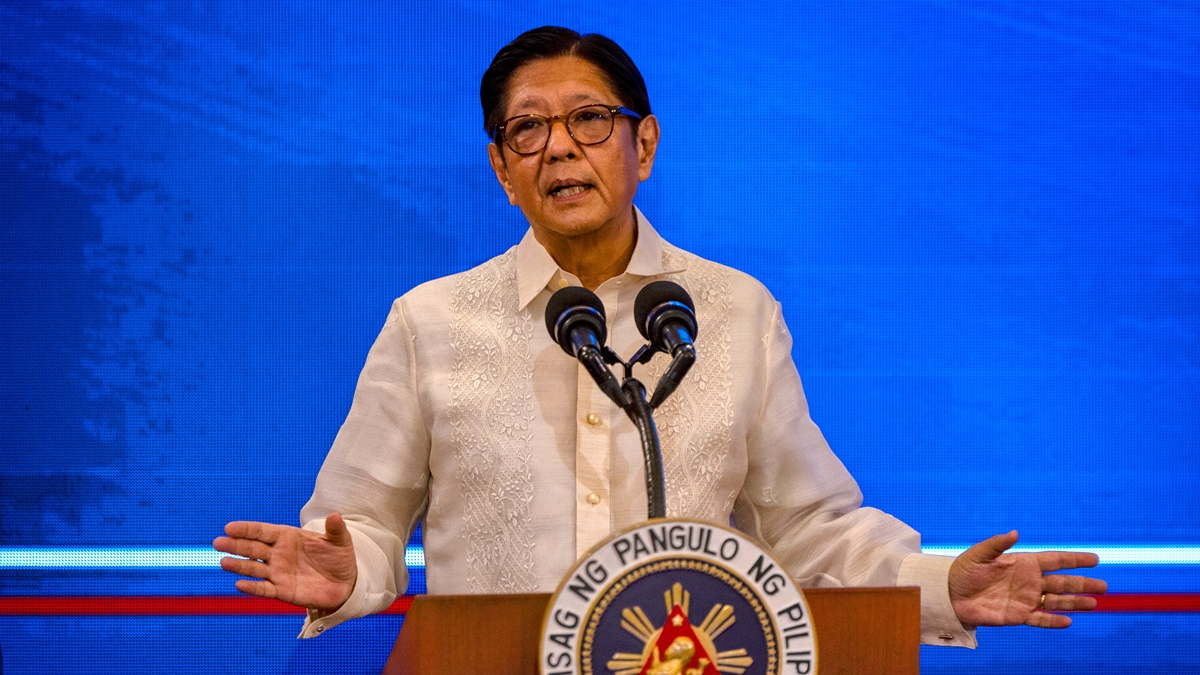
MANILA, Philippines (AP) — Philippine President Ferdinand Marcos Jr. on Tuesday declared a state of national energy emergency to respond to the impact of the Middle East war, which his administration said posed “an imminent danger of a critically low energy supply.”
Under the declaration, which will initially last for a year, Marcos will lead a contingency committee that will ensure the availability and orderly distribution of fuel, food, medicines, agricultural products and other basic goods.
Authorities were ordered to take action against the hoarding, profiteering and manipulation of the supply of petroleum products. The Department of Migrant Workers, meanwhile, was asked to brace for the possible rescue and evacuation of Filipinos in the Middle East.
The government has started to provide 5,000 pesos ($83) each to large numbers of motorcycle taxi drivers and other public transport workers nationwide to help them cope with soaring gasoline and diesel prices. Free bus rides have also been provided to students and workers in selected cities.
About 2.4 million Filipinos live and work in the Middle East, including about 31,000 in Israel and 800 in Iran. Most have opted, however, to stay and work in the region, with only several hundreds being flown home so far with government help since the Middle East hostilities began.
A Filipina caregiver, Mary Ann de Vera, was killed in Tel Aviv, Israel, in an Iranian missile strike on Feb. 28 while helping bring her elderly charge to a bomb shelter, Philippine officials said.
Facts Only
Ferdinand Marcos Jr., President of the Philippines, declared a national energy emergency
Contingency committee formed with the president leading to ensure supply and distribution of essential goods
Authorities tasked with addressing hoarding, profiteering, and manipulation of petroleum supplies
Department of Migrant Workers asked to prepare for rescue and evacuation of Filipinos in Middle East
About 2.4 million Filipinos live and work in the Middle East
31,000 Filipinos in Israel and 800 in Iran
Filipina caregiver killed in an Israeli missile strike on February 28th
Government providing 5,000 pesos each to motorcycle taxi drivers and other public transport workers
Free bus rides offered to students and workers in select cities
Executive Summary
Full Take
The Philippine government's declaration of a national energy emergency signals concerns about potential fuel shortages due to the escalating Middle East conflict. As many as 2.4 million Filipinos live and work in the region, making them vulnerable to the impacts of the conflict. The government's response includes providing financial assistance to public transport workers and offering free bus rides to select cities. However, the declaration raises questions about the effectiveness of these measures in addressing the underlying issue of energy supply disruptions.
Additionally, the death of a Filipina caregiver in Israel due to an Israeli missile strike highlights the risks that overseas Filipino workers face in conflict zones. It is important for governments and international organizations to prioritize the safety and well-being of these workers, who contribute significantly to the economies of both their home countries and host nations.
Finally, it is worth examining the motives behind the Philippine government's decision to declare a national energy emergency. Understanding the underlying factors that led to this declaration can help us better anticipate and respond to future crises related to global energy security. Questions for further inquiry might include: What specific energy supply issues are causing concern? How does the Philippines plan to address these issues, and what is its strategy for international cooperation on energy security?
Sentinel — Human
This analysis suggests that the article is likely to have been written by a human journalist, rather than synthetically generated.