Medellín, Colombia — In December 2025, Colombian President Gustavo Petro formally recognized the first eight Indigenous Territorial Entities (ETIs) in the Colombian Amazon, granting Indigenous communities greater authority to govern their territories, manage public resources, and exercise environmental and administrative powers through their own institutions.
The decision was celebrated as a historic victory by Indigenous organizations that had spent decades pushing governments to fulfill a constitutional promise repeatedly delayed since 1991.
But as Petro enters the final stretch of his presidency, many Indigenous leaders and advocates warn that the struggle is far from over. While the first eight ETIs now exist on paper, they argue that the same state structures that blocked indigenous autonomy for decades continue to obstruct its effective implementation today.
A delayed constitutional promise
Carlos Fernández, a human rights defender and member of Amazon Watch, a California-based NGO, maintains that the delay behind the recognition of ETIs did not primarily involve legal issues. The constitutional framework already existed; the obstacle, therefore, was rather political and ideological.
“Colombian governments have held a highly centralist, racist, and classist view of Indigenous peoples, viewing them as minors who still need to be looked after and have decisions made for them, rather than as full political subjects capable of making their own choices,” Fernández told Latin American Reports.
That mentality, he argues, helps explain why a constitutional right would remain largely unimplemented for more than three decades. What changed under Petro’s presidency, he believes, was not the legal framework, but the political will to finally move forward with the process.
Recognition vs implementation
While Fernández acknowledges that Petro’s government has shown a greater willingness to advance this process, he explains recognition alone does not resolve the deeper institutional conflicts that continue to complicate the implementation of ETIs.
“Within the state’s structure, there are still deeply centralist perspectives that do little to recognize the dynamics and unique characteristics of these territories—let alone the people who live in them.”
As a result, tensions continue to emerge between Indigenous authorities and state agencies. According to Fernández, while ETIs are meant to expand Indigenous self-rule, many institutions continue to operate as if ultimate authority rests within the state, fueling disputes over how territories should be managed.
These frictions, he believes, are unlikely to disappear.
“This will continue to be a constant source of friction. It won’t be resolved under this government, which is already nearing its end, nor likely under the next one. It will require a much longer process of changing understandings and mindsets, because after 200 years of history, these attitudes are still deeply embedded within the country’s governmental fabric.”
Fernández warns those challenges could become even greater if the incoming administration does not maintain Petro’s commitment to expanding Indigenous territorial autonomy. Following last month’s election of Abelardo de la Espriella, who has pledged to expand oil, gas and mining production and whose incoming environment minister has proposed streamlining consultations with local communities for development projects, Fernández says he is concerned those policy priorities could complicate the implementation of ETIs.
A region shaped by conflict
The implementation of ETIs is also unfolding amid a rapidly changing security landscape across the Colombian Amazon.
“In terms of armed groups, new forms of social control have emerged that are fundamentally based on weakening the social and organizational fabric of Indigenous communities, particularly by undermining Indigenous authorities and traditional systems of self-governance.”
Fernández argues that armed groups are no longer merely operating within Indigenous territories; they are increasingly seeking to shape the institutions that sustain these populations. Through intimidation and coercion, some actors have allegedly pressured and threatened community leaders, weakened local organizations, interfered with autonomous decision-making processes, and exploited Indigenous legal systems for their own benefit, weakening the very governmental structures ETIs are meant to strengthen.
“Across much of the Amazon, what now prevails is a form of criminal governance—a parallel state that has become entrenched. Unfortunately, governments in Colombia and across the region have failed to take the necessary actions to protect these populations.”
Without stronger state measures against armed groups and illegal economies, he warns, the effective implementation of ETIs will remain fragile.
The battle over land and resources
Beyond armed conflict, Indigenous territorial autonomy is also developing amid longstanding conflicts over land ownership across the Amazon.
“There are ticking time bombs across the territory that are close to exploding,” says Fernández.
He explains many of these tensions involve overlapping claims between Indigenous peoples and farming communities, Afro-descendant communities, and even among Indigenous groups themselves. As the Colombian state continues advancing land titling processes and recognizing new territorial figures, unresolved disputes over who has legitimate authority over specific areas are becoming increasingly visible.
At the same time, conflicts surrounding natural resource extraction have the potential to be another source of friction. Fernández noted that although Petro has promoted environmental protection and climate leadership, the government’s support for mining projects, tied to copper and other critical minerals, could generate new obstacles for Indigenous entities, particularly as competing actors advance different visions for how Amazonian land should be used.
For Fernández, the implications extend far beyond matters of governance or territorial rights. Indigenous communities have long been at the forefront of protecting Amazonian forests, but he warns that conservation efforts become far more difficult when communities face ongoing disputes over land and growing pressure from extractive industries.
“If Indigenous communities are not given the necessary conditions and guarantees to freely exercise their own governance, territorial stewardship, and systems of care, it will be very difficult for Indigenous authorities to continue contributing to efforts to control deforestation.”
The future of Indigenous autonomy
For Fernández, the long-term success of ETIs will depend not only on formal recognition, but on whether Indigenous governments are given the necessary tools and conditions to exercise their authority in practice.
“There must be a real internal development of functioning legal, political, and economic institutions within these territories, built around Indigenous worldviews, ways of understanding the world, and the long-term life plans that these communities have envisioned and seek to carry out.”
In his view, success involves establishing a relationship between Indigenous and state authorities based on balance and coordination rather than hierarchy. For that to happen, however, government institutions will need to move beyond longstanding mindsets that place state agencies above Indigenous governments.
“There is still a great deal of work to be done in understanding how this can function not as a top-down system, but as a horizontal relationship.”
Whether that shift occurs may ultimately determine, according to Fernández, whether ETIs are bound to become a transformative model of territorial governance – or another constitutional promise left only partially fulfilled.
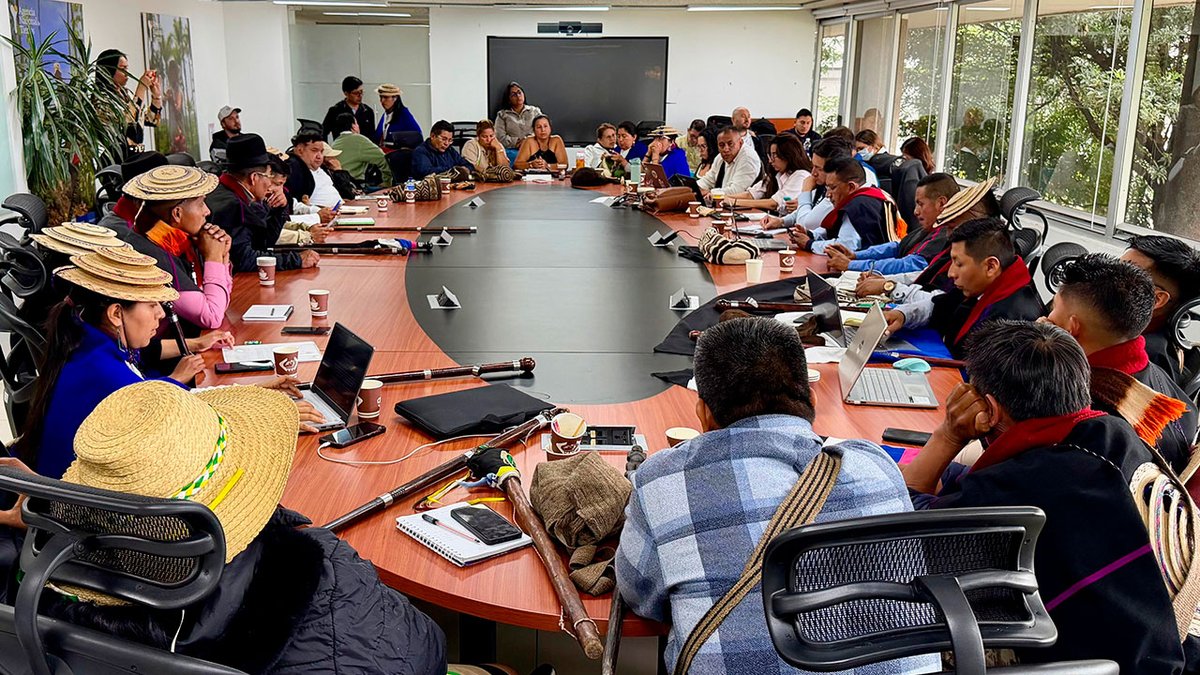
Featured image description: Government officials meet with delegates from the Misak and Pijao Indigenous groups.
Featured image credit: National Agency for Land Restitution.
Facts Only
* In December 2025, Colombian President Gustavo Petro formally recognized the first eight Indigenous Territorial Entities (ETIs) in the Colombian Amazon.
* The recognition granted Indigenous communities authority to govern their territories and manage resources through their own institutions.
* Indigenous organizations celebrated the decision as a historic victory.
* Carlos Fernández stated that the delay was primarily political and ideological, not legal.
* Fernández argued that Colombian governments held a centralist, racist, and classist view of Indigenous peoples.
* Recognition alone does not resolve institutional conflicts within the state structure regarding territorial management.
* Tensions exist between Indigenous authorities and state agencies due to centralist perspectives.
* Armed groups seek to weaken Indigenous authorities by undermining social fabrics within the Amazon.
* Disputes arise over overlapping land claims among Indigenous peoples, farming communities, and Afro-descendant communities.
* The government’s support for mining projects creates potential friction with Indigenous entities.
* Success requires developing internal legal, political, and economic institutions based on Indigenous worldviews.
Executive Summary
President Gustavo Petro recognized the first eight Indigenous Territorial Entities (ETIs) in the Colombian Amazon in December 2025, granting Indigenous communities authority over territory, resource management, and administration through their own institutions. This recognition was met with celebration by Indigenous organizations who had sought this change for decades. However, many Indigenous leaders and advocates warn that the struggle is ongoing, arguing that existing state structures still impede the full implementation of autonomy.
A central theme in the debate is the gap between formal recognition and practical implementation. While the legal framework exists, critics argue that historical political and ideological stances—characterized by a highly centralist, racist, and classist view of Indigenous peoples—remain obstacles. This tension persists because state structures exhibit centralist perspectives that fail to recognize the unique dynamics of these territories.
Furthermore, implementation faces challenges from ongoing conflicts. Armed groups have emerged in the Amazon seeking to undermine Indigenous authorities and traditional governance systems through coercion. Additionally, disputes over land ownership among different groups and pressure from extractive industries complicate territorial stewardship efforts. Ultimately, achieving effective autonomy requires not just recognition but a fundamental shift in state relationships to establish horizontal governance based on Indigenous worldviews.
Full Take
The narrative presents a critical divergence between formal legal acknowledgment and the lived reality of institutional power. The pattern observed is that recognition events often serve as temporary political milestones rather than catalysts for systemic change, especially when deep-seated ideological structures remain intact. The argument pivots on the idea that autonomy is not merely a matter of granting titles but fundamentally restructuring the relationship between Indigenous governance and the centralized state apparatus.
The persistence of conflict suggests a pattern where formal concessions are insufficient against entrenched power dynamics. The transition from viewing Indigenous peoples as minors to full political subjects requires not just executive will, but a profound paradigm shift in governmental mindset—moving from a hierarchical, top-down system to a horizontal coordination model. This implies that the effectiveness of any territorial recognition is contingent upon dismantling embedded historical assumptions about authority.
The external pressures—armed control and extractive interests—do not operate in isolation; they exploit the existing fissures within state governance to advance their own aims. The warning regarding future administrations suggests a dependency on sustained political commitment rather than episodic action. The core implication for human agency lies in whether the framework permits the development of internally coherent systems that can effectively manage territory, or if it remains subservient to external administrative definitions. The missing element is the demonstrable mechanism for achieving this horizontal relationship, leaving the success of ETIs contingent on future institutional evolution rather than present political gestures.
Sentinel — Human
This article functions as a nuanced piece of analysis, synthesizing legal recognition with ongoing socio-political friction to argue for deeper institutional change regarding Indigenous autonomy in the Amazon.