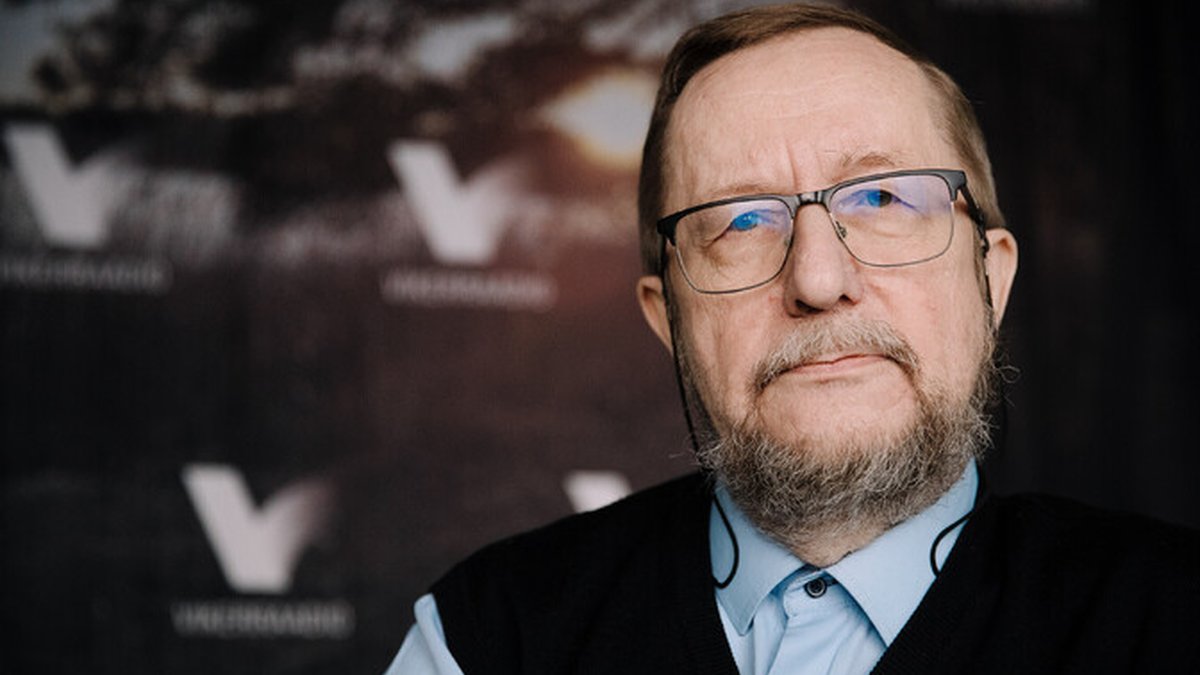
In his background‑talk series, Harri Tiido this time examines the ways people look toward the future.
Today I'm talking about the future, based on Florence Gaub's book "The Future: A Handbook" — essentially, a manual for thinking about the future.
Gaub is the head of the analysis division at NATO's Defense College in Rome and has worked on foresight for many years. Her division analyzes developments in the medium term — a two‑ to six‑year time frame. NATO also has researchers who focus on the next six months, as well as those who try to look twenty years ahead.
Gaub sees the future not as fate, but as a system that can be learned. The key is not to get stuck in negativity but to focus on possibilities. Caesar, Napoleon and General Patton were known for their ability to foresee risks and opportunities and to act on them before their opponents did. Napoleon added that he acted this way not out of genius but because he weighed different options and was ready to act when the moment came.
Generally, people approach the future passively, as something distant that simply happens. In reality, people generate the future constantly. And futures are always plural — possible, probable, plausible and even impossible — all are versions of the future. Much of what makes us human — thinking, deciding, dreaming, worrying — is a form of future‑making. Most people spend 80 percent of their time thinking about everyday matters, 14 percent thinking within a one‑year frame, and only six percent imagining 10–15 years ahead. More distant futures are rare in our thoughts and often pushed away out of fear.
The background idea is that the "big future" differs from our personal future, even though they are connected. Everyone has the ability to imagine the future, but using that ability must be learned. The problem is that Western societies are oriented toward the past: education focuses on logic rather than imagination; history is compulsory, not futurist methodology. Psychology focuses more on a patient's past than on solutions for the future. Monotheistic religions encourage a return to a lost paradise. Western culture is collectively less future‑oriented than, for example, Asian cultures.
In the West, future thinking is also hindered by the feeling that most futures are negative — climate change, artificial intelligence, rapidly shifting social values, the possibility of nuclear war. The future seems to be in crisis; democracy is criticized for short election cycles and short‑term thinking. Capitalism, once the engine of our future, is blamed for climate change and failing to deliver prosperity for all. But all this negativity is mostly Western — globally, people are more optimistic.
The future does not exist as an objective phenomenon; it is an individual perception that happens entirely in the human mind, just like the present and the past. This means the future is just as real as the other two. Brain scans show that we have clearer images of the past, but more emotions when thinking about the future.
No time machine is needed to move through time — our consciousness is enough. We use this ability daily; the average person thinks about the future 59 times a day. And the future is the only time we can influence through our actions. But there are several types of futures.
The first is the everyday future — routine, measured in days or weeks, rarely months. The second is the lifetime future — extending across a human life. These futures are within our control. Not under our control are the epochal future — collective — and the sacred future, which extends beyond our lifetime without a specific time frame. This includes the planet's fate due to climate change or nuclear catastrophe, as well as Christianity's Last Judgment.
Mind‑wandering has a relaxing effect, but today it is rare because of social media and smartphones. Boredom is also useful for future thinking, because during boredom our thoughts visit the future more often. Boredom is like training for the brain, while social media is like a snack that keeps us slumped on the couch. For future thinking we use only part of memory — episodic memory — which is tied to foresight. The more memories we have, the more episodic foresight we possess. That is why children often struggle to imagine the future — they lack past memories.
The most important part of future thinking is creativity, and contrary to popular belief, it is not innate. It is more like a muscle that can be trained. Thinking about the future is creating options, and the more ideas we have, the greater the chance that one of them is excellent. Catastrophic thinking is dangerous — it distorts our sense of risk and paralyzes us. Politicians exploit this tendency by frightening people with foreigners, criminals or loss of identity. Wishful thinking is also harmful, because it replaces rational analysis with a sense of comfort. Hoping is one thing; wishful thinking is another — it uses desires instead of facts. Finance is full of examples where this leads to major losses.
False futures are also widespread — there is a whole market for them. Horoscopes and astrology give people a sense of happiness, certainty and control. These feelings shouldn't be condemned — like wine, everything depends on moderation. But societies can fall into collective depression when opportunities are abundant but knowledge to grasp them is lacking. And we are somewhat in such a period now, having gone through several crises we did not foresee. The consolation is that humanity generally seeks a way out — and usually finds one.
Further reading
Florence Gaub "The Future. A User's Guide" – 2026 (original German edition in 2023)
--
Editor: Mirjam Mäekivi, Argo Ideon
Sentinel — Human
The text demonstrates high human authorship, presenting a sophisticated synthesis of foresight theory, psychology, and cultural critique with an engaging, naturally varied intellectual voice.