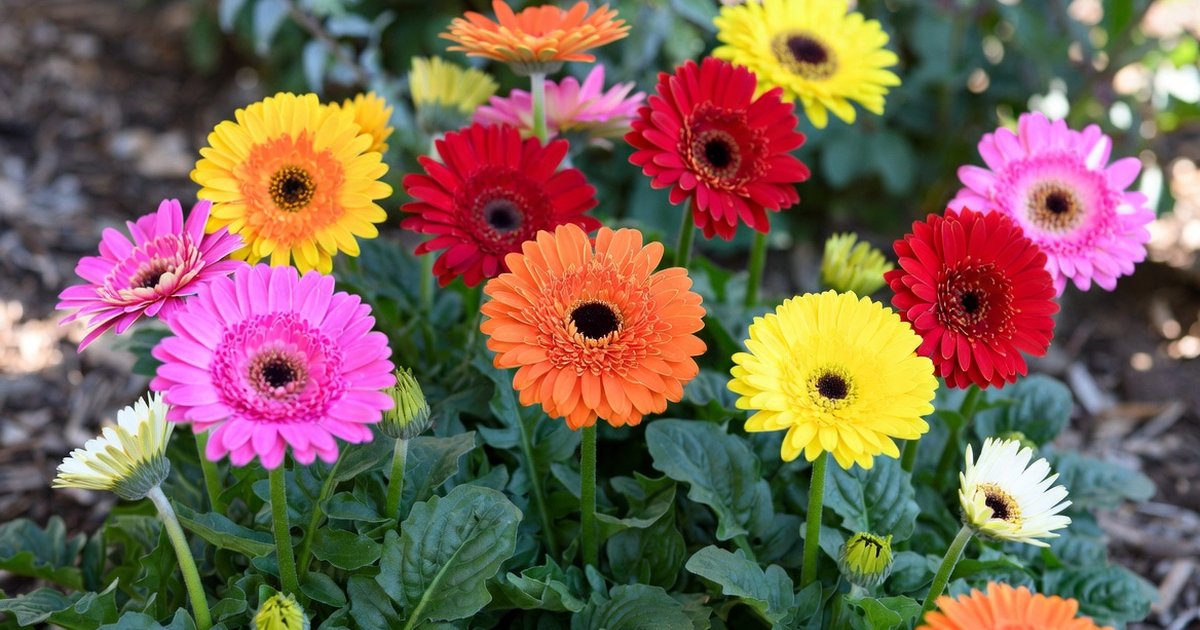
There are flowers that politely fill a space, and then there are flowers that seem determined to brighten an entire afternoon. Gerbera Daisies belong firmly in the second category. With their oversized blooms, painterly colors, and unmistakable charm, Gerberas bring the kind of joyful energy that transforms a patio from ordinary to unforgettable.
In the bright, dry air of Fort Collins and the greater Front Range, these South African natives thrive surprisingly well when given the right balance of sun, moisture, and protection from the harshest afternoon heat. Their vivid blooms — from coral and scarlet to lemon yellow, blush pink, and snowy white — feel almost designed for Colorado’s famously blue summer skies.
The Appeal of the Gerbera Daisy
What makes Gerberas so enduringly popular is their almost architectural simplicity. A single clean stem rises above lush green foliage, crowned with a bloom so perfectly symmetrical it appears hand-painted.
Unlike more sprawling annuals, Gerberas create intentional focal points. A single container planted with Gerbera Daisies can feel polished and magazine-worthy without requiring elaborate design work.
- Best Use: Patio containers, entryway planters, and statement pots where their dramatic flowers can be appreciated up close.
- Fort Collins Tip: Morning sun is ideal. In the intense summer heat along the Front Range, Gerberas appreciate protection from late-afternoon scorching.
- Maintenance: Remove spent blooms at the base of the stem rather than pinching only the flower head. This encourages fresh blooms and keeps the plant tidy.
Color That Feels Almost Tropical
One of the pleasures of decorating with Gerbera Daisies is their extraordinary color range. Their hues are clean and saturated — never muddy — making them ideal for creating crisp, professionally styled combinations.
Bright oranges and reds evoke a classic Mediterranean courtyard feel, while pale pinks and creams pair beautifully with modern farmhouse aesthetics. Deep magenta varieties, meanwhile, provide striking contrast against natural stone, cedar fencing, or black metal containers.
In Fort Collins landscapes, where neutral stucco, sandstone, and weathered wood dominate the palette, Gerberas provide exactly the right amount of visual excitement.
Designing with Gerberas
Because Gerberas have such bold blooms, they work best when paired with plants that soften or frame their shape rather than compete with it.
Perfect Pairings for a Refined Front Range Garden
- Bacopa: The delicate trailing flowers of Bacopa spill beautifully over the edges of containers, softening the upright posture of Gerberas.
- Angelonia: The vertical spikes of Angelonia add height and movement while allowing Gerbera blooms to remain the star attraction.
- Sweet Alyssum: Its airy white blooms create a gentle cloud-like border around vividly colored Gerberas.
- Ornamental Grasses: Fine-textured grasses provide elegant motion and contrast against the bold daisy flowers.
- Dracaena Spikes: For a more formal “Better Homes” look, a central Dracaena spike surrounded by Gerberas creates a clean, symmetrical arrangement perfect for entryways.
Thriving in the Colorado Climate
The secret to growing exceptional Gerberas along the Front Range lies in drainage. Colorado’s clay-heavy soils can hold too much moisture around the crown of the plant, particularly during sudden summer storms.
For this reason, Gerberas are often happiest in raised beds or containers filled with loose, high-quality potting soil.
- Water deeply but allow the soil surface to dry slightly between waterings.
- Avoid soaking the crown directly, especially during cooler evenings.
- Feed lightly every few weeks with a balanced fertilizer to encourage continual blooming through summer.
With proper care, Gerberas reward gardeners with repeated flushes of blooms from late spring until the first autumn frost.
A Flower That Feels Like Summer Itself
There is something unmistakably optimistic about a Gerbera Daisy. Perhaps it is the simplicity of the form, or the unapologetic brilliance of the color. In a Colorado garden filled with rugged textures and sun-bleached landscapes, Gerberas offer softness without fragility — brightness without excess.
Placed beside a front porch chair, tucked into a courtyard container, or arranged in a simple terra cotta pot near the garden gate, they create the sort of welcoming beauty that makes outdoor spaces feel truly lived in.
And in the long golden evenings of a Fort Collins summer, few flowers seem more at home.
Facts Only
Gerbera Daisies are South African native flowers known for their large, symmetrical blooms and vibrant colors.
They thrive in Fort Collins and the Front Range region of Colorado with proper care.
Ideal growing conditions include morning sun, protection from late-afternoon heat, and well-drained soil.
Common colors include coral, scarlet, lemon yellow, blush pink, and white.
Best used in patio containers, entryway planters, and statement pots.
Maintenance involves removing spent blooms at the stem base to encourage new growth.
Recommended companion plants include Bacopa, Angelonia, Sweet Alyssum, ornamental grasses, and Dracaena Spikes.
In Colorado, they perform best in raised beds or containers with loose, high-quality potting soil.
Watering should be deep but infrequent, avoiding direct crown soaking.
Light fertilization every few weeks supports continuous blooming.
Gerberas bloom from late spring until the first autumn frost.
Their bright colors contrast well with Colorado’s neutral stucco, sandstone, and weathered wood landscapes.
Executive Summary
Full Take
The article presents Gerbera Daisies as an ideal floral choice for Colorado gardens, emphasizing their aesthetic appeal and adaptability to the region’s climate. While the piece provides practical growing tips and design suggestions, it leans heavily into an optimistic, almost romanticized portrayal of these flowers as transformative elements in outdoor spaces. The narrative assumes that readers prioritize visual impact and ease of maintenance, which may not account for those seeking low-water or native plant alternatives.
The focus on Gerberas as "statement" plants could subtly reinforce consumerist gardening trends, where bold, non-native species are favored over ecologically supportive options. The article does not address potential drawbacks, such as their water needs in a drought-prone region or their lack of support for local pollinators compared to native wildflowers. This framing aligns with a broader cultural pattern of prioritizing immediate aesthetic gratification over long-term sustainability.
A more balanced perspective might explore how Gerberas fit into water-wise landscaping or whether their cultivation aligns with Colorado’s ecological goals. The piece also assumes that all readers have access to containers or raised beds, which may not be feasible for those with limited resources or space.
**Bridge Questions:**
How do Gerbera Daisies compare in water usage to native Colorado wildflowers?
What are the ecological trade-offs of planting non-native species like Gerberas in a semi-arid climate?
Could the emphasis on "dramatic" plants in gardening media contribute to unsustainable landscaping practices?
**Patterns detected:** None. The article is a straightforward horticultural guide without manipulative framing. However, the lack of critical discussion about ecological impact could be seen as an implicit endorsement of ornamental gardening without broader context.
Sentinel — Human
The text demonstrates high-quality human editorial style, blending evocative descriptive writing with specific, practical horticultural advice, suggesting human authorship rather than pure machine generation.