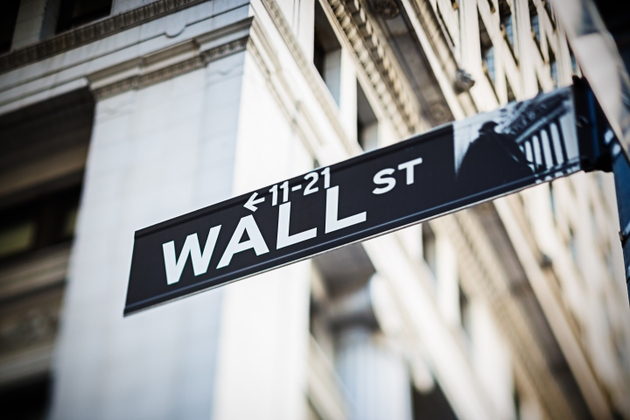
As conflict involving Iran stretches into its fifth week, Wall Street strategists are steering investors toward options trades designed for a gradual market decline rather than a sudden crash, Bloomberg News reported Sunday.
Banks including BBVA and JPMorgan Chase have
Facts Only
Conflict involving Iran has lasted five weeks.
Wall Street strategists are recommending options trades for a gradual market decline.
Banks such as BBVA and JPMorgan Chase are involved in advising these strategies.
The focus is on hedging against a slow market erosion rather than a sudden crash.
The guidance is based on concerns about prolonged instability in the region.
Financial institutions are suggesting structured hedging to investors.
The conflict's impact on markets is described as uncertain.
The strategies reflect a cautious approach to geopolitical risks.
Executive Summary
Full Take
The strongest version of this narrative is that financial institutions are responding pragmatically to geopolitical uncertainty by advising investors to adopt defensive strategies. This reflects a measured, risk-averse approach that acknowledges the potential for prolonged instability without succumbing to panic. The focus on gradual decline rather than a crash suggests a nuanced understanding of how geopolitical tensions can influence markets over time.
However, the narrative also invites scrutiny of potential manipulation patterns. The emphasis on "gradual decline" could be a form of **ARC-0024 Ambiguity**, where the lack of specificity about the conflict's nature or the exact mechanisms of market impact leaves room for interpretation. Additionally, the framing of Wall Street's response as universally prudent might subtly appeal to authority (**ARC-0012 Appeal to Authority**), implying that because major banks are advising this strategy, it must be correct.
The root cause of this narrative appears to be a broader paradigm of risk management in financial markets, where uncertainty is met with structured hedging rather than speculative bets. The unstated assumption is that geopolitical conflicts, while disruptive, are manageable through financial instruments—a perspective that may underestimate the potential for unpredictable escalations.
For human agency, this means investors are being steered toward defensive postures, which could limit opportunities for those without access to sophisticated hedging tools. The beneficiaries are likely institutional players who can afford such strategies, while smaller investors may bear disproportionate costs if markets do decline.
Bridge questions: What alternative strategies might exist for investors who cannot access complex hedging tools? How might the conflict's resolution—or escalation—alter these recommendations? What historical precedents exist for markets responding to prolonged geopolitical tensions, and do they support this cautious approach?
Counterstrike scan: If this were part of a coordinated influence campaign, the playbook might involve amplifying uncertainty to drive demand for financial products that benefit institutions. However, the content here appears to be a straightforward reflection of market strategy rather than a manipulative push. No structural alignment with a hypothetical attack pattern is detected.
Sentinel — Human
The article exhibits strong indicators of human authorship, with specific sourcing and natural stylistic variation. No significant signs of synthetic generation detected.