Skip to content
Chimera readability score 58 out of 100, Graduate reading level.

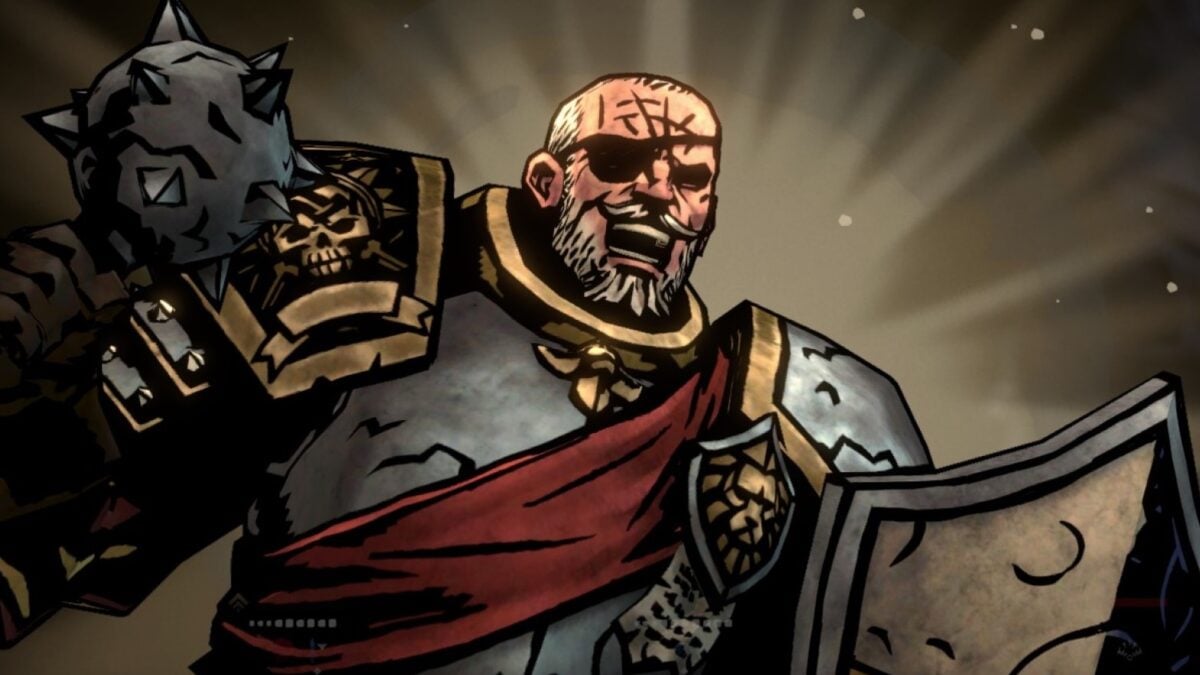
There’s no separating Wayne June from Darkest Dungeon. Like Logan Cunningham’s work as the narrator in Supergiant Games’ Bastion, every narrow victory and heart-wrenching defeat in Red Hook Studios’ dark fantasy dungeon crawler is punctuated by June’s grim, unwaveringly sorrow-filled voice. He passed away in January 2025, and director Chris Bourassa recently confirmed he would never use generative AI to try to resurrect his ghost.
“In one of his last emails to me, Wayne gave us permission to train an AI on his voice, something he’d staunchly opposed prior to the end,” Bourassa wrote on the Darkest Dungeon subreddit this week in response to fans discussing how a potential Darkest Dungeon 3 might handle the deceased actor’s one-of-a-kind talents. “We’d never asked to do it. I think he was trying to put the game/team/fans first – offer us a ‘way forward’. I declined, and we donated to his family anyway.”
Cyberpunk 2077 used generative AI to mimic the voice of the actor who played Viktor Vektor in the Polish-language version of the game after he died of cancer in 2021. “Do not f*cking do that,” Deus Ex voice actor Elias Toufexis said when a modder tried to swap his voice into CD Projekt Red’s sci-fi RPG using AI. Epic Games even used it to have James Earl Jones bark at players in Fortnite as Darth Vader. Red Hook Studios is drawing a line where others haven’t.
“I would never, ever erode his incredible and timeless performances by teaching a machine to sound like him,” Bourassa wrote. “His voice and delivery was *human, and I’m forever grateful I got to write for him.”
June’s voice is especially affecting in Darkest Dungeon 2, where a roguelike adventure structure provides more space for dramatic storytelling and ambient tension. “Wayne’s singular baritone and masterful cadence elevated everything he read. He was a consummate professional, and his love of his craft was an inspiration,” Bourassa said when he passed. “His inimitable work is woven into the very fabric of our industry in a way that cannot be forgotten.”

Facts Only

* Wayne June passed away in January 2025.
* Director Chris Bourassa confirmed that Red Hook Studios would not use generative AI to resurrect Wayne June’s voice.
* Wayne June provided permission in a last email to train an AI on his voice, which Bourassa declined.
* The decision was made to prioritize the game, team, and fans over the AI training request.
* The voice of Wayne June is featured in *Darkest Dungeon 2*.
* The article references instances where generative AI was used to mimic deceased actors, such as in *Cyberpunk 2077* and *Fortnite*.
* Deus Ex voice actor Elias Toufexis objected to the use of AI to swap his voice into CD Projekt Red’s game.
* Epic Games used generative AI to have James Earl Jones bark at players in *Fortnite*.
* Red Hook Studios is described as drawing a line regarding the use of AI.

Executive Summary

The posthumous use of Wayne June’s voice in game media, specifically *Darkest Dungeon*, sparked an ethical debate regarding generative AI and artistic legacy. Director Chris Bourassa confirmed that Red Hook Studios declined to train an AI on June’s voice, despite a request from June’s estate, citing a desire to prioritize the game, team, and fans. This decision was framed by Bourassa as protecting the "human" nature of June’s performances, which he regards as an inspiration. The situation draws parallels to other industry concerns, such as cases involving other voice actors where generative AI has been used to mimic deceased performers, including in *Cyberpunk 2077* and *Fortnite*. The discussion centers on drawing boundaries concerning the use of AI to replicate an inimitable talent and the respect owed to the creative work and the deceased artist’s influence.

Full Take

The tension presented here is not merely about artistic ownership but about the ontological status of performance and the definition of human contribution in the digital age. The conflict revolves around the boundary between utilizing a performance as data and respecting the integrity of the performer's legacy. The refusal by Red Hook Studios to engage with the AI voice training stems from a principle that the voice and delivery were "human," and this distinction is framed as an inherent, irreplaceable element of artistic value, rather than a mere asset to be replicated. This raises critical questions about who controls the digital ghost of a creator and whether mimicking voice crosses the line into eroding the authenticity of historical artistic output. The parallel examples of AI voice mimicry in other media—from sci-fi RPGs to competitive gaming—suggest a systemic trend where technological capability outpaces established ethical and professional boundaries. The implicit pattern is that the cost of technological advancement is often absorbed by the artist’s posthumous influence, which may dilute the agency of the living, regardless of the intent of the creator or the legal framework. The challenge is to establish a framework for digital rights that recognizes the uniqueness of human performance and prevents the commodification of memory into synthetic reality.

Sentinel — Human

Confidence

The text displays strong human journalistic characteristics through specific attribution and the focused presentation of a complex ethical conflict regarding digital legacy and artistic ownership.

Signals Detected
low severity: Natural variance in sentence structure and emotional cadence.
low severity: Strong emotional focus derived from specific quotes; balanced presentation of conflicting viewpoints (director vs. modder vs. deceased's wishes).
low severity: The text relies on direct, attributed quotes and specific incidents (Darkest Dungeon, Cyberpunk 2077, Fortnite) which anchor the narrative in verifiable, real-world events.
low severity: No obvious LLM confabulation or generic phrasing; the specific details and ethical tensions feel organically derived from reporting on an industry debate.
Human Indicators
The text successfully integrates specific, highly contextualized quotes from named individuals (Bourassa, Toufexis) and specific video game titles, indicating deep domain knowledge or careful sourcing.
The narrative structure is driven by an ethical conflict, characteristic of human-focused journalism addressing public interest debates, rather than abstract synthesis.