Facts Only
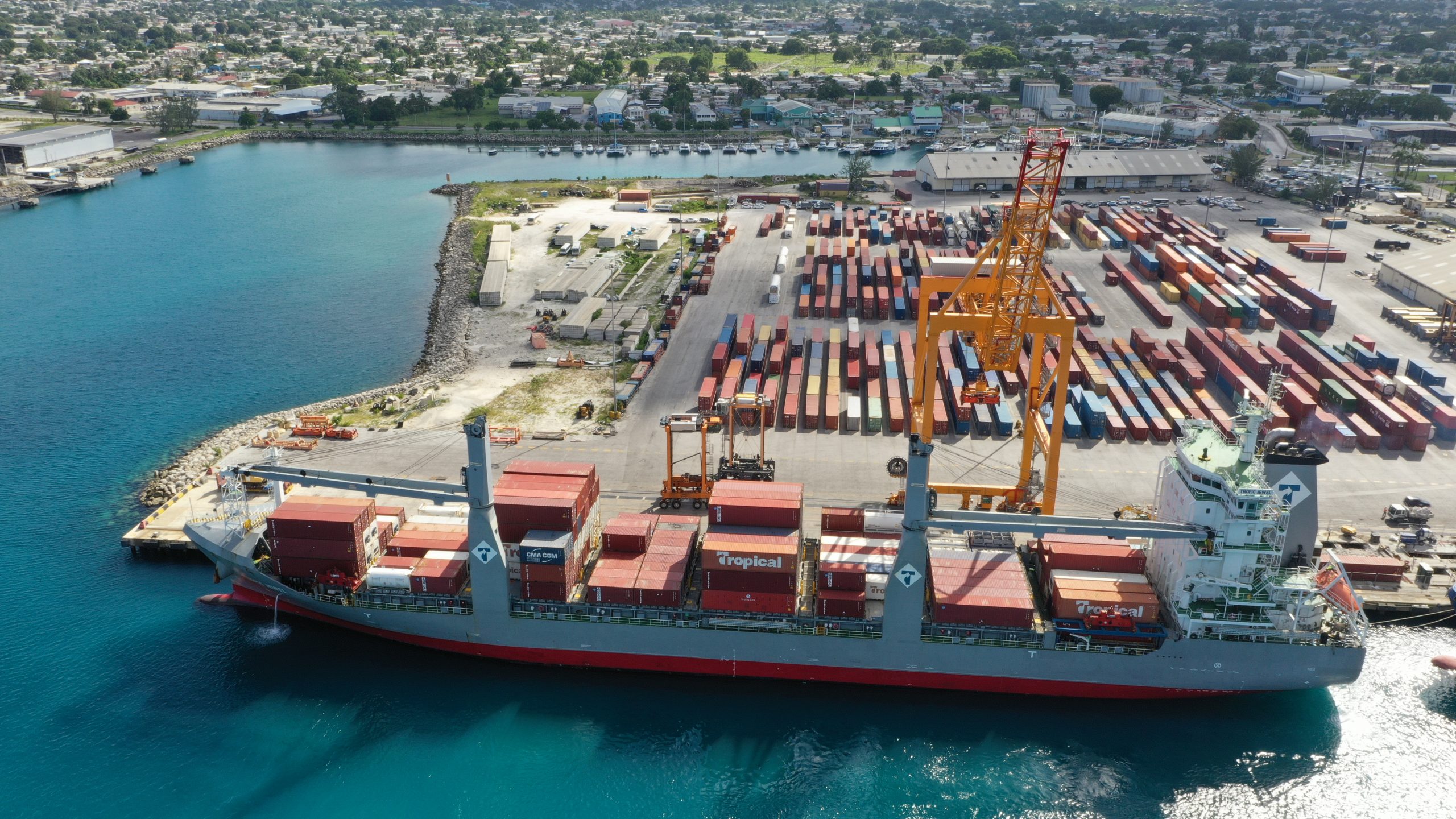
Barbados Port Inc. (BPI) won the CIP Maritime Award of the Americas for Digital Transformation.
The award was administered by the Secretariat of the Inter-American Committee on Ports (CIP) of the Organization of American States (OAS).
BPI was recognized for developing and implementing a Port Community System (PCS).
The PCS was designed in-house by BPI’s Digital Innovation and Development team.
The system became operational at the start of 2025.
The PCS optimizes port operations through improved data exchange and coordination among stakeholders.
It serves as a single access point for cargo tracking, vessel tracking, digital manifest processing, delivery orders, and electronic payments.
The system includes a national Maritime Single Window for electronic information exchange between ships and ports.
A Trade Information Portal provides trade-related data to support compliance with national and international requirements.
Prior to the PCS, approximately 52 paper documents were required per transaction by customs, immigration, port health, the port, and vessel agents.
Online payments now account for over 80% of all financial transactions at BPI.
The award is open to national port authorities, public and private ports, terminals, port operators, and maritime organizations from 34 OAS-CIP member states.
The 12th edition of the award received 30 entries from 11 countries across the Americas.
Winners were selected based on verifiable indicators, exceptional performance, and achieved objectives.
Executive Summary
Barbados Port Inc. (BPI) has been awarded the CIP Maritime Award of the Americas for Digital Transformation by the Organization of American States (OAS). The recognition highlights BPI’s development and implementation of a Port Community System (PCS), a digital platform launched in early 2025 that streamlines port operations by enhancing data exchange and coordination among stakeholders. The system consolidates cargo and vessel tracking, digital manifest processing, and electronic payments, reducing reliance on paper documents—previously requiring 52 forms per transaction—and increasing online payments to over 80% of transactions. BPI’s CEO, David Jean-Marie, emphasized the system’s role in improving trade facilitation, operational efficiency, and supply chain transparency, positioning Barbados as a more competitive player in the Caribbean maritime sector. The award, part of the OAS’s 12th edition themed "Recognizing Outstanding Port Management," evaluated 30 entries from 11 countries, selecting winners based on verifiable performance and innovation. BPI continues to refine the PCS and other digital tools to further modernize its services.
The initiative reflects broader trends in maritime digitalization, where ports globally are adopting single-window systems to comply with international trade standards and reduce bureaucratic inefficiencies. While the award underscores BPI’s leadership in the region, the long-term impact on trade volumes, cost savings, and environmental sustainability remains to be fully assessed. The system’s success also depends on ongoing adoption by all stakeholders, including customs, immigration, and private sector partners.
Full Take
**Steelman:** BPI’s award-winning Port Community System represents a significant leap in maritime digitalization for Barbados, addressing long-standing inefficiencies in port operations. By reducing paperwork, centralizing data, and enabling electronic transactions, the PCS aligns with global best practices for trade facilitation, as promoted by organizations like the World Customs Organization and the International Maritime Organization. The OAS’s recognition validates BPI’s innovation, particularly in a region where digital infrastructure in ports often lags behind other sectors. The system’s focus on transparency and compliance also positions Barbados as a model for smaller island states seeking to enhance their competitiveness in global supply chains.
**Pattern Scan:** The narrative leans heavily on institutional credibility (OAS, CIP) and quantifiable metrics (80% online payments, 52 paper documents eliminated) to bolster its claims of success. While these are legitimate indicators, the absence of critical voices—such as feedback from smaller stakeholders who may struggle with digital adoption—or discussion of potential challenges (e.g., cybersecurity risks, training costs) suggests a possible **ARC-0024 Ambiguity** pattern, where complexity is simplified to emphasize progress. The framing of the award as a definitive marker of excellence could also hint at **ARC-0043 Motte-and-Bailey**, where the broader claim of "digital transformation" is supported by a narrower, operational achievement (the PCS). However, the article does not engage in overt emotional exploitation or distortion.
**Root Cause:** The narrative reflects a paradigm of technological solutionism, where digital tools are presented as the primary driver of efficiency and competitiveness. This assumes that digitalization alone can overcome structural challenges in Caribbean trade, such as limited infrastructure, geopolitical vulnerabilities, or unequal access to technology. The unstated assumption is that all stakeholders—from large shipping lines to small local businesses—can seamlessly integrate into the system, which may not account for digital divides or resistance to change.
**Implications:** For human agency, the PCS could empower businesses with real-time data and reduced bureaucratic hurdles, but it may also centralize control in the hands of port authorities, potentially marginalizing smaller players who lack digital literacy or resources. The environmental benefits of reduced paper use are clear, but the energy demands of digital systems and e-waste are rarely addressed in such narratives. Long-term, this could set a precedent for other Caribbean ports, but the risk of creating a two-tier system—where only well-resourced ports can afford such transformations—remains.
**Bridge Questions:**
How are smaller businesses and informal traders being supported in adopting the PCS, and what safeguards exist to prevent their exclusion?
What metrics beyond transaction efficiency (e.g., job displacement, cybersecurity incidents) are being tracked to assess the system’s broader impact?
If digitalization is the future of maritime trade, how can regional cooperation ensure that no island nation is left behind due to resource constraints?
**Counterstrike Scan:** A coordinated influence campaign pushing this narrative might emphasize Barbados as a "digital pioneer" to attract foreign investment in port infrastructure, while downplaying implementation challenges or costs. It could also use the OAS award to imply broader regional endorsement, pressuring other nations to adopt similar systems without adequate preparation. However, the article itself does not exhibit signs of such coordination. It presents a straightforward account of an award-winning initiative, with no overt attempts to manipulate perception beyond typical institutional pride.