Did you know that Truthout is a nonprofit and independently funded by readers like you? If you value what we do, please support our work with a donation.
Israeli officials are reportedly urging the U.S. to join them in their public urging of Iranians to stage an uprising against their government, even as the Israeli government internally assesses that protesters would be “slaughtered” if they did so, demonstrating Israel’s blasé attitude toward Iranian lives amid its bombardments of the country.
According to reporting by The Washington Post published Tuesday, top Israeli officials relayed the message to U.S. diplomats in a cable that circulated in the U.S. embassy in Jerusalem on Friday. The cable said that Israeli officials assess that the Iranian government is “not cracking” and will “fight to the end” — despite hopes by U.S. and Israeli officials that they could “decapitate” the government and achieve collapse.
The cable further said that if Iranians were to stage more protests against their government, as they did in demonstrations earlier this year, “the people will get slaughtered,” Israeli officials said. According to UN Special Rapporteur on Iran Mai Sato, around 5,000 people were killed in the government crackdown on protests as of January, though it has been difficult to assess the precise number of deaths due to biases on all sides.
The cable, which summarized recent meetings by top Israeli officials and U.S. officials, said that nonetheless, Israeli officials are hoping for a revolt and that the U.S. should support such an uprising as well.
Critics have said that the cable demonstrates Israeli officials’ indifference toward whether civilians live or die, after years of Israel wantonly slaughtering civilians in Palestine and countries across the Middle East.
“This should not surprise anyone,” said Trita Parsi, executive vice president for the Quincy Institute, in a post on social media. “That the Israelis would use the Iranian people as cannon fodder in their war with the Islamic Republic was crystal clear to anyone who had followed the Israeli-Iranian rivalry in a clear-eyed way. Nor can anyone reasonably expect that Israel would act in the best interest of the Iranian people. Israel pursues its own interests, full stop.”
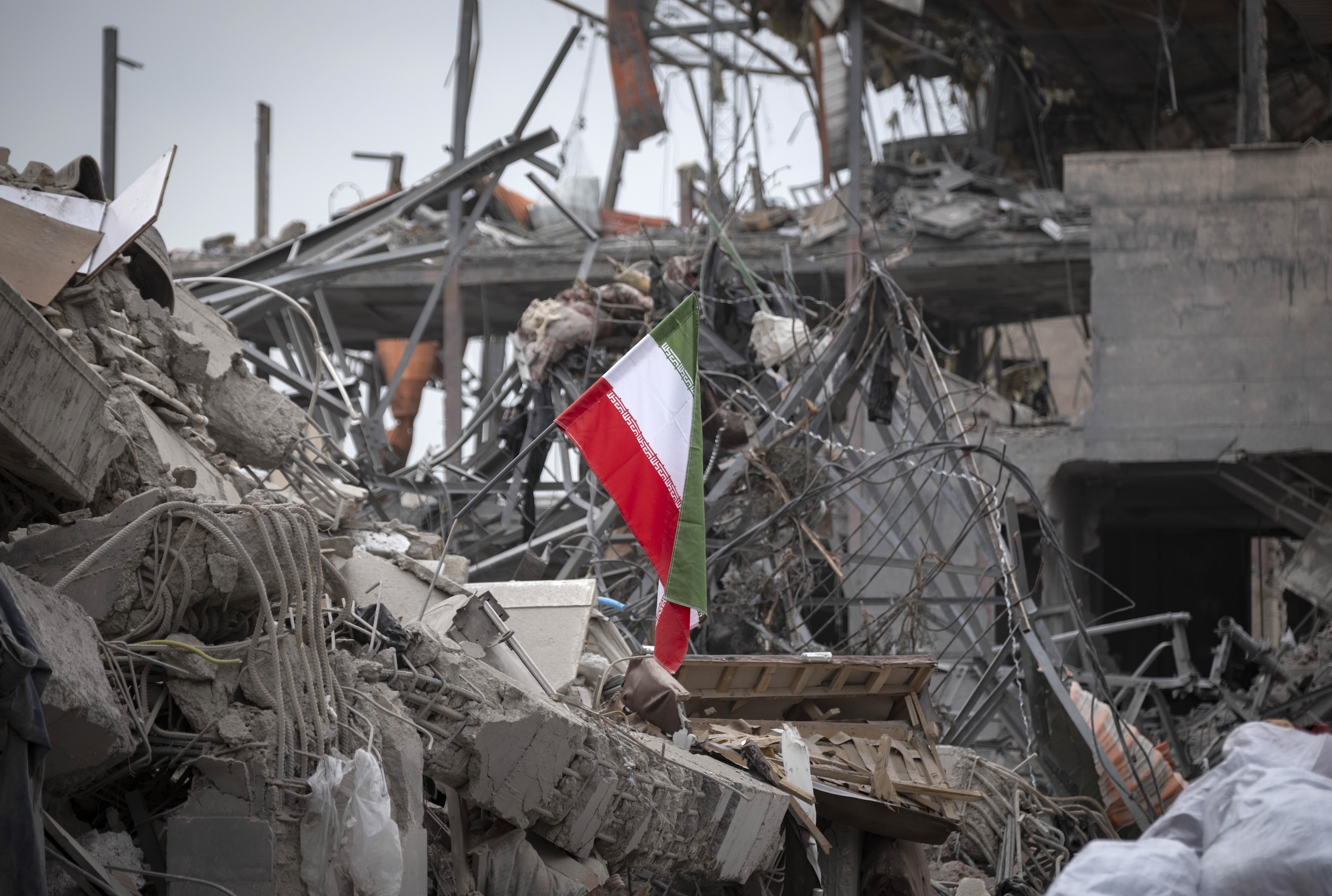
On the first day of the U.S. and Israel’s bombardments on February 28, U.S. President Donald Trump and Israeli Prime Minister Benjamin Netanyahu both put out video addresses urging the Iranian people to take up arms against their government as they rained death and destruction from the sky. Since then, the U.S. and Israel’s bombardments have killed over 1,400 people in Iran and injured at least 18,500, according to Iranian health officials. Israeli intelligence and military officials have long urged Iranians to protest against their government, and the U.S. has meddled in Iranian politics for decades.
“I think a lot of people will feel very betrayed by this assessment,” Iran analyst and Johns Hopkins University assistant professor Narges Bajoli told The Washington Post, saying that it would be viewed as exploiting Iranian lives for political gain.
An urgent appeal for your support: 9 Days to raise $50,000
Truthout relies on individual donations to publish independent journalism, free from political and corporate influence. In fact, we’re almost entirely funded by readers like you.
Unfortunately, donations are down. At a moment when independent journalism is urgently needed, we are struggling to meet our operational costs due to increasing political censorship.
Truthout may end this month in the red without additional help, so we’ve launched a fundraiser. We have 9 days to hit our $50,000 goal. Please make a tax-deductible one-time or monthly donation if you can.
Facts Only
* Israeli officials urged the U.S. to encourage Iranian protests.
* U.S. diplomats relayed this message via a cable to the U.S. embassy in Jerusalem.
* Israeli officials assessed Iranian government resistance to protests.
* Israeli officials predicted a “slaughtered” outcome for protesters.
* UN Special Rapporteur Mai Sato reported approximately 5,000 deaths in the Iranian government crackdown.
* U.S. and Israeli bombardments have killed over 1,400 people in Iran.
* U.S. President Trump and Israeli Prime Minister Netanyahu called for Iranian uprising.
* Iranian health officials report at least 18,500 injuries.
* Israeli intelligence officials have long urged Iranian protests.
* The cable summarized meetings between Israeli and U.S. officials.
* Critics accuse Israeli officials of indifference to civilian lives.
Executive Summary
Full Take
The article presents a chillingly pragmatic, and potentially morally bankrupt, assessment of the Iranian situation, revealing a strategic calculus prioritizing Israeli interests over Iranian lives. The “steelman” version of the Israeli argument is that the Iranian government is a deeply entrenched, reactive force, and that inviting a mass uprising – as the U.S. has seemingly done – would be a catastrophic blunder leading to immense loss of life. This immediately triggers the ARC-0043 Motte-and-Bailey pattern, where the Israelis are presenting a seemingly candid assessment while simultaneously obscuring the underlying motivation: to maintain the status quo and, arguably, to escalate the conflict. The parallel actions – the U.S. call for an uprising alongside the devastating bombardments – strongly suggests a coordinated, cynical attempt to destabilize Iran.
The pattern of “systemic” manipulation is also evident, echoing decades of U.S. intervention in the Middle East, often framed as “liberation” but ultimately serving U.S. geopolitical goals. The fact that Iranian analysts perceive this as “exploiting Iranian lives for political gain” highlights the fundamental asymmetry of power and the risk of this dynamic reinforcing a cycle of violence. The core paradigm here is one of zero-sum thinking – a belief that Iran's fate is entirely determined by the actions of external powers, neglecting the agency and resilience of the Iranian people. The implications are significant; this narrative risks legitimizing aggressive military action, blurring the lines of responsibility for civilian casualties, and further entrenching a dangerous cycle of escalation.
Furthermore, the framing around “urging” a revolt carries a strong echo of the ARC-0024 Ambiguity pattern, deliberately obfuscating the true intent of the U.S. and Israeli actors – a desire to create chaos and potentially open a wider front in the conflict. The question that arises is: who benefits from a decimated Iranian state? Looking deeper, the historical context of Israel’s actions in Palestine and across the Middle East provides a crucial lens through which to understand this exchange – a consistent pattern of prioritizing security concerns over human rights.
Sentinel — Likely Human
This article presents a detailed account of the Israeli government’s urging of Iranians to revolt, alongside related perspectives and a fundraising appeal from Truthout. The analysis suggests a high likelihood of human authorship, primarily due to the formulaic argumentation and reliance on frequently used transitional phrases, although the inclusion of specific quotes mitigates concerns.