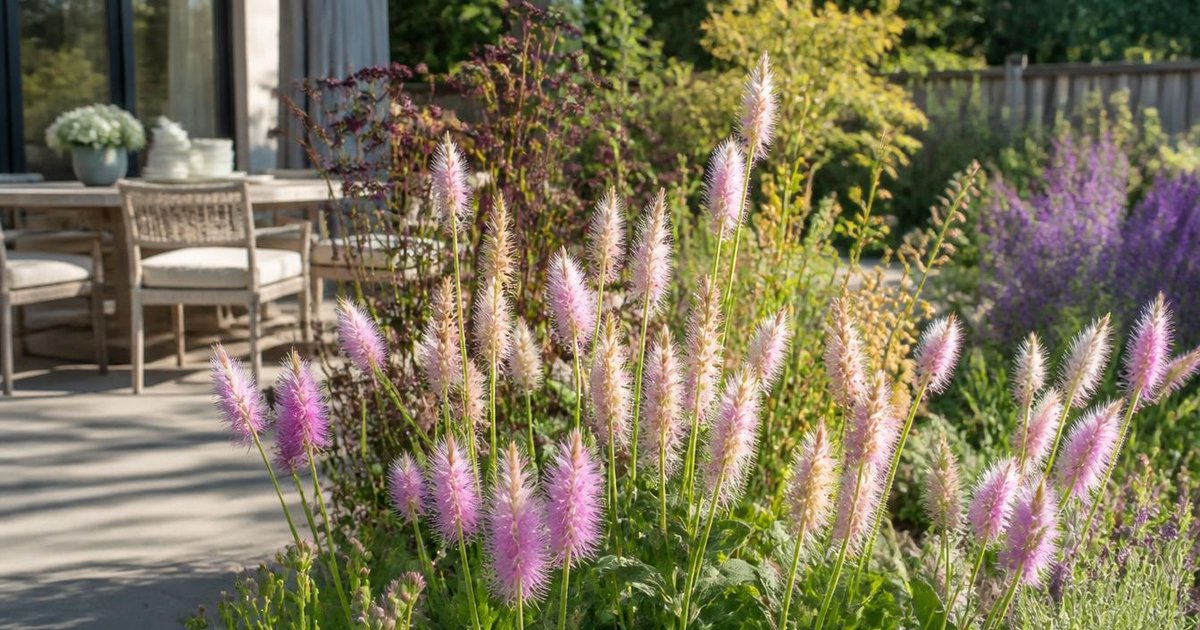
Ptilotus, often sold under the name Pink Mulla Mulla, is one of the more unusual and eye-catching annuals available to modern gardeners. With its soft, silvery foliage and fluffy, bottlebrush-like flower spikes, it brings a sculptural, almost otherworldly texture to summer containers and dry gardens. In Fort Collins and across the Front Range, it fits surprisingly well into the aesthetic of bright sun, low humidity, and water-conscious planting design.
For gardeners looking to step slightly outside the familiar palette of petunias and marigolds, ptilotus offers something different: texture first, color second, and long-lasting structural interest throughout the warm season.
At [Plantorium.com](https://plantorium.com?utm_source=chatgpt.com ptilotus is increasingly valued as a specialty annual for modern containers, drought-tolerant designs, and high-contrast mixed plantings.
Why Ptilotus Performs Well in Northern Colorado
Native to Australia’s arid regions, ptilotus is naturally adapted to heat, sun, and low-water environments. That makes it a strong match for Colorado’s Front Range climate, where bright light and dry air dominate the summer season.
It performs well because:
- It thrives in intense sunlight
- It tolerates heat exceptionally well
- It prefers dry, well-drained conditions
- It maintains structure in low humidity
The most distinctive feature of ptilotus is its soft, feathery flower spikes, which range from pale pink to deeper rose tones depending on variety. These blooms sit above silvery-green foliage, creating a layered, textural effect that feels almost like a living sculpture.
When to Plant Ptilotus in Fort Collins
Ptilotus is highly sensitive to cold and should be planted only after the last frost has passed.
In Fort Collins and surrounding areas, this typically means mid-May or later, once nighttime temperatures are reliably warm.
Because it prefers warm soil, ptilotus often establishes slowly at first, then accelerates growth as summer heat increases.
Sunlight Requirements
Full sun is essential for strong growth and flowering.
In Northern Colorado, provide:
- At least 6–8 hours of direct sun daily
- Open, unshaded exposure
- Excellent airflow around the plant
In shaded conditions, ptilotus tends to become weak and may produce fewer of its signature flower spikes.
In full Front Range sun, however, it develops strong stems and continuous flowering through the heat of summer.
Soil and Growing Conditions
Ptilotus prefers lean, very well-draining soil.
It performs best in:
- Sandy or gritty potting mixes
- Raised beds with excellent drainage
- Containers designed for drought-tolerant plantings
- Rock garden-style environments
Heavy or overly rich soil should be avoided, as it can reduce vigor and increase the risk of root issues.
This is a plant that prefers “less is more” when it comes to soil fertility.
Watering in a Dry Climate
Once established, ptilotus is quite drought tolerant, making it well suited to Colorado’s dry summer conditions.
Watering guidelines:
- Water deeply but infrequently
- Allow soil to dry between waterings
- Avoid consistently wet conditions
- Reduce watering in cooler weather periods
In containers, some additional monitoring may be needed during hot, windy stretches, but overall water demand remains moderate.
Fertilizing for Best Form
Ptilotus does not require heavy feeding.
A light application of balanced fertilizer at planting time is usually sufficient. Excess fertilizer can lead to overly soft growth and reduced flowering quality.
In many cases, leaner conditions actually improve the plant’s structural form and overall appearance.
Garden Role and Design Use
Ptilotus is primarily used as a texture and focal accent plant rather than a mass bedding flower.
It works especially well in:
- Modern container designs
- Drought-tolerant patio planters
- Rock gardens and xeriscapes
- Architectural garden compositions
- Mixed plantings as a vertical accent
In Fort Collins landscapes, it pairs particularly well with both bold flowering annuals and fine-textured grasses, where its unusual flower spikes create contrast and visual interest.
Handling Colorado Weather
Ptilotus is well adapted to heat and sun, making it a strong performer during peak summer conditions along the Front Range.
It handles:
- Intense sunlight
- High heat
- Dry air and wind
- Low-water environments
It is sensitive to:
- Frost (not cold hardy)
- Poor drainage
- Overwatering
Once summer is established, it tends to maintain steady performance with minimal intervention.
Companion Planting
Ptilotus works best when paired with plants that highlight its soft, sculptural texture.
Excellent companions include:
- Portulaca
- Calibrachoa
- Verbena
- Eucalyptus
- Ornamental grasses
- Angelonia
- Succulent-style annuals
Its muted tones and airy flower spikes make it especially effective as a contrast plant in vibrant mixed containers.
A Modern Accent for Contemporary Gardens
Ptilotus represents a newer direction in annual gardening—less focused on dense color and more focused on texture, form, and movement. In Fort Collins and across the Front Range, it offers gardeners a way to introduce something unexpected into summer plantings without sacrificing performance.
It is subtle but striking, restrained but distinctive, and exceptionally well suited to Colorado’s bright, dry summer climate.
For gardeners building modern, water-wise, and design-forward containers, ptilotus is one of the most compelling specialty annuals available.
Explore seasonal availability and additional annuals at [Plantorium.com’s full plant catalog](https://plantorium.com/all-plants/?utm_source=chatgpt.com
Facts Only
Ptilotus, also called *Pink Mulla Mulla*, is an annual plant with silvery foliage and feathery flower spikes.
It is native to Australia’s arid regions and adapted to heat, sun, and low-water environments.
In Fort Collins and the Front Range, it is planted after the last frost, typically mid-May or later.
It requires full sun (6–8 hours daily) and well-draining, lean soil.
Ptilotus is drought-tolerant once established and prefers infrequent, deep watering.
It is sensitive to frost, poor drainage, and overwatering.
The plant is used as a textural accent in modern containers, rock gardens, and mixed plantings.
It pairs well with plants like portulaca, calibrachoa, verbena, and ornamental grasses.
Ptilotus is sold as a specialty annual for drought-tolerant and high-contrast garden designs.
It is available through retailers like Plantorium.com.
The plant’s growth accelerates in summer heat after slow initial establishment.
It is not cold-hardy and performs poorly in shaded or overly rich soil conditions.
Executive Summary
Ptilotus, commonly known as *Pink Mulla Mulla*, is an annual plant valued for its distinctive silvery foliage and feathery, bottlebrush-like flower spikes. Native to Australia’s arid regions, it thrives in hot, dry, and sunny conditions, making it well-suited for Northern Colorado’s Front Range climate. Gardeners in Fort Collins and similar areas can plant it after the last frost, typically mid-May or later, as it is cold-sensitive. It requires full sun (6–8 hours daily), well-draining soil, and minimal watering once established, aligning with drought-tolerant landscaping trends. Ptilotus is often used as a textural accent in modern containers, rock gardens, and mixed plantings, pairing well with bold annuals and fine grasses. While it performs exceptionally in heat and low humidity, it struggles with frost, poor drainage, and overwatering. Its subtle yet striking appearance offers an alternative to traditional bedding plants, emphasizing form and movement over dense color.
The plant’s growing conditions and design versatility make it a compelling choice for water-conscious gardeners seeking unique, low-maintenance options. Its adaptability to Colorado’s climate and aesthetic appeal in contemporary garden designs position it as a specialty annual gaining popularity among those prioritizing both sustainability and visual interest.
Full Take
This piece presents Ptilotus as a novel, climate-adapted plant for Northern Colorado gardeners, emphasizing its aesthetic and practical benefits. The strongest version of this narrative highlights its drought tolerance, structural appeal, and suitability for modern, water-wise landscapes—qualities that align with regional gardening trends. However, the framing leans heavily into its "unusual" and "otherworldly" attributes, which may subtly position it as a niche or elite choice rather than a mainstream option. The focus on texture over color could reflect broader shifts in gardening aesthetics, but it also risks dismissing traditional preferences without addressing potential trade-offs (e.g., lower floral density).
Patterns detected: none
The underlying paradigm here is the promotion of sustainable, design-forward gardening—an admirable goal, but one that assumes readers prioritize form and water conservation over other factors like pollinator support or cost. The article doesn’t explore whether Ptilotus offers ecological benefits beyond its visual and drought-resistant qualities, nor does it compare its performance to native alternatives. This omission could reinforce a consumerist approach to "specialty" plants rather than encouraging deeper ecological stewardship.
For gardeners, the implications are clear: Ptilotus offers a stylish, low-maintenance option for dry climates. But what’s missing? How does its cultivation impact local ecosystems compared to native species? Could its popularity displace more ecologically beneficial plants? And for those without design-focused gardens, does its appeal translate beyond aesthetics?
If this were part of a coordinated campaign, the playbook might involve positioning exotic, drought-tolerant plants as superior to natives to drive sales of specialty annuals. However, the content here doesn’t exhibit manipulative framing—it’s a straightforward endorsement of a plant’s suitability for a specific climate and aesthetic. The alignment with water-wise gardening is genuine, though the lack of ecological context is a notable gap.
Sentinel — Likely Human
The article is highly structured and professionally written, exhibiting the smooth, predictable rhythm and formulaic arrangement typical of advanced large language model generation, focused on optimizing a topic for specific market segments.