Israel’s avowed goal in the Middle East war is to prevent Iran from acquiring nuclear weapons. Yet, the double standard associated with this is hardly sustainable in the long run.
The worst-kept secret in the world of nuclear politics is that Israel possesses a formidable arsenal of nuclear weapons. It began developing these in the 1950s and reached a fully operational capability by the late 1960s.
Although Israel refuses to confirm or deny this fact, arms control organisations have assessed that the country has some 80–90 nuclear weapons.
In recent days, Iran targeted Israel’s nuclear facility in the southern town of Dimona, injuring more than 100 people. The head of the International Atomic Energy Agency (IAEA) called for restraint to avoid a “nuclear accident”.
A program shrouded in secrecy
There is much evidence to support the existence of Israel’s arsenal.
In 1963, then-Deputy Defence Minister Shimon Peres famously stated Israel would not be the first to “introduce” nuclear weapons to the Middle East. What this actually meant was spelled out a few years later by the Israeli ambassador to the US. For a weapon to be “introduced”, he said, it needed to be tested and publicly declared. Merely possessing them did not constitute introducing them.
Several whistleblower accounts, intelligence reports and satellite imagery confirm the extent of the Israeli program and its capabilities.
More recently, Amichai Eliyahu, a far-right minister in Prime Minister Benjamin Netanyahu’s government, alluded to using nuclear weapons in Gaza – a tacit acknowledgement of Israel’s capabilities. He was later reprimanded by Netanyahu.
And in 2024, Avigdor Lieberman, a former defence and foreign minister, threatened to “use all the means at our disposal” to prevent an Iranian nuclear weapon. He added: “It should be clear at this stage it is not possible to prevent nuclear weapons from Iran by conventional means.”
It is important to remember that Israel not only developed its nuclear weapons in secret – employing subterfuge, misleading claims, and even the suspected theft of bomb-grade nuclear material from the United States – it has also rejected international inspections of its facilities and refused to join the nuclear Non-Proliferation Treaty (NPT). This treaty has been signed by almost every state in the world.
Concerns over Iran’s program
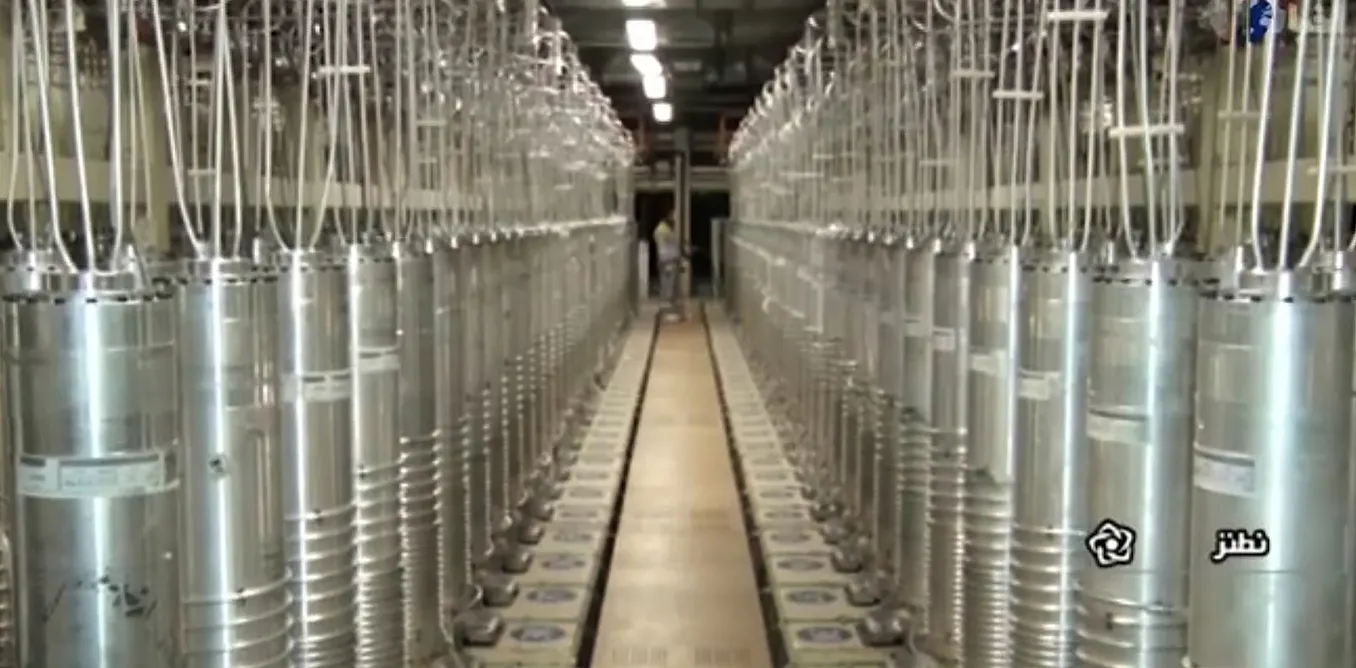
Iran, meanwhile, has never had a nuclear weapon, though its program has been the source of international concern for more than a decade.
In 2015, Iran signed the Joint Comprehensive Plan of Action (also known as the Iran nuclear deal) with the US, Russia, China, France, the United Kingdom and Germany, which imposed restrictions on its nuclear program in return for sanctions relief. This included inspections by IAEA monitors.
However, Trump scuppered the plan in 2018. Since then, Iran has enriched uranium to levels well above those needed for its energy program. And last year, the IAEA said Iran was non-compliant with its nuclear nonproliferation obligations for failing to provide full answers about its program.
But since the current war began, US and international officials have confirmed that Iran was not close to developing a nuclear weapon and did not pose an imminent nuclear threat to the US or Israel.
In short, there is no truth to the claim, made for almost 40 years by Israel, that Iran is “weeks away” from acquiring the bomb. The IAEA made clear two years ago that a nuclear weapon requires “many other things independently from the production of the fissile material”.
Getting close to nuclear threshold status, but stopping short of developing an actual bomb, likely provides a fall-back position for Iran. If Iran were to feel pushed or threatened, it could, in time, accelerate its energy program towards a weapons program. Or it could use this enriched uranium as leverage in negotiations with the US.
Nuclear powers need to show restraint
This brings us back to a major question: can double standards about who can and cannot develop a nuclear weapon be sustained indefinitely?
Israel’s nuclear arsenal has been tacitly accepted by the West, implying there are “right hands” and “wrong hands” for nuclear weapons. But this is a risky and ultimately unsustainable position.
As Australia’s Canberra Commission noted in 1996, as long as any one state has nuclear weapons, other states will want them, too.
This is precisely why many states voted in 2017 to adopt the UN Treaty on the Prohibition of Nuclear Weapons. The treaty’s purpose is to make the possession, threat and use of nuclear weapons illegitimate for all states, not just for some, on the basis of international humanitarian law.
Signed by 99 states so far, the treaty recognises that nuclear weapons promise massive destruction to civilians and combatants alike, and that even a “small” nuclear war will cause catastrophic damage.
At the end of the day, a consistent approach to nuclear weapons is more likely to prevent nuclear proliferation (by Iran or other states) than the current mess, where some states are tacitly permitted to have these weapons (and wage war on others), while other countries are not.
It is possible we are at a tipping point when it comes to nuclear proliferation, with some countries suspected of wanting to develop nuclear weapon capabilities. This includes US allies South Korea and Japan.
Are the nuclear weapons states ultimately willing to accept the UN Treaty on the Prohibition of Nuclear Weapons and disarm in the interest of global peace and security? If they don’t, then the current trajectory of keeping one’s own nuclear weapons and waging war against states that don’t have them will only weaken an already crumbling rules-based international order.
Facts Only
Israel is widely believed to have 80-90 nuclear weapons.
Iran targeted Israel's nuclear facility in Dimona, causing over 100 injuries.
Israel developed its nuclear weapons secretly and has rejected international inspections of its facilities.
Iran signed the Joint Comprehensive Plan of Action in 2015 but has since enriched uranium to levels above those needed for its energy program, leading to concerns about its nuclear intentions.
The UN Treaty on the Prohibition of Nuclear Weapons aims to make the possession, threat, and use of nuclear weapons illegitimate for all states.
Executive Summary
Full Take
By highlighting Israel's secretive and questionable methods in developing its nuclear arsenal, while condemning Iran's program, the article raises concerns about double standards in nuclear politics. The article also points out that the UN Treaty on the Prohibition of Nuclear Weapons seeks to eliminate these discrepancies by making nuclear weapons illegal for all states. However, it remains to be seen whether the nuclear powers are willing to disarm in the interest of global peace and security as per the treaty. The article ends with a question about the future trajectory of nuclear proliferation and the potential consequences for the rules-based international order.
Patterns detected: ARC-0024 Ambiguity (The phrase "weeks away" from acquiring the bomb has been used for almost 40 years by Israel, but the IAEA made clear two years ago that a nuclear weapon requires "many other things independently from the production of the fissile material").
Sentinel — Human
The analysis suggests that the article is likely human-written, as it presents a clear argumentative structure, includes personal voices, and references specific events and sources.