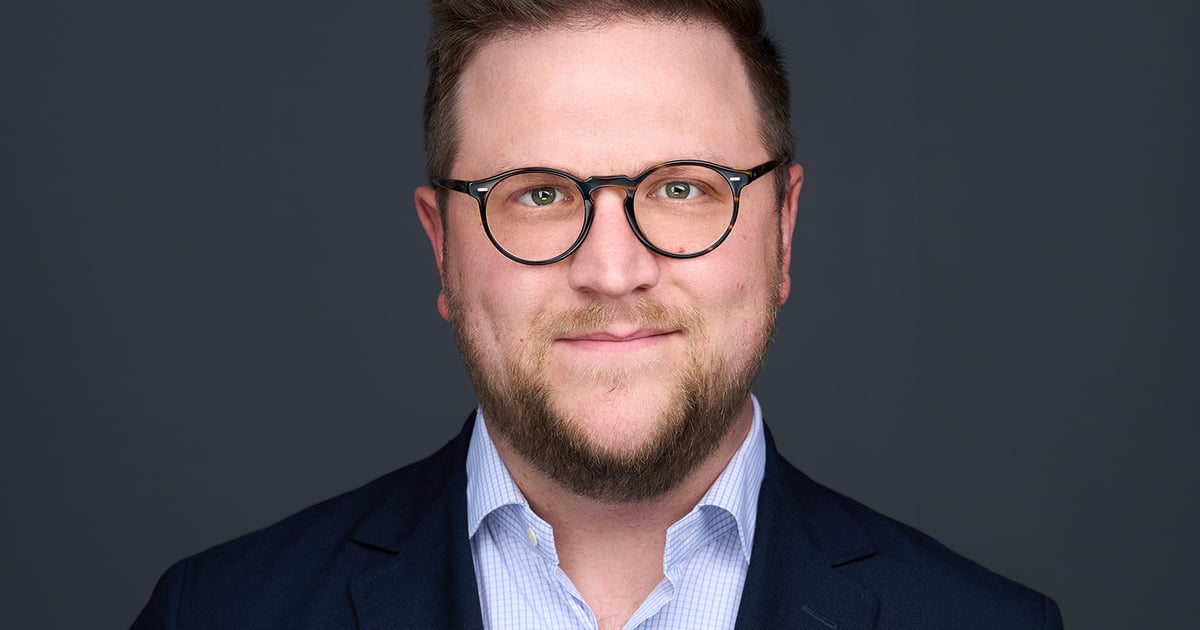
CIO Timothy Chubb lays out the firm’s investment philosophy, from exposure to international equities to extreme caution on evergreen funds.
Girard, a Univest Wealth Division, got its start over 30 years ago as Girard Partners, Ltd, a King of Prussia, Pa.-based RIA. After amassing $500 million in AUM over two decades, it caught the eye of Univest Bank executives, who bought it in 2014. As of year-end 2025, the firm, which had since rebranded as Girard, a Univest Wealth Division, had $5.9 billion in AUM, with $2.8 billion from Girard Advisory Services, its private client division. While Girard Advisory Services has some mass-affluent clients, the bulk of its clientele falls into the high-net-worth category, with net worth ranging from $2 million to $10 million, according to Timothy Chubb, the firm’s CIO.
Wealth Management recently spoke with Chubb about what his investment team prioritizes in client portfolios, why he’s a skeptic about allocations to crypto and evergreen funds, and what worries him at this point in the market cycle.
This Q&A has been edited for length, style and clarity.
Wealth Management: Can you describe your firm’s typical wealth management client?
Timothy Chubb: We manage a wide range of clients, from the $250,000-range mass affluent client to the $250 million-range, and everything in between. A good 30% to 35% of our business is with institutional and non-profit foundations. But on the private wealth side, our bread-and-butter is somewhere in that $2 million to $5 million range.
WM: What’s your overarching investment philosophy? What do you focus on in your investment decisions?
TC: For most of our relationships, we are incorporating our own individual equity strategies to lower costs and manage taxes on behalf of our clients. As we look at their portfolio, we are making decisions on how much exposure we want to the U.S. relative to non-U.S. companies, and to have that diversification broadly across the globe.
We are utilizing individual stocks based here in the U.S., and the strategies are geared towards quality. We run what we call our select equity strategies: select growth, select core and select dividend. Each one has a very similar overweight philosophy around quality that relates not just to their balance sheet, but how they are allocating capital, how they are reinvesting for the future, and how they are ultimately rewarding shareholders through thoughtful increases in their dividend or stock buybacks. We find that our platform there gives our clients the best of both worlds. We manage to a relatively tight tracking error. We’ll own healthy amounts of what we believe are the biggest and the best within the market in the S&P 500, so a lot of the Mag 7. And then we find the best of the rest—those businesses that oftentimes have a monopoly or a duopoly, that have a lot of competitive advantages that help sustain above-peer returns on invested capital.
Beyond that, we really want our advisors to have the flexibility to customize. With that personalization on the individual stock side, it makes it very easy for us to accommodate clients who may have a preference toward a certain company. Maybe they were an executive there and they want to incorporate that into their overall plan, but not take on additional concentration risk. We have a proprietary process of equivalences that we’ve built over the years, allowing us to manage around those positions, while still incorporating some of our thinking into the portfolio to help diversify.
On the foreign side, it’s a mix of mutual funds and ETFs. This is an area where we feel comfortable taking on a bit more tracking error, just given the composition of international indexes. And then the same thing on the fixed-income side. We have a preference toward active management. We utilize a number of SMA strategies on that side of the portfolio that are plug-and-play for our clients. We’ll take a core SMA, whether it’s on the municipal side or the taxable side, and then wrap around the satellite asset classes that we are not going to be able to get exposure to in an SMA structure.
WM: Can you break down what allocations look like in your most-used models?
TC: For the typical client, it’s a 70% stock and 30% bond allocation. We would allocate approximately 70% of the equity exposure to our select growth portfolio. One important note is that we do not charge extra for our clients to have that ability. It allows us to bring down the overall portfolio costs at the aggregate level. Another 30% [of the equities] would go into our international model allocation. And then, the remaining 30%, depending on the client’s tax status, would go into our core fixed-income allocation, which would be a blend of SMAs, mutual funds and ETFs.
WM: Do you have any allocations to alternatives?
TC: We do, for the right client and the right vehicle structure. It tends to be those clients who have north of $5 million who would consider allocating to a traditional drawdown vehicle. Often, when we allocate to alternatives, it’s to gain exposure to an asset class with which a client is very familiar. Perhaps it was somebody who worked in the real estate business who is now retired and wants to have that real estate exposure within the portfolio. We kind of go out on an ad-hoc basis and look to make an allocation to a number of the managers we have relationships with.
We’ve been very reluctant to dive into the interval fund world, especially in private credit. And that’s been a decision that, unfortunately for those who have allocated, is unfolding in real time, just given our concerns around the valuation methodology and the way that these funds are making it difficult to extract value when there are swings in the market.
So, for example, in our fixed-income portfolio, we’ll lean into certain areas, whether that’s duration or introducing more credit exposure as spreads widen. And that’s just not necessarily something that is easily achieved in an interval fund structure, just given how these funds have been marking their books.
WM: What are some other alternatives your clients might be allocated to, besides real estate?
TC: Most of it’s been private equity. That’s just being able to benefit from the J-curve. Given the illiquidity premium, we feel that’s an asset class that’s really helpful to access in those traditional drawdown structures.
WM: Can you dive a bit deeper into your rationale for investing in international equities?
TC: We’ll think of it from a diversification standpoint, trying to get our clients’ exposure to the wonderful quality of businesses that we would not be allocating to on their behalf on the individual stock side of things. It’s pretty complementary to what we are doing on the domestic equity side.
Overall, that market, especially given the concentrated nature of European banks, for example, tends to be ripe for outperformance over the full market cycle. Just given the European growth backdrop, we’ll have years like last year, where the European banks will have meaningful multiple re-rating. But that’s typically something we’ll essentially fade, if you will. It doesn’t have a meaningful weight in our clients’ portfolios, outside the passive anchor on the core side of their international sleeve.
And then it’s finding managers that share a similar philosophy to us, with quality orientation on both the developed and emerging market sides of things. At times, we’ve made allocations to areas like small-cap emerging markets when we felt there were some opportunities to add alpha on that front. It tends to be more of a temporary allocation, but overall, we have our anchored core around EMEA. Right now, we are slightly overweight on the emerging market side, just given the dynamics that we’ve experienced over the last 18 months or so.
WM: How often do you review your allocations and make changes?
TC: We will review our capital market assumptions on a semi-annual basis. We have a survey that our investment teams respond to on a monthly basis to see where leanings have started to emerge relative to our positioning.
I would say, in any given year, we are making top-down, asset allocation changes anywhere from two to three times a year. Sometimes our investment thesis is playing out, and there is nothing that we need to do. As portfolios drive over the course of the year from a rebalancing standpoint, we’ll check if ultimately we need to make some changes to bring them back to target.
But it would be two or three times a year where we would be making what I would consider more of a dynamic market allocation shift, meaning leaning a little bit more on a certain manager to get some duration exposure or something like higher allocations to emerging markets.
WM: When was the last time you made any significant tweaks to your allocations? What did they involve?
TC: Back in January, we had repositioned a little bit. We made the decision to allow our emerging market overweight to run up a little bit further.
On the fixed-income side, we’ve continued to pare back credit exposure as spreads further tightened last year. That meant reducing our allocation to high-yield bonds, reducing our allocation to multi-sector income strategies, where we are picking up some spread exposure on the front end of the curve. So, proceeds would essentially go into our core fixed-income allocation on either the taxable or municipal side, where we are not exposed to as much spread risk.
WM: What are you most worried about at this point in the market cycle? Where do you see opportunities?
TC: I think it’s just the compounding effect of a lot of the supply shocks that we’ve experienced over the last several years and what that has meant for the American consumer. Obviously, coming out of the pandemic, we had a demand shock with a supply shock. With the tariff policy last year, it certainly elevated inflation beyond that 2% target, where we feel we wouldn’t otherwise be.
Our view coming into this year was that the continuation of the labor market deterioration would likely cause the Fed to cut interest rates in the back half of this year. The conflict in Iran has complicated that quite a bit, and then trying to understand the extent to which it could be a temporary price shock with oil prices. I think it’s analogous to what we went through back in 1990 with the invasion of Kuwait by Iraq. However, it’s a very different economy today. Many of us are working from home and not necessarily spending as much money on filling up our cars or commuting every day. We are more of a service-based economy, and so, I think it’s important to take this energy shock into context.
Certainly, the higher-for-longer interest rates will continue to challenge many borrowers in private credit. And given the liquidity mismatch we are seeing play out in real time right now, it’s ultimately going to be something that, at a minimum, will tighten financial conditions across the U.S. economy. Those are our larger concerns at the moment.
WM: Can you go into more detail on how you choose which third-party managers you will work with?
TC: We’ve got a pretty sophisticated screening process. One of my colleagues—Tom Miller — ran manager due diligence at Nationwide and previously ran a private real estate fund at a firm called USQ. So, we’ve really enhanced that process. It starts with a screen; depending on the search for a particular asset class, we may have different goals. So, for example, if we are looking for a domestic equity manager, we look for a manager with a reasonably low tracking error.
After that, we review the results and try to get it down to anywhere from three to five managers. And then we’ll go through a full due diligence request with them. From there, it comes back to reviewing those particular managers in the context of the overall portfolio from a risk management standpoint, looking at our active risk, how that new manager might change the composition of our model allocation and ultimately, sizing the position from there.
WM: After you go through that process, do you usually end up with the biggest managers or not necessarily?
TC: It’s going to be dependent upon the asset class. We are very comfortable allocating with smaller boutique managers so long as it does not exceed our internal risk thresholds, with how much we would have allocated to a particular fund on a relative basis. We don’t want to be the biggest [allocation] in the fund and face challenges if others ultimately sell.
On the alternative side of things, especially in private equity, it makes sense to go with some of the larger firms. We’ve made allocations to a Lexington secondary private equity strategy in the past, where we felt just the size of that team gave them a particular advantage in sourcing those secondary private equity opportunities.
That’s not to say we wouldn’t go with somebody smaller and a little bit more boutique, especially for a more niche allocation. We’ve been looking recently into some of the warehouse buildout, especially within cold storage. That probably is going to be a smaller manager on that front, versus a larger one.
WM: Do you have any allocations to digital assets, either directly or through ETFs?
TC: No. We’ve done quite a bit of work in trying to understand the application of blockchain technology, in particular for crypto. And I feel that ultimately, a lot of the use cases that are being discussed for that are really not solving anything that hasn’t already been solved by the market. It’s a meaningful increase in beta exposure within our clients’ portfolios, it tends to be correlated with risk assets we feel much more comfortable making allocations to without the leverage and without the beta.
It’s not to say that we wouldn’t change our mind in the future. We are constantly re-underwriting a lot of our views related to that, but at this time, we just don’t feel that it’s something necessarily that even our clients are asking about. A good example would be that we’d much rather get the exposure through BlackRock within our individual equities strategy.
WM: Do you hold any cash on hand?
TC: The short answer is no. We certainly don’t want to have clients paying us to manage cash. We will allocate to cash on a temporary basis, from just a positioning standpoint. It’s not necessarily something we are doing on a tactical basis. An example would be if we’d like to reduce a position and allocate on a temporary basis to a BIL ETF that we’ll move out of in fairly short order.
Facts Only
Girard, a Univest Wealth Division, manages $5.9 billion in assets as of year-end 2025.
The firm was originally founded as Girard Partners, Ltd., a King of Prussia, Pa.-based RIA, and was acquired by Univest Bank in 2014.
Girard Advisory Services, the private client division, manages $2.8 billion, with clients primarily in the $2 million to $10 million net worth range.
The firm’s investment philosophy prioritizes quality, focusing on individual equity strategies to lower costs and manage taxes.
Typical portfolio allocation is 70% stocks and 30% bonds, with 70% of equities in U.S. select growth strategies and 30% in international markets.
Girard uses a mix of mutual funds and ETFs for international equities and prefers active management for fixed income.
The firm is cautious about allocations to crypto and evergreen funds, citing concerns about valuation and liquidity.
Alternatives are considered for clients with over $5 million, primarily in private equity and real estate.
Recent adjustments include reducing credit exposure in fixed income and increasing allocations to emerging markets.
The firm reviews capital market assumptions semi-annually and makes top-down allocation changes 2-3 times per year.
Girard’s due diligence process for third-party managers involves screening, reviewing results, and assessing risk management.
The firm does not hold cash as a tactical asset but may use it temporarily for positioning.
Executive Summary
Girard, a Univest Wealth Division, manages $5.9 billion in assets, with a focus on high-net-worth clients ranging from $2 million to $10 million in net worth. The firm’s investment philosophy centers on quality, emphasizing individual equity strategies to lower costs and manage taxes. Their approach includes a mix of U.S. and international equities, with a preference for active management in fixed income. Girard’s typical portfolio allocation is 70% stocks and 30% bonds, with 70% of equities in U.S. select growth strategies and 30% in international markets. They are cautious about alternatives like crypto and evergreen funds, preferring traditional drawdown structures for private equity and real estate. Recent adjustments include reducing credit exposure in fixed income and increasing allocations to emerging markets. Concerns include inflation, geopolitical risks, and the impact of higher interest rates on private credit markets.
The firm’s due diligence process for third-party managers is rigorous, balancing boutique and larger firms based on risk thresholds. They avoid digital assets, citing lack of clear use cases and high beta exposure. Cash is held temporarily for positioning but not as a tactical asset. Girard’s investment decisions are driven by a focus on quality, diversification, and risk management, with a cautious stance on market volatility and economic uncertainties.
Full Take
The strongest version of Girard’s narrative is its disciplined focus on quality, diversification, and risk management. The firm’s emphasis on individual equity strategies to lower costs and manage taxes aligns with a client-centric approach, particularly for high-net-worth individuals. Their cautious stance on alternatives like crypto and evergreen funds reflects a prudent risk-averse philosophy, prioritizing transparency and liquidity. The rigorous due diligence process for third-party managers further underscores their commitment to risk management.
However, the narrative also reveals a conservative bias that may limit exposure to innovative or higher-risk opportunities. The avoidance of digital assets, for instance, could be seen as a missed opportunity for diversification, especially as blockchain technology evolves. Additionally, the firm’s reliance on traditional drawdown structures for alternatives may not fully capture the potential of newer, more flexible investment vehicles.
Patterns detected: none
Root cause: The paradigm driving this narrative is a traditional wealth management approach that prioritizes stability and risk mitigation over aggressive growth. This reflects a broader trend in wealth management where firms cater to high-net-worth clients who value preservation of capital and steady returns.
Implications: For human agency and dignity, this approach empowers clients by providing a structured, transparent investment strategy. However, it may also limit their exposure to potentially higher-yielding, albeit riskier, opportunities. The beneficiaries are primarily high-net-worth individuals who value stability, while the costs are borne by those seeking more aggressive growth strategies.
Bridge questions: What are the potential long-term costs of avoiding innovative investment opportunities like digital assets? How might Girard’s conservative approach adapt to evolving market conditions and client demands? What alternative strategies could provide similar risk management benefits while offering greater growth potential?
Counterstrike scan: If this narrative were part of a coordinated influence campaign, the playbook would likely emphasize stability and risk aversion to attract conservative investors. The actual content aligns with this pattern but does not exhibit signs of manipulation or bad faith. The firm’s cautious stance is consistent with its stated philosophy and client base.
Sentinel — Human
Sentinel analysis incomplete — partial response from fallback model.