The Volokh Conspiracy
Mostly law professors | Sometimes contrarian | Often libertarian | Always independent
Today in Supreme Court History: March 19, 1891
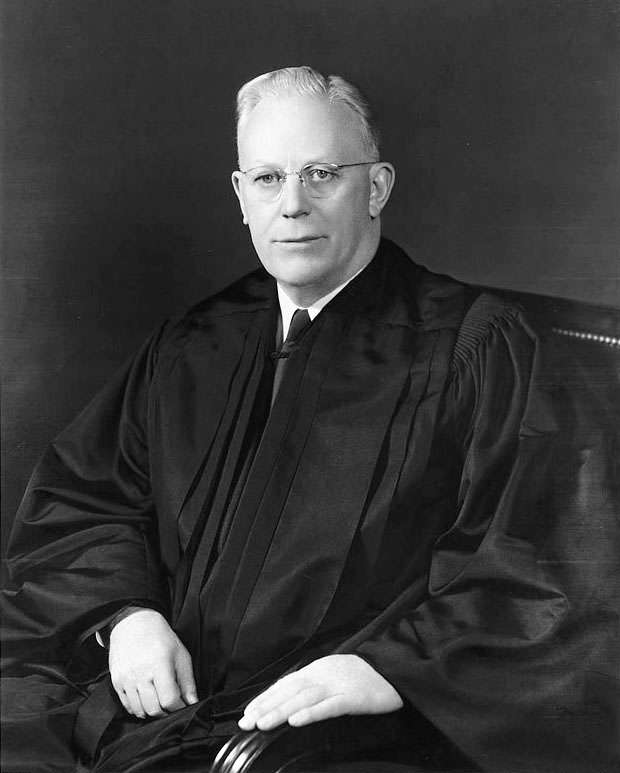
3/19/1891: Chief Justice Earl Warren's birthday.
Mostly law professors | Sometimes contrarian | Often libertarian | Always independent
3/19/1891: Chief Justice Earl Warren's birthday.
Help Reason push back with more of the fact-based reporting we do best. Your support means more reporters, more investigations, and more coverage.
Make a donation today! No thanksEvery dollar I give helps to fund more journalists, more videos, and more amazing stories that celebrate liberty.
Yes! I want to put my money where your mouth is! Not interestedSo much of the media tries telling you what to think. Support journalism that helps you to think for yourself.
I’ll donate to Reason right now! No thanksPush back against misleading media lies and bad ideas. Support Reason’s journalism today.
My donation today will help Reason push back! Not todayBack journalism committed to transparency, independence, and intellectual honesty.
Yes, I’ll donate to Reason today! No thanksSupport journalism that challenges central planning, big government overreach, and creeping socialism.
Yes, I’ll support Reason today! No thanksSupport journalism that exposes bad economics, failed policies, and threats to open markets.
Yes, I’ll donate to Reason today! No thanksBack independent media that examines the real-world consequences of socialist policies.
Yes, I’ll donate to Reason today! No thanksSupport journalism that challenges government overreach with rational analysis and clear reasoning.
Yes, I’ll donate to Reason today! No thanksSupport journalism that challenges centralized power and defends individual liberty.
Yes, I’ll donate to Reason today! No thanksYour support helps expose the real-world costs of socialist policy proposals—and highlight better alternatives.
Yes, I’ll donate to Reason today! No thanksDonate today to fuel reporting that exposes the real costs of heavy-handed government.
Yes, I’ll donate to Reason today! No thanks
Facts Only
* The Volokh Conspiracy is a website.
* It is primarily staffed by law professors.
* It is occasionally contrarian in its views.
* It frequently adopts a libertarian perspective.
* The website is described as “always independent.”
* March 19, 1891, is the birthday of Chief Justice Earl Warren.
* The article promotes financial support for Reason magazine.
* Reason magazine is described as pushing back against misleading media.
* The support is intended to fund reporting, videos, and stories celebrating liberty.
* The article highlights the intent to challenge central planning, big government, and socialism.
* It promotes journalism committed to transparency, independence, and intellectual honesty.
* The support aims to expose the real-world costs of socialist policy proposals.
Executive Summary
Full Take
The primary source here is a promotional blurb designed to elicit donations to Reason magazine. The structure immediately signals a tactic of “bait and switch” – starting with a seemingly neutral historical detail (Warren’s birthday) to subtly frame the reader within a particular intellectual space (libertarian law professors) before deploying a forceful call to action. The repeated framing of the media as “misleading” subtly leverages the common complaint of those on the right, appealing to a pre-existing distrust. This is a classic Motte-and-Bailey (ARC-0043) – establishing a relatively benign premise (misleading media) and then reinforcing it with stronger claims (socialist policies) to force a defensive response. Notice the frequent use of emotionally charged language – “expose,” “misleading,” “threats” – aiming to activate a visceral reaction and trigger a sense of urgency. The relentless repetition of the benefits of donating ("fuel reporting," "challenge government overreach") represents a Gish Gallop (ARC-0024) strategy – overwhelming the reader with a barrage of assertions without necessarily addressing any specific claims.
Underlying this narrative is a deeply embedded paradigm of anti-statism, often coupled with a suspicion of complex economic systems. The “revolution” described—challenging “central planning, big government overreach, and creeping socialism”—implicitly assumes that any government intervention represents an inherent corruption of individual liberty. There’s a reliance on a “bad actor” narrative – a nameless, faceless “media” actively spreading falsehoods, rather than examining the specific content being disputed. The implicit cost here is the potential stifling of nuanced debate and critical thinking, replacing it with a simplified, Manichean worldview. The invocation of “open markets” (ARC-0043) suggests a prioritization of free market ideology above all else, a potentially dangerous assumption given the historical record of market failures.
The potential systemic issue is a gradual shift toward a “liberation” rhetoric – promising to “free” individuals from the perceived constraints of government. This echoes liberation movements throughout history, a tactic that can be exploited to build a following and mask more complex underlying agendas. If this were part of a coordinated influence campaign, the playbook might involve amplifying similar narratives across multiple platforms, utilizing targeted advertising to reach specific demographics, and fostering an online community around the shared suspicion of “the deep state.” A key structural alignment would be a consistent, almost obsessive, focus on perceived injustices and threats to “individual liberty,” creating a perpetual state of alarm and justifying further intervention.
Questions: What specific claims about media “misleading” are being advanced, and can they be objectively verified? What historical context is being ignored in the framing of “socialist policies” as inherently detrimental?
Sentinel — Uncertain
This article exhibits several characteristics indicative of AI-generated content, primarily through its monotonous style, excessive hedging, and formulaic argument structure. The relentless promotion of donations and broad criticisms of the media suggest a coordinated synthetic operation rather than independent journalistic analysis.