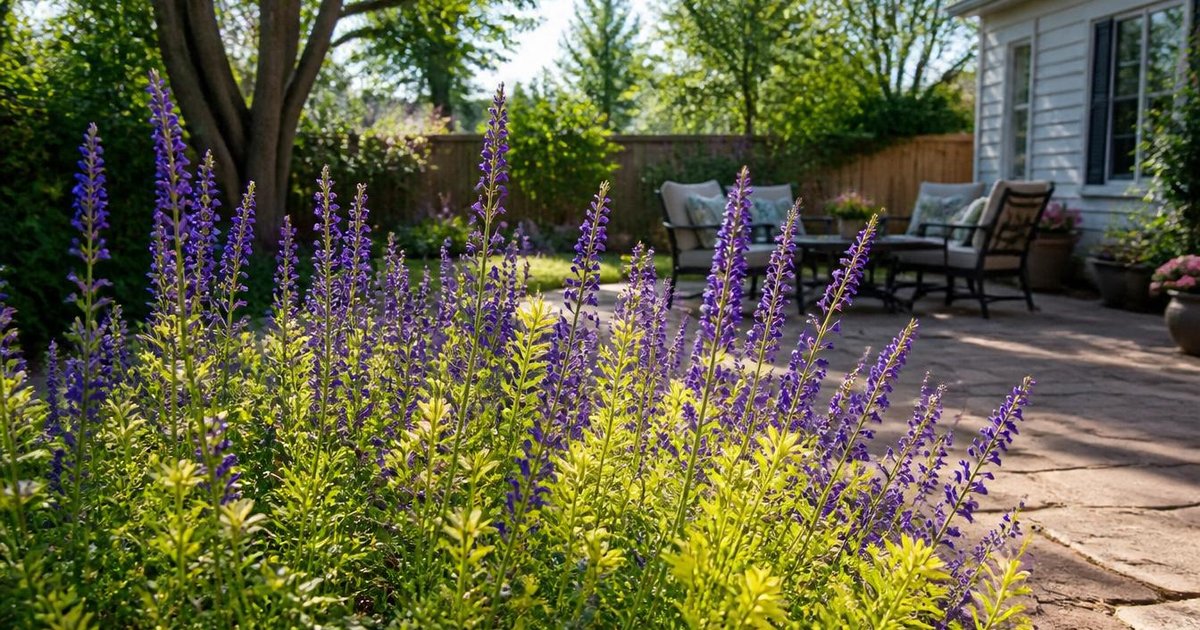
Salvia is one of those rare garden plants that manages to be both elegant and tough at the same time. With its upright spikes of vivid flowers and aromatic foliage, it brings structure, color, and pollinator activity to summer gardens across Fort Collins and the greater Front Range. In a climate defined by intense sun, dry air, and rapid weather shifts, salvia feels less like a delicate annual and more like a dependable architectural feature in the landscape.
For gardeners building long-season containers or pollinator-friendly beds, salvia is one of the most reliable performers available.
At [Plantorium.com](https://plantorium.com?utm_source=chatgpt.com salvia is frequently used as a structural centerpiece in mixed plantings, especially where heat tolerance and continuous bloom are essential.
Why Salvia Performs So Well in Northern Colorado
Salvia is built for sun-drenched environments. Its upright flower spikes rise above dense foliage, creating vertical interest that holds up well even in challenging conditions.
It thrives in Fort Collins and surrounding areas because:
- It loves full sun and heat
- It tolerates dry air exceptionally well
- It resists many common garden pests
- It blooms repeatedly through the season with proper care
Depending on variety, flowers may appear in shades of:
- Deep blue
- Violet
- Red
- Pink
- White
Red-flowering types are especially popular in Colorado gardens due to their strong hummingbird attraction.
When to Plant Salvia in Fort Collins
Salvia is a warm-season annual and should be planted after the last frost date, typically mid-May in Northern Colorado.
Once soil temperatures warm, salvia establishes quickly and begins developing its first flower spikes early in the season.
Because it grows steadily through summer, early planting helps maximize its bloom window.
Sunlight Requirements
Full sun is essential for strong flowering and compact growth.
In the Front Range climate:
- Provide 6–8+ hours of direct sunlight daily
- Ensure open spacing for airflow
- Avoid deep shade, which reduces flowering and weakens stems
In full sun, salvia produces dense foliage and continuous vertical blooms that remain attractive throughout the season.
Soil and Growing Conditions
Salvia prefers well-draining soil and performs best when not overwatered.
For optimal results:
- Amend heavy soils with compost
- Avoid waterlogged or compacted areas
- Use quality potting mix in containers
Once established, salvia is relatively low-maintenance and adapts well to a range of soil types as long as drainage is adequate.
Watering in a Dry Climate
Salvia is notably drought tolerant compared to many flowering annuals.
Recommended watering approach:
- Water deeply during establishment
- Allow soil to dry slightly between waterings
- Reduce watering frequency once established
- Increase watering during prolonged heat waves
In Fort Collins’ dry, windy conditions, container plantings may need more frequent monitoring than in-ground beds.
Fertilizing for Continuous Bloom
Salvia benefits from moderate feeding but does not require heavy fertilization.
A balanced fertilizer every few weeks supports:
- Continuous flower spike production
- Healthy foliage
- Strong, upright growth habit
Excess nitrogen should be avoided, as it can encourage leafy growth at the expense of flowers.
Garden Role and Design Use
Salvia is primarily used as a vertical accent plant in garden design.
It works especially well in:
- Mixed container arrangements
- Pollinator gardens
- Sunny borders and beds
- Entryway plantings
- Mass planting schemes for color rhythm
In Fort Collins landscapes, salvia is often used as a structural “spine” plant that anchors softer or trailing companions.
Pollinator Powerhouse
One of salvia’s most valuable qualities is its ecological role.
It is highly attractive to:
- Hummingbirds
- Bees
- Butterflies
Red and blue varieties are particularly effective at drawing pollinators throughout the summer season.
For gardeners building wildlife-friendly landscapes in Northern Colorado, salvia is one of the most effective flowering annuals available.
Handling Colorado Weather
Salvia is well suited to Front Range conditions and handles summer stress better than many flowering plants.
It tolerates:
- Heat
- Wind
- Dry air
- Intense sunlight
It is less tolerant of:
- Overwatering
- Poor drainage
- Frost (not cold hardy)
Even after weather stress, salvia often continues blooming or rebounds quickly once conditions stabilize.
Companion Planting
Salvia pairs well with both bold and trailing annuals, making it a versatile design component.
Excellent companions include:
- Petunias
- Calibrachoa
- Verbena
- Lantana
- Sweet Potato Vine
- Rudbeckia
- Eucalyptus
Its upright form contrasts beautifully with cascading or mounding plants in containers.
A Structural Staple of Summer Gardens
Salvia brings something essential to the summer garden: structure with purpose. It is not just a background plant or filler, but a strong visual element that adds rhythm, height, and ecological value to plantings across Fort Collins and the Front Range.
For gardeners seeking a dependable, long-blooming, pollinator-friendly annual that thrives in heat and sun, salvia remains one of the most effective choices available.
Explore seasonal availability and additional annuals at [Plantorium.com’s full plant catalog](https://plantorium.com/all-plants/?utm_source=chatgpt.com
Facts Only
Salvia is a garden plant known for its upright flower spikes and aromatic foliage.
It thrives in full sun, dry air, and well-draining soil, making it suitable for Fort Collins and the Front Range climate.
Salvia attracts pollinators such as hummingbirds, bees, and butterflies.
Flower colors include deep blue, violet, red, pink, and white.
Red-flowering varieties are particularly popular in Colorado due to their appeal to hummingbirds.
Salvia should be planted after the last frost date, typically mid-May in Northern Colorado.
It requires 6–8+ hours of direct sunlight daily for optimal growth.
Salvia prefers well-draining soil and is drought-tolerant once established.
Overwatering and poor drainage can harm the plant.
It benefits from moderate fertilization to support continuous blooming.
Salvia is used as a vertical accent in garden design, often paired with trailing plants like petunias or sweet potato vine.
It is not frost-tolerant and performs poorly in deep shade or waterlogged conditions.
Executive Summary
Salvia is a versatile and resilient garden plant that thrives in the challenging climate of Fort Collins and the greater Front Range, offering both aesthetic and ecological benefits. Known for its upright flower spikes, aromatic foliage, and ability to attract pollinators like hummingbirds, bees, and butterflies, salvia is a popular choice for gardeners seeking heat-tolerant, low-maintenance plants. It performs well in full sun, well-draining soil, and dry conditions, making it ideal for the region’s intense sunlight, dry air, and rapid weather shifts. Salvia is typically planted after the last frost in mid-May and requires minimal watering once established, though it benefits from occasional fertilization to support continuous blooming. Its structural form makes it a valuable design element in mixed containers, pollinator gardens, and sunny borders, often serving as a vertical accent or "spine" plant. While salvia is highly adaptable, it is not frost-tolerant and performs poorly in overwatered or poorly drained soils. Its ecological role as a pollinator magnet further enhances its appeal for gardeners aiming to create wildlife-friendly landscapes.
The article highlights salvia’s practical advantages, such as its drought tolerance, pest resistance, and long bloom season, while also noting its limitations, such as sensitivity to frost and overwatering. Companion planting suggestions, like pairing salvia with petunias or lantana, underscore its versatility in garden design. Overall, salvia is presented as a dependable, multi-functional plant that combines beauty, resilience, and ecological value, making it a staple in Northern Colorado gardens.
Full Take
This piece presents salvia as an ideal plant for Northern Colorado gardens, emphasizing its resilience, ecological benefits, and design versatility. The strongest version of this narrative highlights salvia’s adaptability to the region’s climate, its role in supporting pollinators, and its low-maintenance requirements—all of which are well-supported by the details provided. The article avoids overt manipulation patterns, focusing instead on practical advice and factual descriptions of the plant’s characteristics and care needs.
However, the narrative leans heavily into the plant’s benefits without deeply exploring potential drawbacks beyond basic care requirements. For instance, while it mentions salvia’s sensitivity to frost and overwatering, it doesn’t address other possible challenges, such as specific pests or diseases that might affect it in the region. The framing of salvia as a near-perfect solution for Front Range gardens could be seen as slightly idealized, though not misleading.
The root cause of this narrative is likely the broader trend of promoting drought-tolerant, pollinator-friendly plants in regions facing water scarcity and habitat loss. The assumptions here are that gardeners prioritize ease of care, ecological impact, and aesthetic appeal—all valid, but worth questioning. For example, what trade-offs might exist between salvia’s benefits and its potential to outcompete native plants in certain settings? How might its water needs compare to truly native species in the long term?
Implications for human agency include empowering gardeners to make informed choices that align with both personal and environmental goals. The second-order consequences could involve increased biodiversity in urban gardens or, conversely, unintended ecological shifts if non-native plants dominate.
Bridge questions to consider:
How does salvia’s ecological impact compare to that of native plants in the same region?
What long-term effects might widespread adoption of salvia have on local pollinator populations?
Are there native alternatives that offer similar benefits with fewer potential drawbacks?
Counterstrike scan: If this were part of a coordinated campaign, the playbook might involve promoting salvia as a silver-bullet solution for sustainable gardening, potentially overshadowing native species or more nuanced ecological considerations. However, the content here does not exhibit signs of such manipulation; it remains focused on practical advice without overclaiming or dismissing alternatives. The narrative aligns with genuine horticultural guidance rather than a deceptive agenda.
Patterns detected: none
Sentinel — Uncertain
The article exhibits a highly polished, template-driven style characteristic of AI generation, combining factual horticultural knowledge with commercial framing.