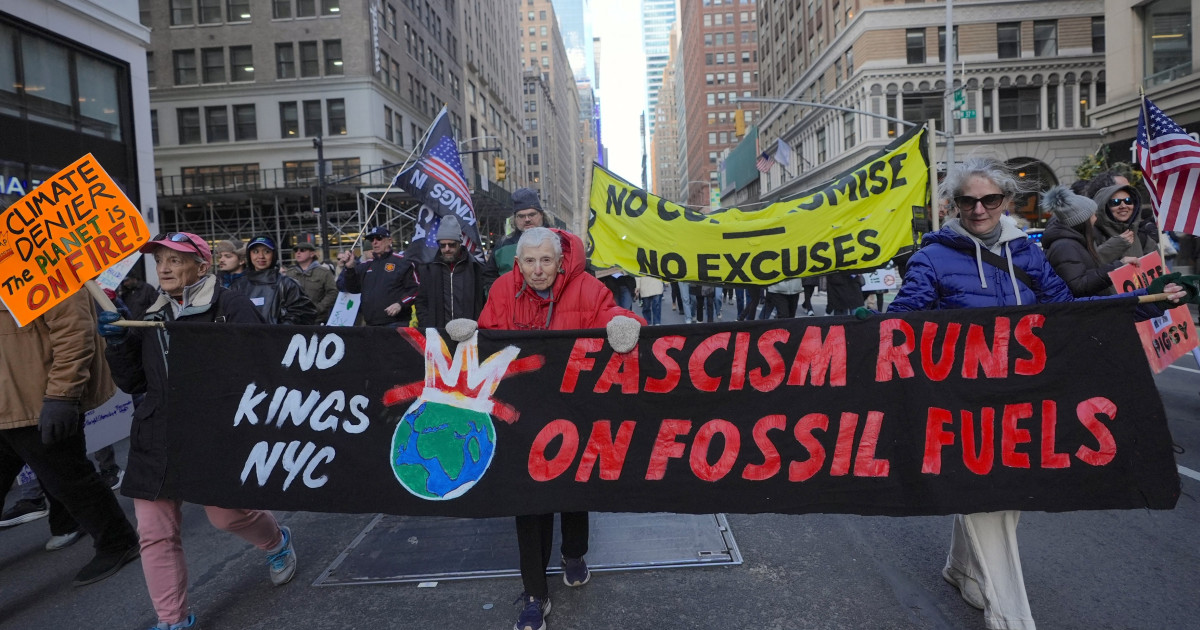
Cel puţin opt milioane de persoane au participat sâmbătă la marşurile „Fără Regi” împotriva administraţiei Donald Trump, potrivit organizatorilor care au comunicat cu presa americană. Mişcarea, care cuprinde zeci de organizaţii şi activişti democraţi, a organizat peste 3.300 de proteste în toate cele 50 de state americane pentru a denunţa ceea ce numeşte „autoritarismul” preşedintelui Trump.
Protestul de sâmbătă reprezintă o creştere estimată de un milion de participanţi şi 600 de marşuri suplimentare faţă de protestul din octombrie anul trecut. Această mişcare s-a impus ca cel mai mare protest unificator de la revenirea miliardarului republican la Casa Albă, relatează duminică EFE şi AFP preluate de Agerpres.
„Război ilegal” şi acuzaţii la adresa ICE
În cadrul manifestaţiilor, protestatarii au denunţat „războiul ilegal” pe care preşedintele Donald Trump l-ar fi lansat împotriva Iranului, despre care spun că a dus la creşterea preţurilor la combustibili şi la inflaţie, şi şi-au reiterat criticile la adresa „abuzurilor” Serviciului de Imigrare şi Control Vamal (ICE).
Principala demonstraţie a avut loc în faţa a zeci de mii de persoane în Minneapolis, cel mai mare oraş din Minnesota, devenit epicentrul indignării naţionale împotriva ICE şi a Patrulei de Frontieră după ce agenţii acestora i-au ucis acolo pe cetăţenii americani Renee Good şi Alex Pretti în luna ianuarie.
Minneapolis, epicentrul ofensivei anti-imigraţie a guvernului american de la începutul acestui an, a fost ales drept punct central al mobilizării de sâmbătă, alături de oraşul său înfrăţit, Saint Paul, unde au manifestat aproximativ 200.000 de persoane, potrivit organizatorilor.
Legenda rock Bruce Springsteen a interpretat piesa sa „Streets of Minneapolis”, scrisă ca un omagiu pentru Renee Good şi Alex Pretti.
Discursuri dure la adresa preşedintelui SUA
Vorbind în acest oraş cu înclinaţii democrate din Midwest, guvernatorul statului Minnesota, Tim Walz, le-a mulţumit locuitorilor pentru că s-au opus unui „războinic în devenire” precum Donald Trump.
„Nu vom accepta niciodată un preşedinte care este un mincinos patologic, un cleptocrat şi un narcisist care subminează Constituţia Statelor Unite şi statul de drept în fiecare zi”, a declarat Bernie Sanders, fost candidat democrat la preşedinţia SUA.
Alte zeci de mii de persoane au mărşăluit pe străzile din New York City, în frunte cu actorul Robert De Niro, un critic acerb al preşedintelui Donald Trump.
„Alţi preşedinţi şi-au testat deja limitele constituţionale ale puterii, dar niciunul nu a reprezentat o asemenea ameninţare existenţială pentru libertăţile şi securitatea noastră. (...) Trebuie oprit”, a îndemnat el.
Proteste şi în Europa. Reacţia Casei Albe
De cealaltă parte a Atlanticului, la Roma, Amsterdam, Madrid şi Atena au avut loc, de asemenea, mitinguri împotriva preşedintelui american.
Casa Albă a respins protestele, numindu-le „şedinţe de terapie” pentru „tulburarea Trump”, un termen folosit de preşedintele Trump şi susţinătorii săi pentru a ironiza opoziţia.
Protestele au loc în contextul în care rata de dezaprobare a preşedintelui Trump a ajuns la 59%, cel mai ridicat nivel din cele două mandate ale sale, potrivit unui sondaj publicat miercuri de Fox News.
Facts Only
At least eight million people participated in "No Kings" marches against the Trump administration on Saturday.
Over 3,300 protests were organized across all 50 U.S. states.
Protesters criticized Trump’s policies as authoritarian, focusing on immigration enforcement by ICE and tensions with Iran.
The largest protest occurred in Minneapolis, Minnesota, with tens of thousands in attendance.
Minneapolis became a focal point after ICE and Border Patrol agents killed two American citizens, Renee Good and Alex Pretti, in January.
Approximately 200,000 people protested in Saint Paul, Minnesota.
Bruce Springsteen performed a song honoring the victims of the January killings.
Minnesota Governor Tim Walz and former presidential candidate Bernie Sanders spoke at the protests, condemning Trump’s leadership.
Robert De Niro led a march in New York City, criticizing Trump as an existential threat to constitutional freedoms.
Protests also took place in Rome, Amsterdam, Madrid, and Athens.
The White House dismissed the protests as "therapy sessions" for opposition to Trump.
A Fox News poll showed Trump’s disapproval rating at 59%, the highest of his presidency.
Executive Summary
Full Take
The "No Kings" protests represent a significant escalation in organized opposition to Trump’s presidency, framed as a defense of democratic norms against perceived authoritarianism. The movement’s strength lies in its broad coalition, uniting grassroots activists, celebrities, and political figures under a shared narrative of resistance. The focus on ICE’s actions and the Iran conflict provides concrete grievances, while the emotional resonance of the Minneapolis killings amplifies moral urgency. However, the White House’s dismissal of the protests as "therapy sessions" reveals a classic polarization tactic—dismissing opposition as irrational rather than engaging with substantive critiques. This mirrors broader patterns of political tribalism, where each side weaponizes language to delegitimize the other.
The narrative’s strongest version is its ability to mobilize large numbers around tangible policy concerns, from immigration to foreign policy, while tying them to broader democratic principles. Yet, the framing risks oversimplification—painting Trump’s administration as uniquely authoritarian without acknowledging the complexities of executive power or the historical context of U.S. immigration enforcement. The protests also reflect a broader global trend of populist backlash, where opposition movements often mirror the emotional intensity of the leaders they oppose.
Root cause: The paradigm here is one of democratic erosion anxiety, where opposition groups perceive institutional norms under threat and respond with mass mobilization. The unstated assumption is that Trump’s presidency represents an existential break from democratic traditions, a claim that both energizes supporters and alienates skeptics.
Implications: For human agency, these protests demonstrate the power of collective action but also highlight the risks of political performativity—where symbolism can overshadow policy impact. The second-order consequences may include further polarization, as each side doubles down on its narrative, making compromise increasingly difficult.
Bridge questions: How might this movement evolve if its demands are not met? What policy alternatives could address the concerns about ICE and foreign policy without reinforcing partisan divides? Would the protests retain their momentum if Trump were no longer in office, or is the opposition inherently tied to his persona?
Counterstrike scan: If this were a coordinated influence campaign, the playbook would involve amplifying emotional triggers (e.g., the Minneapolis killings), leveraging celebrity endorsements for credibility, and framing the opposition as a moral crusade. The actual content aligns with organic grassroots mobilization rather than a structured disinformation effort, though the White House’s dismissive response suggests a counter-narrative strategy aimed at undermining legitimacy.
Patterns detected: ARC-0024 Ambiguity (broad "authoritarian" framing without specific policy benchmarks), ARC-0043 Motte-and-Bailey (shifting between concrete grievances and existential threats).