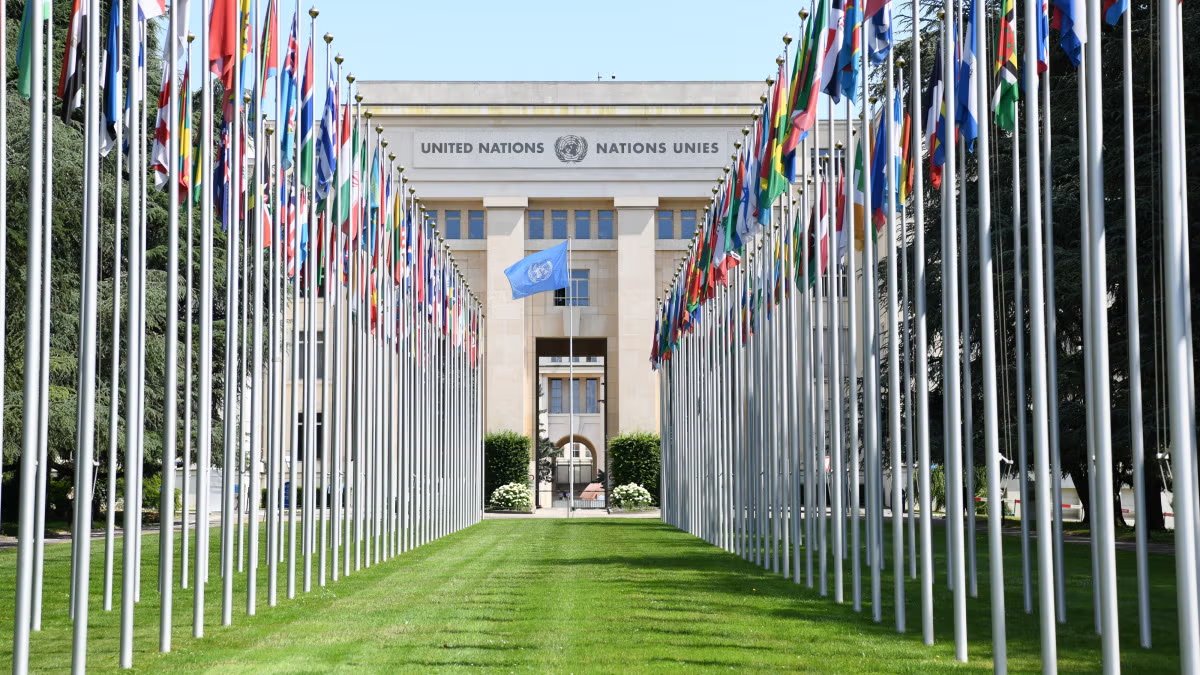
The UN Human Rights Council held an emergency session today on the imminent risk of atrocities in and around Sudan’s El Obeid, a city in North Kordofan. The session follows an appeal by rights groups for the Council to exercise its prevention mandate by meeting in anticipation, rather than the aftermath, of another round of devastating atrocities in Sudan’s conflict.
The UN Fact-Finding Mission for Sudan has reported an increasing and apparently indiscriminate barrage of Rapid Support Forces (RSF) drone attacks in and around El-Obeid, noting that “hospitals, markets, schools, and residential areas have also reportedly been struck, causing civilian casualties and disrupting essential services.”
These reports are eerily reminiscent of the weeks preceding the RSF’s assault on El Fasher, which the UN Fact-Finding Mission concluded bore the “hallmarks of genocide.” The RSF’s modus operandi is clear: it must be stopped.
The session witnessed increased calls for action to address external support for the RSF, notably by the UAE, whose support to the RSF has been spotlighted again in recent months. UN actors and states called on those providing military support to the RSF to stop, and to use their influence to prevent further atrocities, clearly alluding to but failing to call out the UAE explicitly.
Both the Fact-Finding Mission and the UN Human Rights Office said they are investigating the role of external actors and the war economy fueling atrocities in Sudan, and the High Commissioner highlighted the need for greater scrutiny of “foreign players […] benefiting from the carnage.”
A resolution will be adopted by the Human Rights Council on Monday, which is expected to urge an immediate halt to atrocities by all parties to the conflict, call for an end to external support, including the deployment of foreign forces and supply of weapons, and request the Fact-Finding Mission to conduct an urgent inquiry on El Obeid.
But this won’t be enough. Further urgent and decisive action is needed to prevent atrocities in and around El Obeid and across Sudan, and to advance accountability.
States from all regions should work together to deploy a protection of civilians’ mission, expand both the arms embargo and ICC jurisdiction to the whole of Sudan, and expand sanctions targeting those responsible for serious violations of international human rights and humanitarian law in Sudan.
The imminent risk of further atrocities in Sudan is crystal clear as are the measures the international community must take today to prevent them.
Sentinel — Human
The text functions as a synthesized news report, effectively weaving specific UN findings with political calls for external accountability. It exhibits the structure and thematic linkage typical of human-authored journalistic or advocacy material.