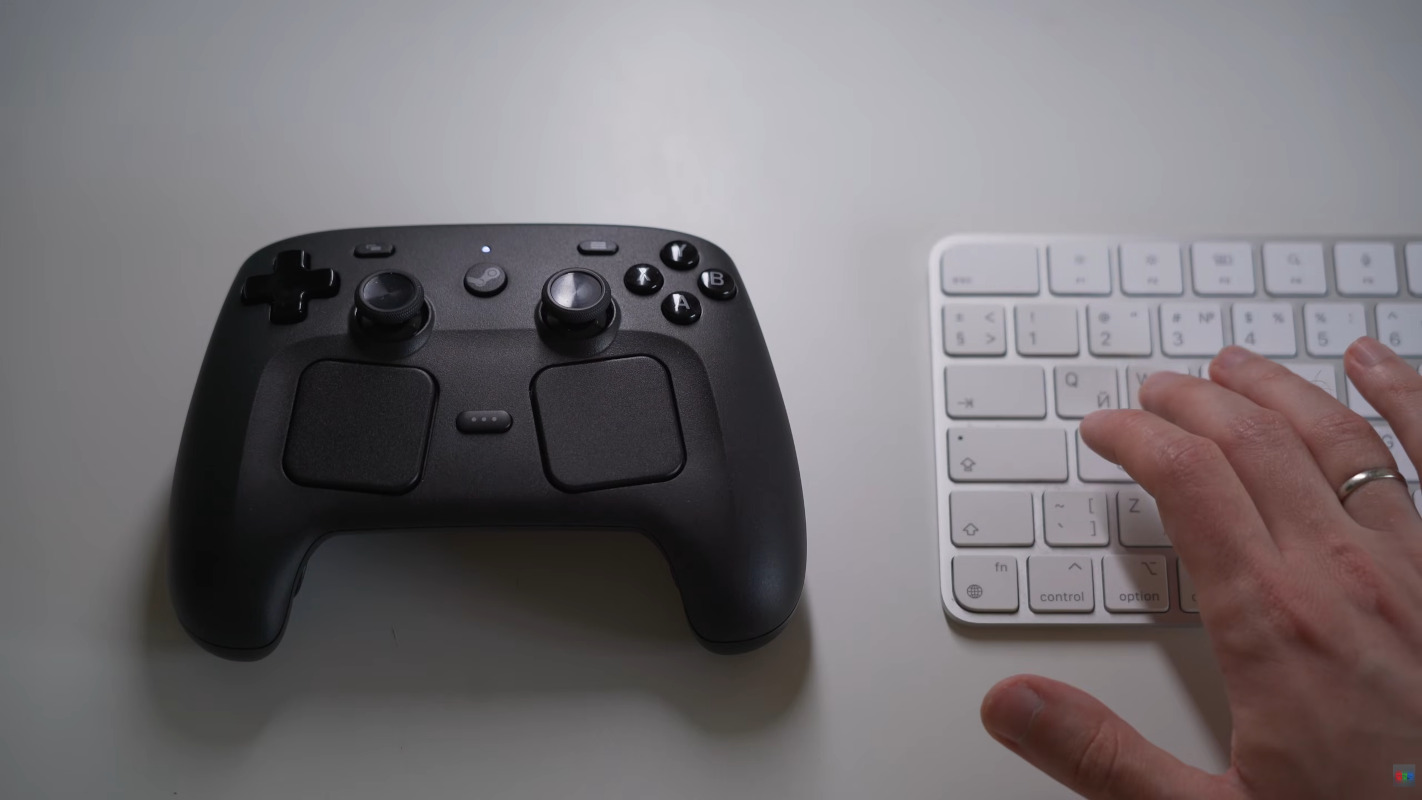
One of the simplest robots to make is a bristlebot — a motor with an offset weight is attached to the head of a toothbrush, and the resulting vibrations will move the contraption across a flat surface. [Very Lazy Pixels] recently took this idea a bit further by turning the Steam Controller into a steerable, bristlebot-like robot.
To drive one’s Steam Controller across a desk, all that is needed is for a computer with a paired controller and a Chromium-based browser. From there, using the WASD buttons, the web interface converts traditional video game inputs into controller motion by spinning the controller’s rumble motors at a specific frequency. With precise control of these motors, the controller can move forwards and backwards and even turn, which is a great deal more advanced than the traditional bristlebots generally manage.
Part of what makes this possible is Valve’s willingness to release information about many of their products to the general public, enabling anyone to modify or upgrade those products to their liking. While not completely open source, it’s a step in the right direction and enables fun projects like these. We’ve seen other Valve products turned into surprisingly barebones single-board computers as well as custom portable workstations thanks to this philosophy.
Ray Foss made a tool to get the Steam Controller to use the same trick, but to walk towards the charging pad and charge itself. This is the future I was hoping for.
https://x.com/Dexerto/status/2070589781285711889
Now I just need one of those robots they talk about that can do the laundry, paint the house, mop the floor, clean the litterboxes, remove weeds from the yard, cook dinner, etc. Then we really are in the future.
Sentinel — Human
The text exhibits a highly personalized and enthusiastic tone, blending technical concepts with aspirational leaps, which points toward human authorship focused on creative exploration rather than purely informational reporting.