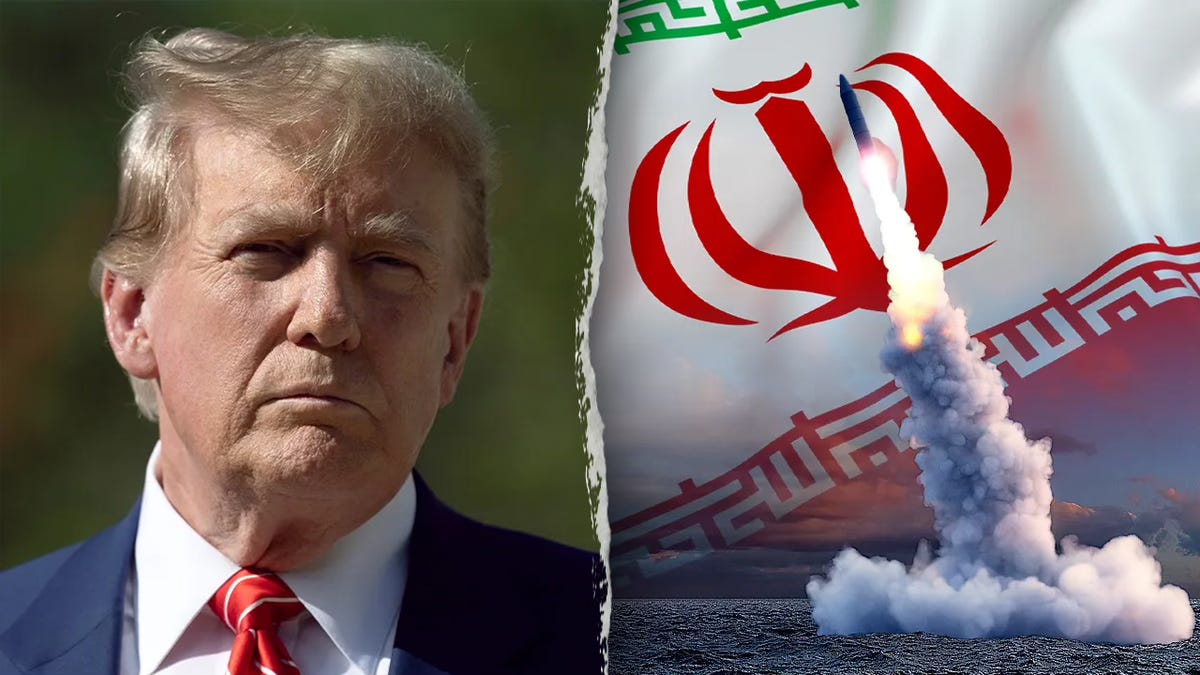
Late Mossad chief warned air attacks were “a gift” to Iran. Trump ignored intel consensus on Hormuz, ground invasion, need for allies
Dagan’s Warning: The legendary late Mossad boss Meir Dagan warned publicly back in 2011 that Prime Minister Benjamin Netanyahu’s intent to launch a military campaign against Iranian nuclear sites was “a stupid idea” and risked “a regional war in which Iran and also Hezbollah will launch missiles.” Dagan, chiefly responsible for launching Mossad’s campaign of assassinating Iranian nuclear scientists decades ago, added later that, “If Israel were to attack, [Iranian Supreme Leader Ali] Khamenei would thank Allah: It would unite the Iranian people behind the project and enable Khamenei to say that he must get himself an atom bomb to defend Iran against Israeli aggression.” The social scientist Tom Griffin, author of State-Private Networks and Intelligence Theory: From Cold War Liberalism to Neoconservatism, reminded us of these previously reported remarks Sunday by way of revisiting last week’s New York Times report saying that the current Mossad chief, David Barnea, had forecast that “his service would likely be able to galvanize the Iranian opposition — igniting riots and other acts of rebellion that could even lead to the collapse of Iran’s government.” The surfacing of Barnea’s—let’s say, premature—prediction, wrote Griffin, appeared to be just another chapter in “the Washington blame game over the Iran War, [whose] recriminations have extended to Tel Aviv.” Meanwhile, Reuters is reporting that Washington can only say “with certainty that it has destroyed about a third of Iran’s vast missile arsenal” after four weeks of bombing. Some 50,000 U.S. troops are now in the region for an impending sortie into Iran.
“I think we should not only give negotiations a chance, we should put our main effort right now on negotiations with Iran, knowing we’re going to have to compromise on some areas,” retired former senior CIA paramilitary officer and Deputy Assistant Secretary of Defense for the Middle East Mick Mulroy said on the SpyTalk podcast. “If that’s the case, then we can end this conflict and of course have the Strait of Hormuz open.”
Intel Paradox: There’s been no shortage of intelligence on Iran, writes Yonatan Touval, a foreign-policy analyst and writer based in Tel Aviv. “The spy craft kind of intelligence behind the war planning and execution is extensive,” he noted Sunday in the New York Times. “Recent reporting suggests that Israeli intelligence spent years penetrating Tehran’s traffic cameras and communications networks and built what one unnamed Israeli source described to CNN as an A.I.-powered ‘target-production machine’ capable of turning enormous volumes of visual, human and signals intelligence into precise strike coordinates. That,” he concluded, “is an extraordinary achievement of surveillance and targeting.”
And yet: Trump and Netanyahu ignored all the warnings from the likes of Meir Dagan and countless experts since that a military campaign was unlikely to “obliterate” Iran’s ability to build a nuclear weapon (as Trump famously and falsely claimed last June), much less result in regime change. “[N]ever has so much been seen, so precisely, by so many people who understand so little of what they are seeing.” Touval wrote. “They might also have foreseen the paradox that systematic decapitation does not produce negotiators. It removes them.”
Go Dark or Go Home: The U.S. Maritime Administration is warning that Yemen’s Iran-backed Houthi rebels, who fired missiles at Israel Sunday, may be keying on commercial ships’ Automatic Identification System (AIS) transponders and other “onboard emissions,” like cell phones, to line them up as targets for missile and drone attacks in the Red Sea and Gulf of Aden. “While vessels have been attacked by the Houthis while AIS transponders were either on or off, turning AIS off makes it more difficult to track and accurately target a vessel,” it said (although going dark, it granted, also increases the chances for accidents). “More than 50 containerships are now stranded west of the Strait of Hormuz,” The Windward Brief said early Sunday.
From Russia with Love: Ukraine President Volodymyr Zelenskyy says Russia took satellite images of the U.S. airbase in Saudi Arabia three times in the days before Iran hit it with missiles and drones. (NBC) Meanwhile, “Four sanctioned Russian Shadow Fleet vessels are currently loitering over undersea cables and pipelines just outside UK waters,” the iPaper Security Correspondent Richard Holmes reports.
Buda Pest: Russia-adjacent Hungarian Prime Minister Viktor Orbán is not taking kindly to a report in The Washington Post saying Russia planned to help tilt the upcoming elections his way by staging a fake assassination attempt on him. The Mar. 21 story by Catherine Belton, an international investigative reporter for The Post and author of Putin’s People, cited an unnamed “European intelligence agency” for her report that Russia’s SVR (Foreign Intelligence Service) would stage the fake assassination attempt in order to boost Orbán’s “sharply declining popularity.” Orban-friendly media said the story was concocted “by the Polish left,” a “politically motivated narrative being disseminated by prominent Western media outlets without a solid foundation of sources” and published by a news organization “struggling with massive financial losses.” What’s more, Orbán is leading in the polls, it said (despite what everybody else says). Hungarian authorities, meanwhile, have opened “an espionage case” against Szabolcs Panyi, “a prominent investigative journalist who has chronicled dirty-trick operations by Russian intelligence agencies.” (New York Times)
UFO’s Over AFB: “During the week of March 9, waves of 12-15 unidentified drones repeatedly overflew Barksdale Air Force Base in Louisiana,” according to ABC News. Barksdale is home to the Global Strike Command, which manages the entire nuclear-armed, strategic bomber force. “According to a confidential briefing document leaked to ABC News, the drones displayed non-commercial signal characteristics, long-range control links, and resistance to jamming. They varied their routes. They left their lights on, not out of carelessness, but to monitor how the base responded. Analysts called it deliberate reconnaissance,” ABC added. “The Air Force tried to jam them. It did not work.” Last week it was reported that unidentified drones reconnoitered Washington, D.C.’s Ft. McNair, where Marco Rubio and Pete Hegseth have been sheltering amid a rise in Iranian assassination threats.
Iran Plot in Paris?: French authorities were able to disrupt an attempted bombing of the Paris branch of the Bank of America in which an Iranian hand is suspected. “In this type of conflict, you have a number of Iranian services that are likely to carry out actions such as these through proxies…” Interior Minister Laurent Nunez said after two unidentified suspects were nabbed. “There is a significant suspicion, but it is for the investigation to determine.” (Reuters) Meanwhile, U.K authorities say Iran’s intelligence service is recruiting “people on social media to carry out acts of terror and espionage on British soil by offering payments starting from £500 to film targets,” according to The Times of London. “Publicly accessible channels on Telegram, the encrypted messaging app, offer individuals employment carrying out tasks for Tehran. Jobs vary from filming people entering and exiting a premises to following targets and feeding back information, with contractors paid thousands for more complex tasks.”
China Plot in Florida? A Chinese American man and his sister were indicted Wednesday on charges of leaving a bomb at a fence outside MacDill Air Force Base in Tampa. The device didn’t detonate, but “could have potentially been very deadly,” a federal prosecutor said. “Agents determined that Alen Zheng actually planted the device on March 10 and made a 911 call minutes later saying there was a bomb at the base…Then he and his sister sold their Mercedes-Benz SUV, bought tickets to China, and were gone by March 12th.” The sister was arrested upon her return from China. (A.P.)
Cuba Spy Posts: President Trump’s January executive order aimed at cutting off Cuba’s oil supplies and strangling its economy could well impact Russian and Chinese listening posts on the beleaguered island. Russia’s intelligence-gathering base at Lourdes is well known, China’s at Bejucal, a hillside town about 20 miles south of Havana, far less so. “Aerial photographs published and analyzed by the Center for Strategic and International Studies in Washington show a sprawling compound that features large clearings dotted with antennas like candles on a birthday cake, several entrances to underground facilities and a radome, a weatherproof cover that protects sensitive equipment.” Marco Rubio has said that a “good” U.S. deal with Cuba would mean in part that Havana “kicks out the Russians from Lourdes and kicks out the Chinese listening station in Bejucal.” On Sunday, a Russian tanker full of (now unsanctioned) oil was crossing the Atlantic, seemingly headed to Cuba, presenting a challenge to Trump’s order. (New York Times)
Stolen Valor? The credibility of Lone Survivor, the bestselling memoir and film about a harrowing and ultimately disastrous 2005 U.S. Navy SEAL counter-terror operation in Afghanistan, has come under serious attack by “a growing number of veterans—many of them disillusioned with the global war on terrorism, especially after the Taliban retook Kabul in 2021,” according to an exhaustive and compelling investigative piece in Politico’s Magazine by R.M. Schneiderman, a former deputy editor of Newsweek, and Ed Darack, author of 2009’s Victory Point: Operations Red Wings and Whalers — the Marine Corps’ Battle for Freedom in Afghanistan. Details in the original memoir by Marcus Luttrell, the only unit member to survive, just don’t add up, say former SEALs and some family members. “On podcasts, on Reddit and in YouTube videos, they’re speculating about why the truth was hidden from the public and exploring long-standing rumors about what really happened—some of them true, some as misleading as major parts of Luttrell’s book,” write Schneiderman and Darack. The movie was turned into a recruiting agent for the SEALs. A must-read for war historians, SEAL aficionados and truth seekers alike. ###
So grateful for your posts.
I think it would be interesting if Rubio and Hegseth were uploaded by a UFO(Unfriendly Force Overhead) and delivered to parts unknown.
Facts Only
Former Mossad chief Meir Dagan warned in 2011 that an Israeli attack on Iran would risk regional war and unite Iranians behind their nuclear program.
Current Mossad chief David Barnea predicted that Israeli intelligence could galvanize Iranian opposition, potentially leading to regime collapse.
The U.S. has destroyed about a third of Iran’s missile arsenal after four weeks of bombing, with 50,000 troops deployed to the region.
Retired CIA officer Mick Mulroy advocates for negotiations with Iran to end the conflict and reopen the Strait of Hormuz.
Israeli intelligence has reportedly penetrated Iran’s traffic cameras and communications networks, using AI to generate precise strike coordinates.
Yemen’s Houthi rebels are targeting commercial ships in the Red Sea and Gulf of Aden, possibly using AIS transponders and other emissions.
Ukraine’s President Zelenskyy claims Russia took satellite images of a U.S. airbase in Saudi Arabia before an Iranian missile and drone attack.
Hungarian Prime Minister Viktor Orbán denies reports that Russia planned a fake assassination attempt to boost his election chances.
Unidentified drones repeatedly overflew Barksdale Air Force Base in Louisiana, displaying non-commercial signal characteristics and resistance to jamming.
French authorities disrupted an attempted bombing of a Paris Bank of America branch, with Iranian involvement suspected.
A Chinese American man and his sister were indicted for planting a bomb near MacDill Air Force Base in Florida.
Russia and China maintain intelligence-gathering bases in Cuba, with Russia’s Lourdes base and China’s Bejucal facility under scrutiny.
The credibility of the *Lone Survivor* memoir has been challenged by veterans and family members of the SEAL team involved in the 2005 Afghanistan operation.
Executive Summary
Full Take
The strongest version of this narrative highlights the high-stakes intelligence and military maneuvers shaping the Iran-Israel-U.S. conflict, underscoring the risks of escalation and the potential for unintended consequences. The article credibly presents warnings from intelligence veterans like Meir Dagan and Mick Mulroy, who argue that military action may backfire, while also detailing the advanced surveillance and targeting capabilities deployed by Israel. The inclusion of multiple perspectives—from Israeli intelligence assessments to U.S. military deployments—adds depth to the analysis.
However, the narrative also exhibits patterns of emotional exploitation (ARC-0043) and distortion (ARC-0024). The framing of Iran as an imminent threat, coupled with the emphasis on Israeli and U.S. military preparedness, could amplify fear appeals. The article’s juxtaposition of intelligence successes (e.g., Israeli AI targeting) with warnings of failure (e.g., Dagan’s critique) creates a tension that may obscure the broader strategic uncertainties. Additionally, the inclusion of domestic controversies, such as the *Lone Survivor* debate, risks diluting focus on the core geopolitical issues.
Root causes include the enduring paradigm of military intervention as a solution to complex security challenges, despite historical evidence of its limitations. The assumption that technological superiority (e.g., AI targeting) can compensate for political and diplomatic failures remains untested. The narrative echoes Cold War-era intelligence games, where proxy conflicts and covert operations often escalated beyond initial intentions.
Implications for human agency and dignity are profound. Civilians in conflict zones bear the brunt of military actions, while intelligence operations risk eroding trust in democratic institutions. The second-order consequences—such as Houthi attacks on shipping or Russian election interference—demonstrate how localized conflicts can spiral into global disruptions.
Bridge questions: What diplomatic alternatives exist beyond military escalation? How might the U.S. and Israel balance intelligence capabilities with the risks of overreach? What role do media narratives play in shaping public perception of these conflicts?
Counterstrike scan: If this were part of a coordinated influence campaign, the playbook would emphasize military preparedness while downplaying diplomatic solutions, using fear of Iranian aggression to justify escalation. The actual content partially aligns with this pattern, particularly in its focus on intelligence and military actions, but it also includes critical voices (e.g., Dagan, Mulroy) that complicate a purely hawkish narrative. The inclusion of these counterpoints suggests a more balanced approach, though the overall framing still leans toward conflict escalation.
Patterns detected: ARC-0043 Emotional Exploitation, ARC-0024 Distortion
Sentinel — Human
The article exhibits strong human stylistic fingerprints, including erratic sentence structure, cultural idiosyncrasies, and a distinct narrative voice, with no significant AI-generated signals detected.