Facts Only
Pilgrimage is a practice found in many religions, involving journeys to sacred sites for devotion, atonement, or spiritual experiences.
The concept is rooted in both the Old and New Testaments, with examples like Abraham’s journey and the Exodus.
In the New Testament, Jesus’ ministry is described as a pilgrimage toward Jerusalem, culminating in his death and the idea of redemption.
The Holy Family’s annual pilgrimage to Jerusalem for Passover is documented in Luke 2:41-42.
After Christianity was legalized in A.D. 313, pilgrimage routes in Europe became more established.
"Egeria’s Travels," written in the early fifth century, documents early Christian pilgrimages to sites linked to Jesus’ life.
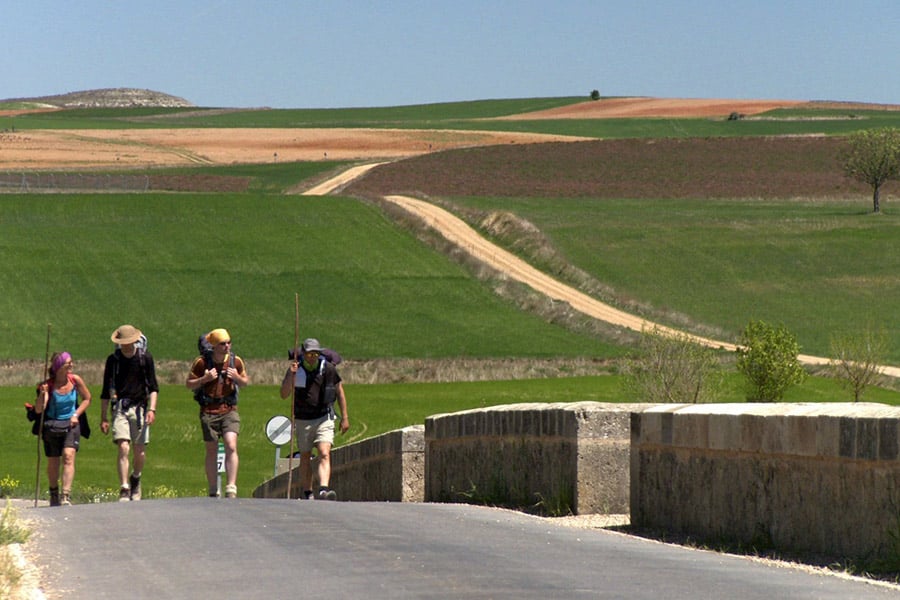
Rome and Santiago de Compostela became major pilgrimage destinations in medieval times and remain significant today.
Santiago de Compostela houses the relics of St. James the Great and features multiple pilgrimage routes with hostels for travelers.
Other major pilgrimage sites include Loreto (Italy), Lourdes (France), Fatima (Portugal), Our Lady of Guadalupe (Mexico), and Aparecida (Brazil).
In the U.S., notable shrines include the Basilica of the National Shrine of the Immaculate Conception and the National Shrine of Our Lady of Champion in Wisconsin.
Pilgrimages are distinct from typical travel, often involving restraint, prayer, and simplicity.
The Vatican’s Directory on Popular Piety describes pilgrimage as a journey to deepen one’s Christian vocation.
Executive Summary
Pilgrimage holds deep theological and spiritual significance across religions, particularly in Catholicism, where it is rooted in Scripture and tradition. The practice involves physical journeys to sacred sites, often tied to acts of devotion, penance, or seeking divine grace. Biblical examples include Abraham’s journey, the Exodus, and the Holy Family’s pilgrimage to Jerusalem. In the New Testament, Jesus’ ministry is framed as a pilgrimage toward Jerusalem, culminating in his crucifixion, which redefines pilgrimage as a metaphor for the Christian journey toward salvation. Historically, pilgrimage routes like the Camino de Santiago and destinations such as Rome, Lourdes, and Fatima emerged as centers of veneration, often linked to relics, apparitions, or miracles. Modern pilgrims seek spiritual renewal, though the experience is distinct from tourism, emphasizing simplicity, prayer, and intentionality. The Vatican’s Directory on Popular Piety highlights pilgrimage as a means to deepen one’s Christian vocation, not merely a visit to a religious site. While motivations vary—from personal conversion to physical healing—the practice remains a global phenomenon, with millions visiting major shrines annually.
The article traces the evolution of pilgrimage from its scriptural foundations to contemporary expressions, noting its adaptability across cultures and centuries. It acknowledges the diversity of pilgrimage experiences, from solitary reflection to communal journeys, while emphasizing the transformative potential of the practice when approached with faith and humility.
Full Take
The article presents pilgrimage as a timeless spiritual practice, deeply embedded in religious tradition and personal transformation. At its strongest, the narrative effectively traces the historical and theological evolution of pilgrimage, from biblical journeys to modern-day shrines, highlighting its role in fostering faith, penance, and communal identity. It credits the practice with enduring relevance, noting how millions still undertake pilgrimages for healing, conversion, or devotion. The piece also distinguishes pilgrimage from tourism, emphasizing its intentionality and spiritual discipline.
However, the analysis could benefit from deeper scrutiny of the motivations behind pilgrimage’s resurgence in contemporary society. Is the modern appeal driven by genuine spiritual seeking, or does it also reflect broader cultural trends, such as the commodification of religious experiences or the search for meaning in an increasingly secular world? The article leans heavily on Catholic tradition, which is appropriate given its focus, but it could acknowledge the diversity of pilgrimage practices across religions and their varying theological justifications.
Rooted in the paradigm of pilgrimage as a metaphor for the Christian journey, the narrative assumes a linear progression from earthly struggle to heavenly reward. This framing may resonate with believers but could be interrogated for its implications: Does it risk oversimplifying suffering as merely a stepping stone to salvation? Who benefits from the institutionalization of pilgrimage sites—local communities, the Church, or commercial interests?
For human agency, the article positions pilgrimage as an active choice to deepen faith, but it doesn’t explore how socioeconomic factors might limit access to such journeys. Second-order consequences could include the environmental impact of mass pilgrimages or the potential for exploitation in sites dependent on religious tourism.
Bridge questions:
How might the rise of virtual pilgrimages (e.g., online tours of holy sites) challenge or complement traditional physical journeys?
What role does pilgrimage play in interfaith dialogue, given its presence in multiple religious traditions?
If pilgrimage is framed as a personal transformation, how do we measure its success beyond subjective experience?
Counterstrike scan: A coordinated influence campaign might exploit pilgrimage’s emotional and spiritual appeal to reinforce institutional authority or commercialize religious sites. However, this article does not exhibit such manipulation; it presents a balanced historical and theological overview without overt persuasion or distortion.
Patterns detected: none