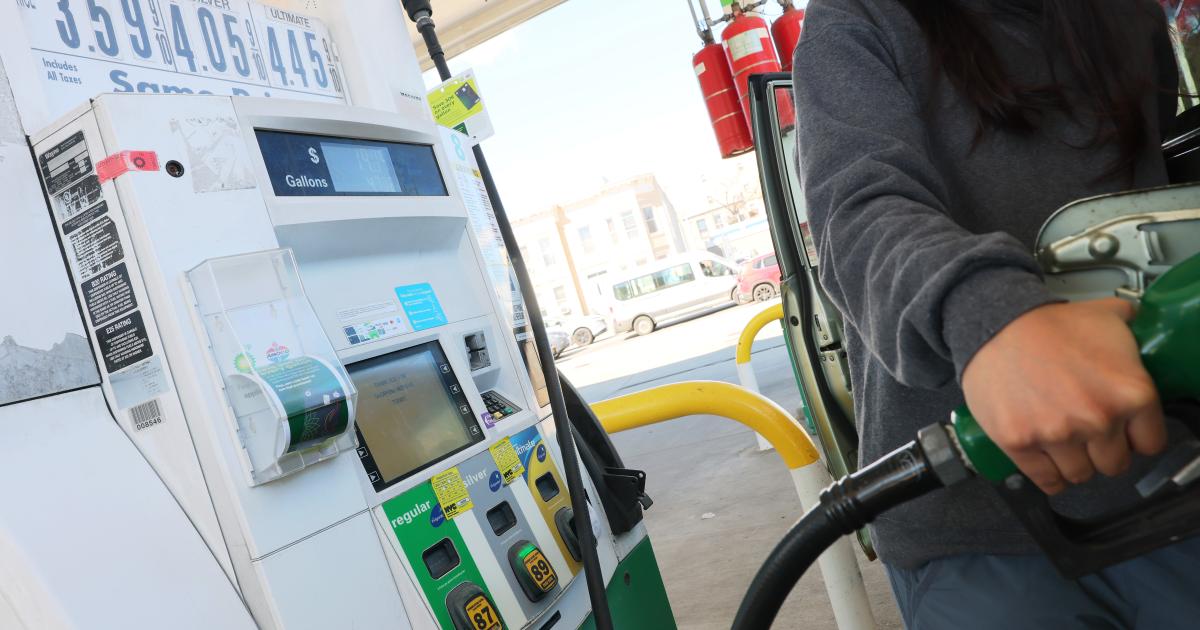
Iran’s efforts to close the Strait of Hormuz have made gas prices rise to the point where they may threaten President Donald Trump’s affordability agenda. Whether the closure is short or long, consumers are feeling the pain just as the latest economic figures show an economy that is sputtering and can use a boost.
But the President can help absorb the disruption and deprive Tehran of its goal to push our economy into reverse by cutting a deal on planned global tariff increases.
The Strait of Hormuz has been a key bottleneck for oil exports from the Gulf region with roughly one-fifth of global oil flows being impacted by the threat of Iranian missiles, mines, and drone strikes through the narrow waterway. The economic situation is becoming increasingly precarious as energy stockpiles worldwide quickly dwindle and prices rise in response to the choked-off supply that is not easily substituted. This explains why in recent weeks we’ve seen the fastest rise in gasoline prices in three decades.
Without sufficient defensive naval assets, including minesweepers, to safely protect and escort oil and liquified natural gas tankers through the Strait, commercial shipping there has largely ceased. President Trump has sought military assistance for this task from other nations, but it has not been forthcoming, even though they would benefit from the resultant low energy prices as we would.
>>> How America Drilled Its Way out of the Oil-Supply Straitjacket
This presents the deal-maker-in-chief with a tremendous opportunity to address multiple problems at once by negotiating on tariffs.
After the Supreme Court struck down the Trump administration’s across- the-board tariffs imposed under the International Emergency Economic Powers Act, the president immediately reimposed them at a 10% rate using another authority, Section 122 of the Trade Act of 1974. He later announced he would raise the rate to 15%, but the administration has not yet implemented the increase.
Before hiking import duties, President Trump can offer to take the higher rate of 15% off the table in exchange for commitments from our trading partners and allies to increase short-term global energy output in concrete ways. This would include releasing energy reserves, increasing production, and especially by providing military assistance for protecting commerce through the Strait of Hormuz.
The importance of energy markets to the modern economy simply cannot be overstated. Not only do we depend on energy for everything in our daily lives, but energy is increasingly used for what might be called non-energy purposes. Oil and natural gas are the source of seemingly everything: fertilizers, car parts, pharmaceuticals—you name it.
Countless products, from the screens where most of us read our news to the synthetic fibers in clothing, come from oil and natural gas. That means if energy prices rise, the price of just about everything else in the economy starts rising too. After four years of Bidenflation and given anemic GDP growth this past quarter, American families can ill afford this additional burden.
>>> Saudi’s Petroline Undercuts Iran’s Energy Blackmail and Offers a Lesson for America
Cooperation from other nations through energy production and military assistance would go a long way in securing energy flows and stabilizing markets, which in turn would put downward pressure on prices. Reducing the across-the-board tariffs, planned or already enacted, is a powerful bargaining chip in making that happen, and by itself would give consumers and producers certainty that prices were not going to continue to rise for a plethora of goods.
But President Trump can go even further in helping reduce energy prices by dropping certain other tariffs too. The 50% steel and aluminum tariffs, imposed under Section 232 of the Trade Expansion Act of 1962, have increased costs for oil and natural gas drillers who heavily depend on imported pipes and tube steel.
Suspending these tariffs would increase the number of wells that can be profitably drilled at today’s prices. Drilling more wells and increasing extraction would bring more energy to market and put downward pressure on prices, while making America and her allies less dependent on hostile foreign powers.
The President who perfected the Art of the Deal can easily make this pitch. If the world helps us, we’ll help the world. By inducing trading partners to do their part in helping to secure stable and cheap global energy supplies, most people win, except Iran and its allies.
This piece originally appeared in Townhall
Facts Only
Iran is threatening the Strait of Hormuz with missiles, mines, and drone strikes.
The strait is a key bottleneck for oil exports from the Gulf region, impacting roughly one-fifth of global oil flows.
Commercial shipping through the Strait has largely ceased due to lack of defensive naval assets.
President Trump seeks military assistance for protecting commerce through the Strait from other nations.
The U.S. has reimposed tariffs under Section 122 of the Trade Act of 1974 after they were struck down by the Supreme Court.
Tariffs are planned to be raised from 10% to 15%, but have not yet been implemented.
The 50% steel and aluminum tariffs, imposed under Section 232 of the Trade Expansion Act of 1962, increase costs for oil and natural gas drillers.
Executive Summary
Full Take
The article presents a strategic approach by President Trump to address multiple challenges simultaneously: the Iranian threat to the Strait of Hormuz, escalating energy prices, and global tariffs. By offering concessions on planned tariff increases in exchange for increased short-term energy output, military assistance, and cooperation on releasing energy reserves from trading partners and allies, Trump aims to secure energy flows, stabilize markets, and reduce energy prices. This strategy could help mitigate the economic burden on American families, but it also raises questions about the long-term sustainability of these negotiations and potential unintended consequences for global trade relations.
Patterns detected: ARC-0159 Offer-for-Concession, ARC-0043 Motte-and-Bailey
Sentinel — Human
The article exhibits signs of being likely human-written, showing variations in sentence length and lexical diversity, as well as some idiosyncratic emphasis. However, it does have a more balanced framing than what one might expect from a human journalist.