The Democrats have set a new record for single-month lobbyist fundraising. The Democratic Congressional Campaign Committee reported a record $4.1 million in lobbyist-bundled contributions in February, according to a Sludge analysis of Federal Election Commission filings, a dramatic increase in corporate-linked fundraising as House Democrats are campaigning on “affordability.” The lobbyist-derived cash made up nearly one-third of the DCCC’s fundraising last month.
Lobbyist bundling, in which registered lobbyists collect checks from their clients and colleagues and deliver them in a single package, is a key way that corporate interests work to gain influence with lawmakers. Federal law requires disclosure of bundled contributions above $24,000.
The DCCC’s February total shatters previous records and builds on a trend of the Democrats’ increasing reliance on lobbyist bundling for their funds. January’s $3.6 million was itself a high-water mark, and as recently as 2023, monthly lobbyist bundling reported by the DCCC was generally much lower, typically in the tens or hundreds of thousands of dollars.
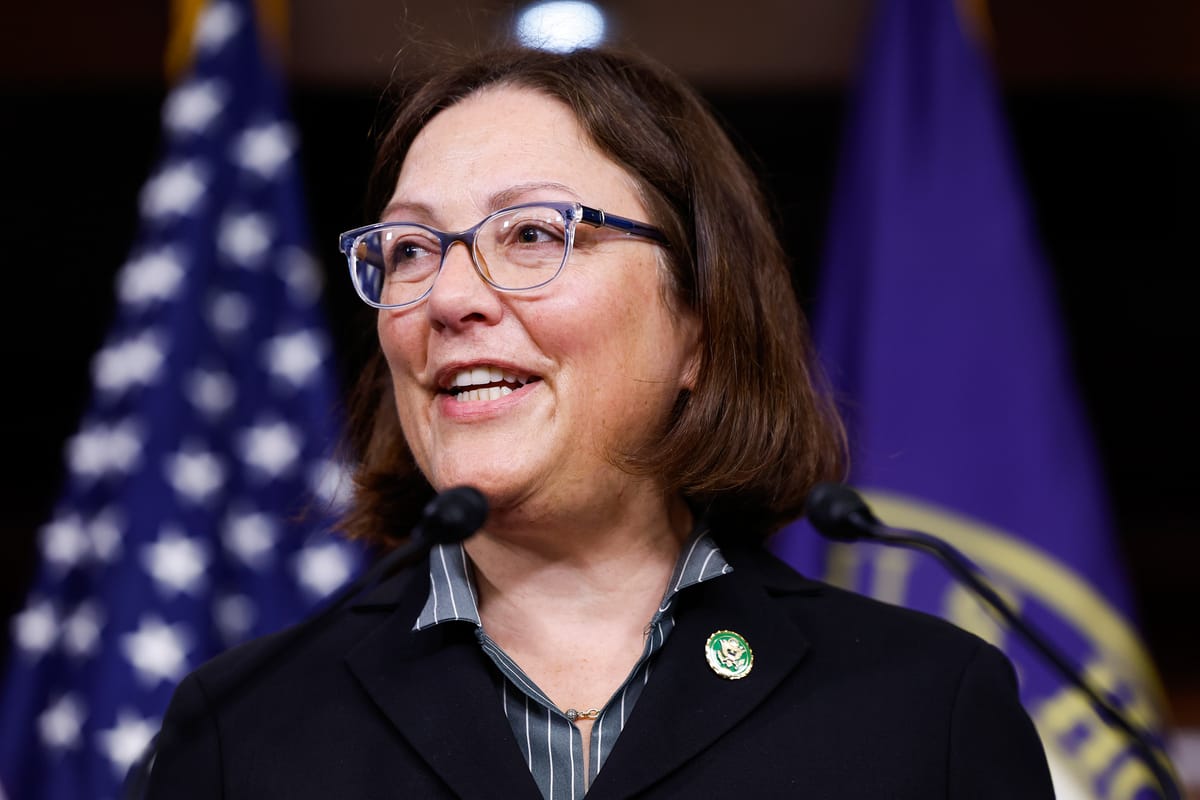
House Democrats have made affordability a central theme of their midterm message. When the DCCC announced its February fundraising haul, its chair Rep. Suzan DelBene (Wash.) highlighted rising costs, saying, “Everything is getting more expensive, far too many Americans can no longer afford their health care.” She blamed the affordability crisis on House Republicans.
DCCC Chair DelBene is herself among the top recipients of corporate-linked campaign contributions in the House. According to OpenSecrets, more than 40 percent of DelBene’s 2024 campaign receipts came from business PACs, ranking her eighth among House Democrats in total raised from those sources. DelBene’s office did not respond to a request for comment.
Many of the lobbyists contributing to DCCC’s record haul represent companies or trade groups that have opposed the very policies Democrats are promoting to reduce costs.
For example, several of the firms whose lobbyists bundled significant sums in February work for major pharmaceutical manufacturers and their trade associations that have spent years lobbying against expansive drug pricing reforms, including efforts to strengthen Medicare’s authority to negotiate prices. House Democrats have made expanding that authority and closing loopholes a central priority, with top committee chairs Frank Pallone and Richard Neal introducing the Lowering Drug Costs for American Families Act last November to do so.
Tiber Creek Group, whose lobbyists bundled nearly $480,000 for the DCCC in February, represents Pharmaceutical Research and Manufacturers of America (PhRMA), and more than a dozen major drug manufacturers including Eli Lilly, AstraZeneca, Merck, Novartis, and Roche. Tiber Creek lobbyists Jonathan Jones and Corey Malmgen have both been lobbying Congress for PhRMA on “issues related to Medicaid pricing reform” and each contributed $49,000 in bundled funds to the DCCC in February.
Facts Only
The Democratic Congressional Campaign Committee (DCCC) reported $4.1 million in lobbyist-bundled contributions in February.
This amount made up nearly one-third of the DCCC’s total fundraising for the month.
Lobbyist bundling involves registered lobbyists collecting and delivering contributions from clients and colleagues.
Federal law requires disclosure of bundled contributions above $24,000.
January’s lobbyist-bundled contributions totaled $3.6 million, also a record.
In 2023, monthly lobbyist bundling reported by the DCCC was typically in the tens or hundreds of thousands of dollars.
House Democrats have made affordability a central theme of their midterm message.
DCCC Chair Suzan DelBene highlighted rising costs and blamed House Republicans for the affordability crisis.
DelBene is among the top recipients of corporate-linked campaign contributions in the House.
More than 40% of DelBene’s 2024 campaign receipts came from business PACs.
Several firms whose lobbyists bundled significant sums in February represent pharmaceutical manufacturers and trade groups.
Tiber Creek Group, whose lobbyists bundled nearly $480,000 for the DCCC in February, represents PhRMA and major drug manufacturers.
Tiber Creek lobbyists Jonathan Jones and Corey Malmgen each contributed $49,000 in bundled funds to the DCCC in February.
Executive Summary
The Democratic Congressional Campaign Committee (DCCC) reported a record $4.1 million in lobbyist-bundled contributions in February, marking a significant increase in corporate-linked fundraising. This sum constituted nearly one-third of the DCCC’s total fundraising for the month, surpassing previous records, including January’s $3.6 million. Lobbyist bundling involves registered lobbyists collecting and delivering contributions from clients and colleagues, with federal law requiring disclosure of bundled sums exceeding $24,000.
House Democrats have emphasized affordability as a key midterm campaign theme, with DCCC Chair Suzan DelBene highlighting rising costs and blaming Republicans for the crisis. However, many lobbyists contributing to the DCCC represent industries opposing Democratic policies aimed at reducing costs, such as pharmaceutical companies lobbying against drug pricing reforms. For instance, Tiber Creek Group, which bundled nearly $480,000 for the DCCC in February, represents major drug manufacturers and PhRMA, an industry group that has opposed Medicare price negotiation reforms. This juxtaposition raises questions about the alignment between Democratic messaging and their fundraising sources.
Full Take
The strongest version of this narrative highlights a clear tension: Democrats are campaigning on affordability while simultaneously accepting record sums from lobbyists representing industries that oppose their policy goals. The reporting is factually grounded, with specific examples like Tiber Creek Group’s contributions and the pharmaceutical industry’s opposition to drug pricing reforms. This creates a compelling case for examining the influence of corporate money in politics, regardless of party.
Patterns detected: ARC-0024 Ambiguity (the framing of "affordability" as a Democratic priority while accepting funds from industries that undermine it), ARC-0043 Motte-and-Bailey (campaigning on populist messaging while relying on corporate donations).
The root cause here is the systemic reliance on corporate fundraising in U.S. politics, where both parties often prioritize financial support over policy consistency. The assumption that campaign messaging aligns with legislative action is challenged by the reality of lobbyist influence. Historically, this echoes the broader pattern of political parties leveraging populist rhetoric while maintaining ties to corporate donors.
The implications for human agency are significant: voters may feel disillusioned if they perceive a disconnect between campaign promises and fundraising practices. The beneficiaries are corporate interests that gain access and influence, while the costs are borne by voters who may see policies watered down or stalled. Second-order consequences could include eroded trust in democratic institutions and increased cynicism about political accountability.
Bridge questions: How might Democrats reconcile their affordability messaging with their fundraising sources? What alternative funding models could reduce corporate influence in politics? Would voters prioritize policy outcomes over campaign rhetoric if given full transparency?
Counterstrike scan: A coordinated influence campaign would amplify the hypocrisy narrative to undermine Democratic credibility, potentially using selective framing to ignore similar practices by Republicans. The actual content does not fully match this pattern, as it presents a balanced critique without overt partisan bias. However, the focus on Democrats could be exploited by bad actors to create a false equivalence or deflect from broader systemic issues.
Sentinel — Human
The text shows signs of being human-written, with a balance between coherent argumentative structure, stylometric signals, and minimal coordination indicators. However, the lack of a clear personal voice or stylistic fingerprint in some sections suggests potential AI assistance.