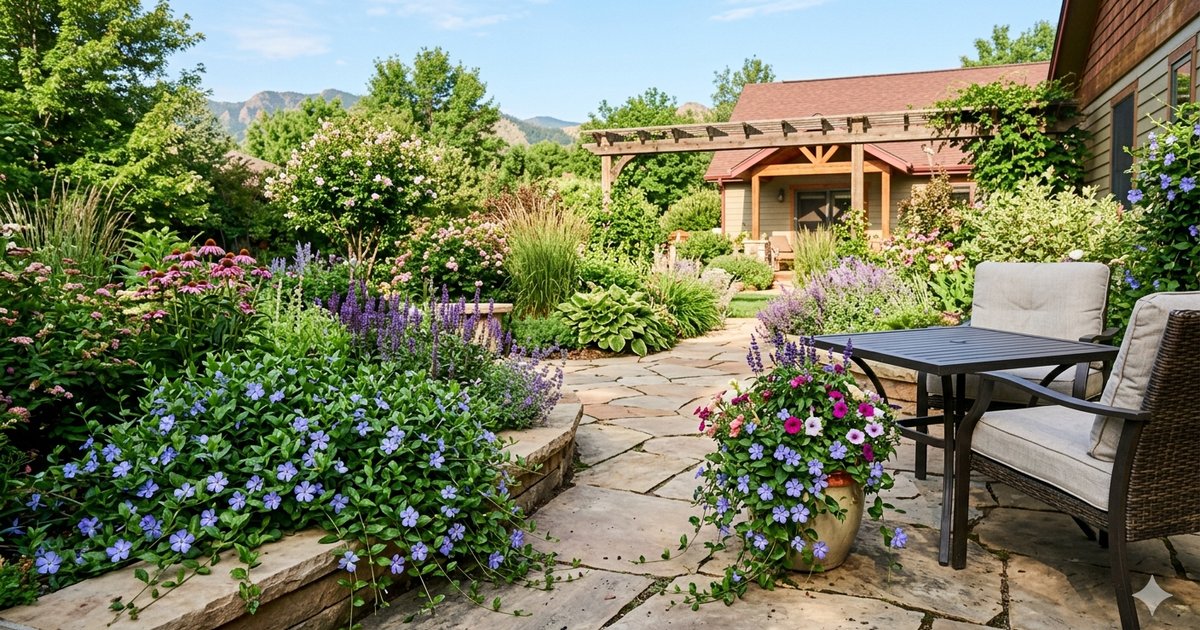
Vinca vine, often known as creeping periwinkle, is one of the most adaptable and quietly dependable groundcover-style plants used in both shade and sun gardens. With its glossy evergreen foliage and soft trailing stems, it brings continuity and coverage to planting designs across Fort Collins and the wider Front Range.
Unlike more flamboyant summer annuals, vinca vine is valued for its stability—filling space, suppressing weeds, and providing a consistent green backdrop that supports brighter flowering companions.
At [Plantorium.com](https://plantorium.com?utm_source=chatgpt.com vinca vine is commonly used in container spillovers, shaded planters, and low-maintenance groundcover-style plantings where steady growth matters more than seasonal display.
Why Vinca Vine Performs Well in Northern Colorado
Vinca vine is remarkably adaptable, which makes it well suited to the varied microclimates of the Front Range. It can tolerate both sun and shade, though it performs best in cooler, partially shaded environments.
It performs well because:
- It tolerates a wide range of light conditions
- It spreads steadily without becoming aggressive in a single season
- It maintains attractive evergreen foliage
- It handles dry air better than many shade plants
The plant produces small, five-petaled flowers in shades of:
- Periwinkle blue
- Lavender
- White
- Occasional pink tones
While flowering is attractive, the main ornamental value lies in the trailing, glossy foliage that fills space with a clean, unified texture.
When to Plant Vinca Vine in Fort Collins
Vinca vine should be planted after the last frost date, typically mid-May in Fort Collins and surrounding areas.
Once established in warm soil, it begins to spread steadily through the growing season. In containers, it quickly forms trailing stems that soften edges and spill naturally over sides.
Sunlight Requirements
Vinca vine is flexible, but performs best in partial shade.
In Northern Colorado:
- Partial shade is ideal for lush growth
- It can tolerate full sun with adequate moisture
- Deep shade may reduce flowering and slow growth
In hotter, exposed areas, some afternoon shade helps maintain foliage quality.
Soil and Growing Conditions
Vinca vine prefers well-draining, moderately fertile soil.
For best results:
- Use rich but well-aerated potting mix in containers
- Avoid compacted or waterlogged soil
- Amend heavy soils with compost for better drainage
Once established, it is relatively low-maintenance and adaptable.
Watering in a Front Range Climate
Vinca vine prefers consistent moisture but is more forgiving than many shade-loving plants.
Recommended watering approach:
- Water regularly during establishment
- Maintain even moisture without oversaturation
- Allow slight drying between waterings
- Increase watering in hot, windy conditions
In containers, monitoring is important, especially during peak summer heat in Fort Collins.
Fertilizing for Steady Growth
Vinca vine benefits from light feeding to support continuous spread and foliage density.
A balanced fertilizer applied occasionally helps:
- Encourage steady trailing growth
- Maintain vibrant foliage color
- Support light flowering
Over-fertilization is unnecessary and may lead to overly soft growth.
Garden Role and Design Use
Vinca vine is primarily used as a groundcover and trailing foliage plant in design compositions.
It works especially well in:
- Shaded container arrangements
- Hanging baskets as a soft spiller
- Underplanting in mixed containers
- Low-maintenance groundcover beds
- Edging along shaded pathways
In Fort Collins gardens, it is often used to unify compositions, softening transitions between taller plants and container edges.
Handling Colorado Weather
Vinca vine is well adapted to variable Front Range conditions when properly placed.
It tolerates:
- Partial shade and filtered light
- Moderate heat
- Dry air once established
- Light drought stress
It is sensitive to:
- Prolonged overwatering
- Poor drainage
- Extreme cold (not winter-hardy in containers)
With proper placement, it remains reliable throughout the growing season.
Companion Planting
Vinca vine pairs especially well with both flowering and foliage plants that benefit from a soft trailing base.
Excellent companions include:
- Impatiens
- Coleus
- Begonias
- Calibrachoa
- Petunias
- Fern-like shade plants
- Plectranthus
Its trailing habit helps visually connect mixed plantings into cohesive compositions.
A Quiet Connector in Garden Design
Vinca vine is not a dramatic centerpiece plant, but it is one of the most useful structural elements in container and shade gardening. It fills gaps, softens edges, and creates visual continuity in plantings that might otherwise feel fragmented.
In Fort Collins and across the Front Range, it remains a dependable choice for gardeners who value consistency, adaptability, and low-maintenance performance in mixed garden designs.
Explore seasonal availability and additional annuals at [Plantorium.com’s full plant catalog](https://plantorium.com/all-plants/?utm_source=chatgpt.com
Facts Only
Vinca vine, also called creeping periwinkle, is a groundcover plant used in shade and sun gardens.
It features glossy evergreen foliage and trailing stems.
The plant produces small flowers in periwinkle blue, lavender, white, and occasional pink tones.
Vinca vine is adaptable to varied microclimates, including those in Fort Collins and the Front Range.
It tolerates dry air better than many shade plants and performs best in cooler, partially shaded environments.
The ideal planting time in Fort Collins is after the last frost date, typically mid-May.
Vinca vine prefers well-draining, moderately fertile soil and consistent moisture during establishment.
It is used in container spillovers, shaded planters, and low-maintenance groundcover beds.
Common companion plants include impatiens, coleus, begonias, and ferns.
The plant is not winter-hardy in containers and is sensitive to prolonged overwatering and poor drainage.
Executive Summary
Full Take
This article presents vinca vine as a reliable, low-maintenance groundcover option for Fort Collins and the Front Range, emphasizing its adaptability and aesthetic value. The narrative is straightforward, focusing on practical gardening advice without overt manipulation. However, it’s worth noting the subtle framing of vinca vine as a "quietly dependable" plant, which may appeal to gardeners seeking stability over seasonal flair. The article avoids emotional exploitation or distortion, presenting facts clearly and without exaggeration.
The root cause of this narrative is the broader trend in gardening toward low-maintenance, adaptable plants that thrive in variable climates. The unstated assumption is that gardeners prioritize consistency and ease of care over dramatic seasonal displays. This aligns with a growing preference for sustainable, resilient landscaping practices.
Implications for human agency include the empowerment of gardeners to make informed choices about plant selection, balancing aesthetics with practicality. The second-order consequence could be a reduction in water usage and maintenance efforts, given vinca vine’s tolerance for dry conditions once established.
Bridge questions: How does vinca vine’s adaptability compare to other groundcover options in terms of long-term sustainability? What are the trade-offs between its low-maintenance benefits and potential limitations, such as its sensitivity to overwatering? Would a comparative analysis of similar plants provide a more nuanced perspective for gardeners?
Patterns detected: none
Counterstrike scan: If this narrative were part of a coordinated influence campaign, it might emphasize vinca vine’s adaptability to promote it as a solution to climate-related gardening challenges. However, the content does not align with such a pattern, as it provides balanced, practical advice without overt persuasion.
Sentinel — Human
This text functions effectively as practical, localized horticultural advice, demonstrating human contextual understanding and synthesis rather than pure data regurgitation.