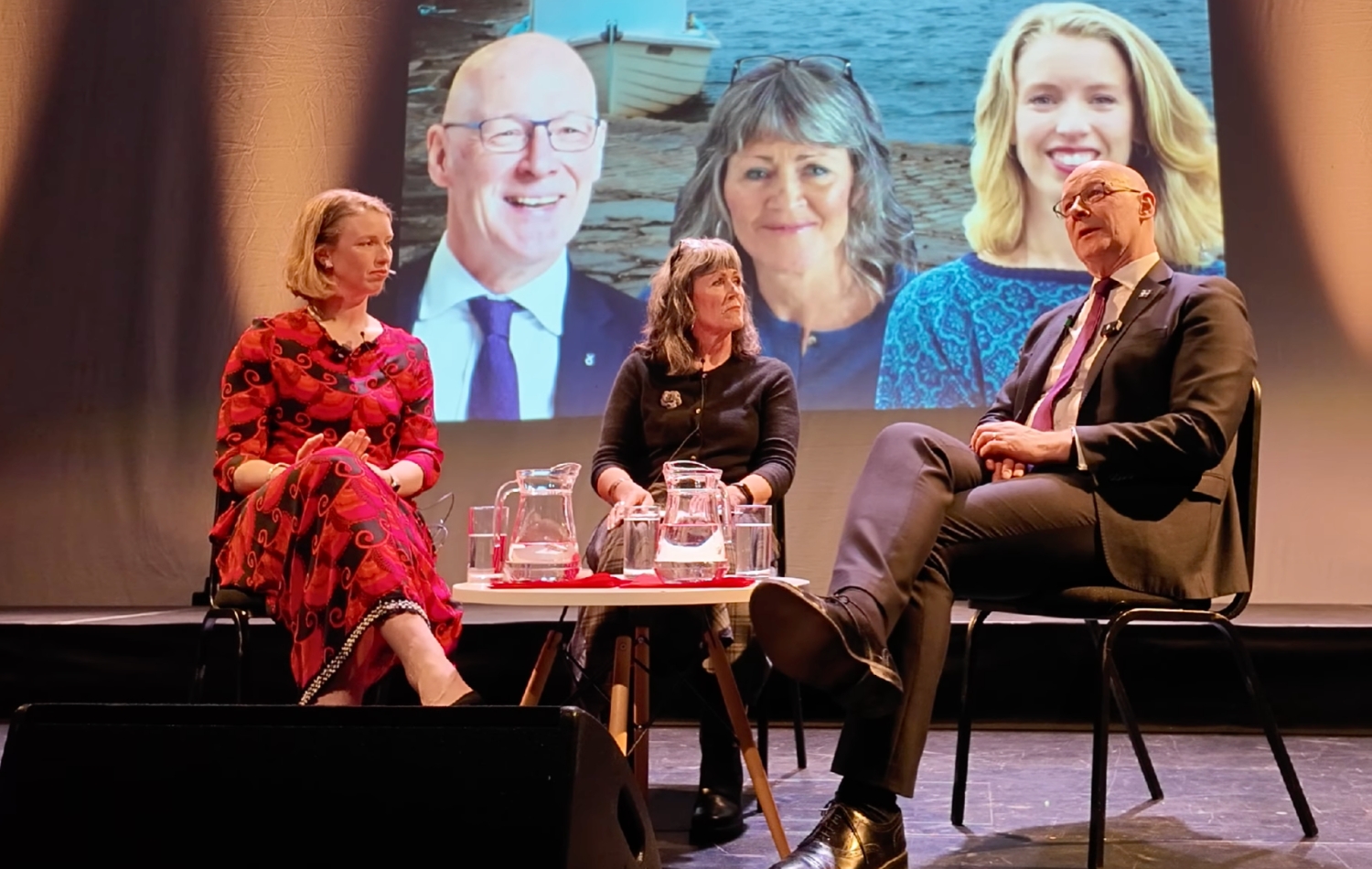
The Scottish National Party (SNP) has selected Hannah Mary Goodlad, a senior figure at Norway’s state oil company, Equinor, as its candidate for the Shetland Islands’ seat in parliamentary elections this May.
Locals and political opponents have accused Equinor, which has given Goodlad a leave of absence to campaign, of attempting to influence British politics. Shetland is the closest Scottish constituency to Rosebank – the largest new oil and gas field in the North Sea, and a flagship project for the company, currently awaiting UK government approval.
Alex Armitage, a local paediatrician and the Scottish Greens’ candidate for Shetland’s Holyrood seat, said Goodlad’s selection presented an “alarming” conflict of interest.
Goodlad has worked for Equinor, and its precursor Statoil, since 2014. During that time, she has risen through the ranks to her current position as head of renewables portfolio and strategy in the Asia Pacific region, working out of Equinor’s Oslo office.
Goodlad announced her intention to run for Holyrood in March 2025, while still a paid Equinor employee. Three months later, she moved back to Shetland, confirmed she was “taking leave from Equinor to stand in the Scottish elections” in a LinkedIn post, and thanked “Equinor for the flexibility demonstrated”.
Since that time, she claims not to have taken a salary from the company, but remains under contract. Goodlad declined to answer whether that contract prevents her from speaking freely about Rosebank, except to say that the project’s permit will be decided by Westminster, not Holyrood, and that “oil and gas is needed”.
As an Equinor executive, Goodlad has experience lobbying the Scottish government on energy decisions, according to documents seen under Freedom of Information law.
In August 2023, Goodlad met the SNP’s then cabinet secretary for external affairs, Angus Robertson, where she “reflected on the role of Equinor as a vehicle to promote and deliver Norway’s energy offer internationally” and the company’s “economic and diplomatic functions”. The meeting does not appear in Holyrood’s official lobbying register, despite seemingly meeting the requirements for doing so.
Subscribe to our newsletter
Stay up to date with DeSmog news and alerts
Shetland has been a safe Liberal Democrat seat since the creation of Scottish Parliament, but has become a key target for the SNP this election according to party leader John Swinney. At time of writing, national polling suggests the SNP will maintain their majority in Holyrood, while indicative projections in Shetland have Goodlad in second.
Rosebank’s initial permit was struck down in a judicial review last January. Re-application documents filed by Equinor in October revealed that fuel from the field would generate almost 250 million tonnes of greenhouse gases over the project’s lifespan.
While positioning itself as a “broad energy” company prioritising the development of renewable energy, Equinor has reneged on commitments to electrify oil platforms and overstated its success in capturing carbon. In its earnings report for the final quarter of 2025, the company announced plans to scale back renewable energy investments while registering an operating income of $6.2 billion.
In a statement to DeSmog, Equinor insisted it is a “leading partner” to the UK’s “decarbonisation ambitions” – citing carbon capture and offshore wind projects in Scotland and Dogger Bank. “Equinor remains dedicated to long-term value creation in support of the goals of the Paris Agreement and to our ambition to achieve net zero by 2050,” said UK spokesperson Alice Baxter.
However, Friends of the Earth Scotland’s oil and gas campaign manager, Rosie Hampton, shared concerns that Goodlad’s election may bring Equinor closer to the halls of Holyrood.
“Equinor likes to market itself as a firm that is concerned about the transition, but the reality is that the overwhelming majority of its energy is from the oil and gas that is driving climate breakdown and worsening extreme weather,” Hampton said.
“Equinor and other fossil fuel giants already have far too big an influence on our politics in Scotland. The lobbying power of these companies has slowed the transition away from oil and gas and has politicians pleading for lower taxes on these firms’ obscene profits.”
The SNP did not respond to requests for comment.
Under former leader Nicola Sturgeon, the party was staunchly opposed to new fossil fuel extraction. That position has changed under Swinney’s tenure: during a visit to Shetland in August he said that fossil fuels would be necessary in the UK’s future, but that “any oil and gas development must be subjected to climate compatibility assessment”.
Equinor declined to comment on the status of Goodlad’s contract with the company or whether she had been paid during her campaigning sabbatical. Baxter said the firm has a policy of not making political donations, and that Goodlad “is free to share her opinions as a private individual”.
Goodlad defended her role with Equinor, and said the company had made no financial contributions to her campaign, nor sought to direct it.
“My employment with Equinor hasn’t influenced my campaign to date,” she said, adding that, if elected, she would resign from Equinor to focus fully on politics.
“Governments need more people with business experience; people with energy expertise. We need fewer career politicians,” Goodlad said. “The experience that I’ve had working in a corporate environment – project management, doing negotiations, making sure that I understand procurement, how to balance a cash flow – these are all things that are critical for decision makers in government.”
“Revolving Door”
Critics were not convinced by Goodlad’s attempt to distance her campaign from Equinor.
“If she’s going to leave Equinor then that’s good,” said Armitage of the Greens, who placed third in the constituency after the Liberal Democrats and SNP in the 2024 UK general election. “But I don’t like the fact that there seems to be this revolving door between corporations and politics.”
Panda Anderson, a local carer, also expressed reservations. “If she does win, she already has all the information needed to lobby on [Equinor’s] behalf,” Anderson said. “She knows their future strategies, plans, ideas – and she wants to be in Parliament representing a constituency that’s on the front lines of that company’s exploitation”.
Equinor has in the past recruited high-profile politicians to its ranks. In 2020, the company appointed former Conservative energy and climate secretary, Amber Rudd, to chair its advisory board.
During her time in office, Rudd led the UK’s involvement in the flagship Paris Agreement, which set a global goal for limiting temperature rises.
However, since joining Equinor, Rudd has penned opinion pieces questioning climate science, including a Times column in November declaring “the age of climate realism has begun” and rubbishing accusations of corporate greenwashing as “unhelpful”.
At time of writing, more than a quarter of the reactions to a LinkedIn post launching a fundraising page for Goodlad’s election campaign came from past and present Equinor staff – including the company’s current vice-president of political and public affairs, Olav Aamlid Syversen.
Last year, a DeSmog investigation found that Equinor had spent £200,000 sponsoring local science classes in Shetland. Spokesperson Baxter said the company was “proud” of the project, while critics called it “dystopian” and accused the company of “greenwashing”.
Shetland’s Energy
Goodlad describes her energy policy as community-focused and “decentrist”. She took credit for an SNP pledge to make future renewable developments contingent on developers offering local communities a stake of “up to 20 percent” in their ownership and profits. She has also proposed a “Shetland Energy Act” which would devolve consenting decisions for onshore wind to volunteer community councils.
Goodlad acknowledged the “risk” of this slowing wind developments but said that Shetland had been chastened by its experience with Viking, the UK’s largest onshore farm. Since coming online in August 2024, Viking has created the country’s biggest community benefit fund from a renewable energy development, but has also been criticised locally for earning operators millions while “wasting” energy.
“We’re not in the initial stages of renewable energy now,” said Goodlad. “We’ve hit the part of the bell curve where we need to take time.”
Goodlad declined to offer a personal opinion on Rosebank. “I think the energy transition is really complex. I think that oil and gas is needed,” she said. “I think that the UK – with its low-carbon production, its human rights [record], and its competence when it comes to safety – is a better nation than almost any in the world to produce oil and gas. As long as the UK needs oil and gas, the UK should be producing.”
This position still commands considerable local support. “Campaigning [about] Equinor might win her votes,” said Debra Nicolson, a local Scottish Green member. “Oil is a high paying sector that employs a lot of people in Shetland. A lot of people here don’t agree that we need to stop drilling.”
Yet, emissions from the world’s existing oil and gas licences would push the world past 1.5°C of warming “by a long way” according to University College of London academics. Crossing that threshold could melt swathes of Arctic ice, and “lead to more frequent wildfires, reduced biodiversity, lower food production, and a higher risk of species going extinct” they added.
“Decarbonisation is the only scientifically literate position that you can have,” said Armitage. “I see Goodlad’s rise within the SNP as a worrying sign that the party is rolling back its climate commitments.”
Subscribe to our newsletter
Stay up to date with DeSmog news and alerts
Facts Only
* Hannah Mary Goodlad is the SNP’s candidate for Shetland in parliamentary elections.
* She previously held a senior role at Equinor (formerly Statoil) since 2014.
* Equinor is developing the Rosebank oil and gas field, a key project for the company.
* Locals and political opponents accuse Equinor of influencing British politics through Goodlad’s candidacy.
* Goodlad announced her intention to run in March 2025, while still employed by Equinor.
* She took leave from Equinor to campaign and confirmed she was “taking leave from Equinor to stand in the Scottish elections”.
* The SNP is targeting Shetland, a traditionally Liberal Democrat constituency, as part of a broader strategy.
* Rosebank’s initial permit was struck down in January 2024.
* Goodlad met with Angus Robertson in August 2023, discussing Equinor's role internationally.
* The meeting was not recorded in Holyrood’s official lobbying register.
* Shetland has been a safe Liberal Democrat seat since 2007.
* Polling suggests the SNP will maintain their majority in Holyrood.