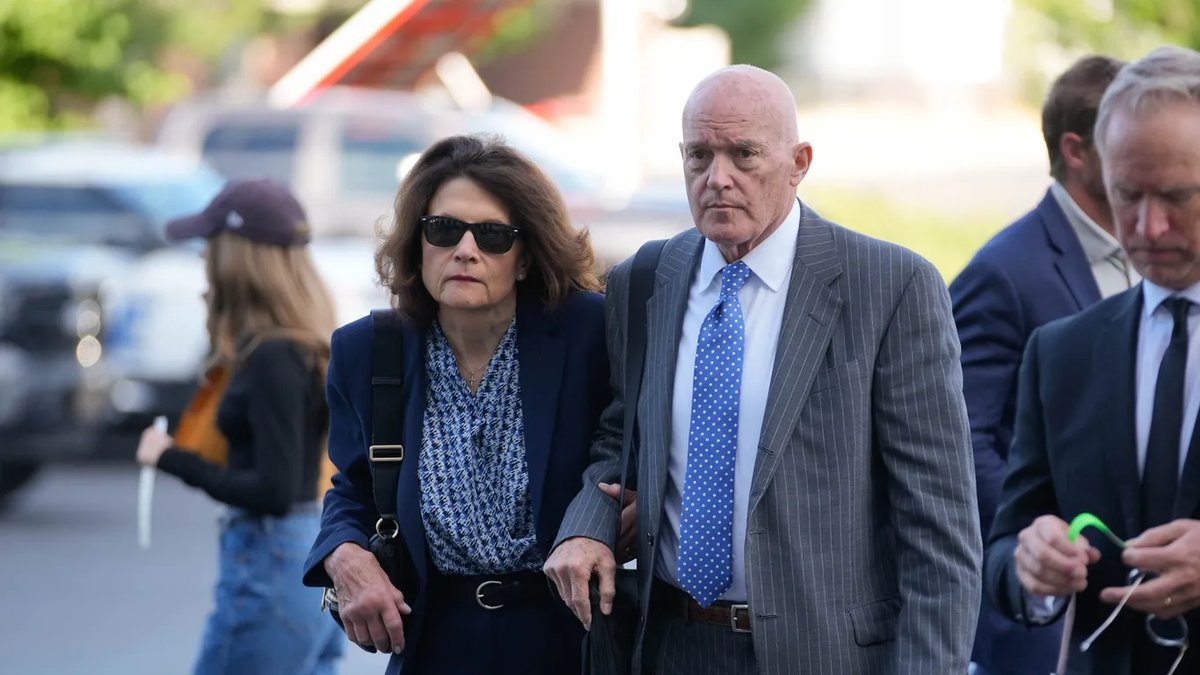
A parade of prominent conservative figures are descending on a Utah courthouse this week to attend the preliminary hearing for the man accused of murdering Turning Point USA founder Charlie Kirk.
Why it matters: The show of support in Provo underscores that, nearly a year after his assassination, Kirk remains a unifying figure across the Republican Party and the MAGA movement.
Driving the news: Among those who have joined Kirk's family members this week in attending hearings for accused killer Tyler Robinson are:
Donald Trump Jr.
Utah Sen. Mike Lee (R)
Conservative influencers Jack Posobiec and Graham Allen, and
Rush Limbaugh's widow, Kathryn Adams Limbaugh.
The big picture: Kirk's assassination has led to a high-profile criminal case shadowed by political divisions in an era of disinformation flooding from podcasts, TikTok and Instagram accounts.
Soon after Kirk's slaying last Sept. 10, baseless conspiracy theories spread like wildfire online that implicated or mentioned Israel, Kirk's own friends, an exploding microphone, a mystery drone or a second shooter.
Vice President Vance, a friend of Kirk's, was so concerned that his office pushed FBI Director Kash Patel to pursue all leads —including the crazy ones— to make sure the investigation was exhaustive. They also discussed countering the disinformation, an administration official said, but it all couldn't be refuted in real time.
"Frankly, it became too much to do," the source said. "It's like playing Whac-A-Mole in a field of bullshit."
Behind the scenes: Kirk's widow, Erika, and his parents, Robert and Kathryn Kirk, have petitioned the court to release more evidence as it's being presented in court, to little effect.
The latest: Prosecutors are using this week's preliminary hearing to try to persuade a Utah judge there is sufficient evidence to send Robinson to trial on aggravated murder charges, which could lead to the death penalty upon conviction.
In court this week, Robinson's roommate Lance Twiggs testified that after Kirk was fatally shot during an appearance at Utah Valley University, Robinson admitted to Twiggs that he "wishes he hadn't done it" and was acting "erratically."
The hearing also featured text messages allegedly between Twiggs and Robinson, who indicated immediately after the killing that "I am" the shooter. Robinson also discussed the need to retrieve his gun that he left near the crime scene.
Before the shooting, Twiggs said, Robinson also asked where they stored their Dremel etching tool because Robinson "said he wanted to engrave messages on bullets."
The intrigue: While conspiracy theorists on social media tried to discount lesser aspects of Twiggs' testimony and the evidence, Kirk supporters such as Trump Jr. acted as legal analysts on TV.
When asked Wednesday about the prosecution's case, Trump Jr. told Fox News it was "very strong and the defense sounded very weak."
"The defense's only real tactic was seemingly either stall or try to not admit essentially any evidence whatsoever because I guess it would be too damning to their client," he said.
Posobiec, another Kirk confidante, has posted extensively from the courthouse, portraying the hearing as a pivotal step toward "justice for Charlie" while praising the prosecution's performance.
At the same time, a leading purveyor of false and unfounded conspiracy theories about Kirk's assassination, Candace Owens, has been locked in a feud with former allies Ben Shapiro and Andrew Kolvet, Kirk's friend and TPUSA spokesman.
"She's generating smoke so that people will believe there's a fire — about Erika, TPUSA, etc. This is evil. And it's working. She's poisoning brains at scale. Resist the conspiratorial arsenic," Shapiro wrote Tuesday on X.
Between the lines: Kirk helped reshape the modern conservative movement by building Turning Point USA into one of the GOP's most influential youth organizations and by forging close relationships with President Trump, the Trump family and senior administration figures such as Vance.
The courtroom attendance this week suggests those political relationships remain deeply intact.
What's next: The GOP's Sept. 9-10 midterm convention in Dallas will overlap with the first anniversary of Kirk's killing, potentially making his legacy a central theme of the gathering.
Asked whether Republicans planned to commemorate Kirk there, convention spokesperson Rick Gorka told Axios: "Stay tuned."
Facts Only
* A parade of conservative figures attended a preliminary hearing in a Utah courthouse regarding Tyler Robinson.
* The hearing concerned charges of aggravated murder against Robinson.
* Attendees included Donald Trump Jr., Utah Senator Mike Lee, Jack Posobiec, Graham Allen, and Kathryn Adams Limbaugh.
* Conspiracy theories spread online following Charlie Kirk's assassination on September 10th.
* Vice President Vance reportedly pushed the FBI to pursue all leads in the investigation.
* Prosecutors used the preliminary hearing to seek a trial on aggravated murder charges, which could lead to the death penalty.
* Lance Twiggs testified that Robinson admitted he "wishes he hadn't done it" and was acting "erratically."
* Testimony included discussions about retrieving a gun and a Dremel etching tool allegedly used for engraving messages on bullets.
* Trump Jr. stated the prosecution's case was "very strong and the defense sounded very weak."