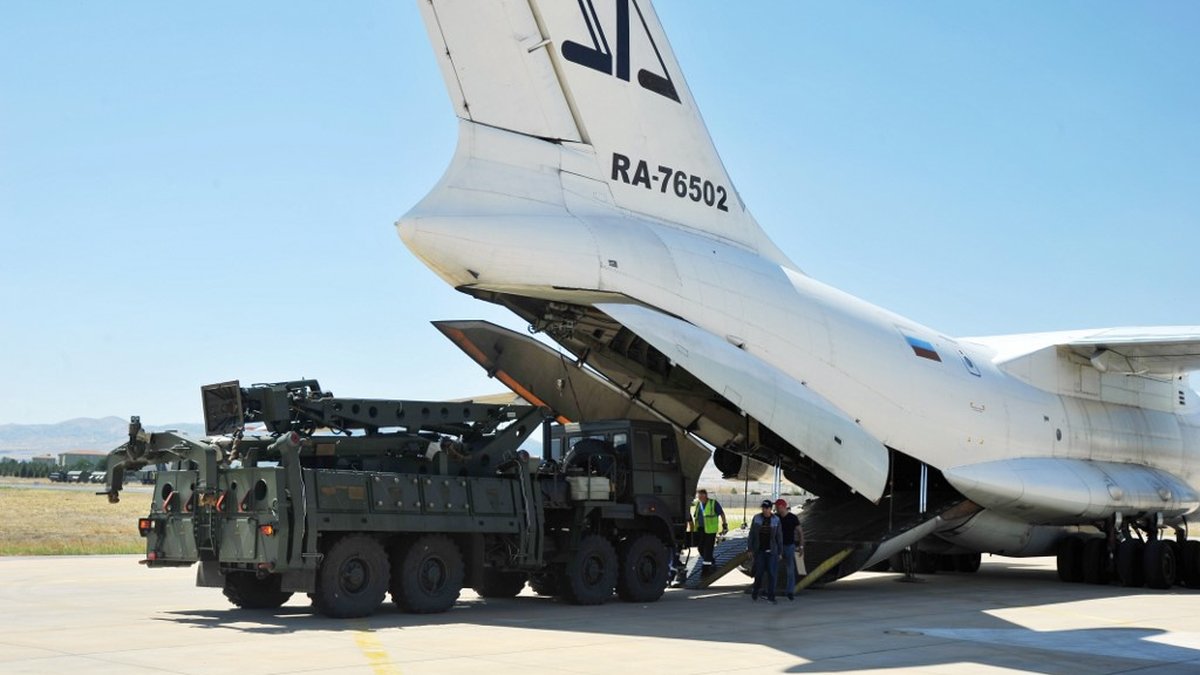
The Russian government views the potential sale of S-400 air defence systems currently operated by Turkey to the United Arab Emirates in a “positive light”, multiple sources familiar with the issue told Middle East Eye, while cautioning that negotiations have yet to be completed.
The Russian S-400 systems, purchased by Turkey in 2019, have been a major headache for Ankara. The acquisition led to Turkey’s removal from the fifth-generation F-35 fighter jet programme and triggered a series of US sanctions on Turkey’s defence industry.
The US still holds six of the jets in storage, as their transfer to Turkey was also blocked by US legislation in 2020.
As the US and Turkey repair relations following Donald Trump’s return to office in 2025, the S-400 issue, and Turkey’s possible return to the F-35 programme, have become crucial topics of discussion.
The 2020 National Defense Authorization Act mandates that the US government ensure Turkey no longer possesses the S-400 systems before it is allowed to receive the F-35 jets. The legislation also tightens the conditions for lifting sanctions imposed on Turkey by Trump in 2019.
New MEE newsletter: Jerusalem Dispatch
Sign up to get the latest insights and analysis on Israel-Palestine, alongside Turkey Unpacked and other MEE newsletters
For the past year and a half, the two sides have been discussing potential solutions.
One option has been to render the S-400s inoperable by removing key components and storing them in a secure location in coordination with the US government, multiple sources familiar with the issue told MEE.
However, that option was later deemed insufficient as a final solution, since it could only secure a waiver rather than the full termination of sanctions imposed on Ankara.
Russian and Turkish sources familiar with the issue told MEE that negotiations over the resale of the systems to a third country, the UAE, have been continuing for months.
In a statement on Friday, the Kremlin confirmed reports that it was in talks with Turkey over the sale of the systems to a third country. Dmitry Peskov, the presidential spokesperson, said the issue was highly sensitive and that consultations would continue for the time being.
“Moscow’s response to Turkey’s idea of selling the systems to a third country was: why not?” a Russian source said. “There are some details that need to be worked out, and a decision by Russian President Vladimir Putin has to be made.”
The source added that if the UAE ultimately makes the purchase, it would be very important for Russia to fully accept and abide by the terms of the contract signed with Ankara. “Moscow will look into this,” the source said.
Several Turkish sources pointed out that the UAE already operates some Russian air defence systems, such as the Pantsir.
They added that Abu Dhabi has been diversifying its weapons procurement from different countries to strengthen its overall defence capabilities.
However, one European investor told MEE that there were also underlying tensions between the UAE and Russia over Moscow’s support for Iran during the war, as Tehran has been sending drones and ballistic missiles into the Gulf country.
The sale would not be covered by US sanctions, since the deal would be between Turkey and the UAE, rather than with Russia.
According to the sources, Moscow had previously declined to take back the Turkish systems, despite reports to the contrary.
A planned Turkish announcement on Friday declaring to the public that Ankara had begun talks to sell the systems to a third country was cancelled, according to a source, who did not specify the reasons.
Russia’s motivation for allowing such a move remains unclear. Ankara insiders speculate that Moscow could ask Turkey for several concessions in return. For example, Turkey’s crucial gas deal with Russia has not yet been renewed, and negotiations over the issue are continuing.
Middle East Eye delivers independent and unrivalled coverage and analysis of the Middle East, North Africa and beyond. To learn more about republishing this content and the associated fees, please fill out this form. More about MEE can be found here.
Facts Only
* Russian government views the potential sale of S-400 systems by Turkey to the UAE in a positive light.
* Turkey purchased S-400 systems from Russia in 2019.
* The S-400 acquisition led to Turkey's removal from the F-35 fighter jet programme and triggered US sanctions on Turkey’s defense industry.
* The US holds six S-400 jets in storage, blocked by US legislation in 2020.
* Negotiations regarding the resale of the systems to the UAE have been ongoing for months.
* The Kremlin confirmed discussions with Turkey about selling the systems to a third country.
* A Russian source suggested Russia would look into the deal if the UAE purchased the systems.
* Some Turkish sources noted the UAE already operates Russian air defense systems, such as Pantsir.
Executive Summary
Full Take
Sentinel — Human
The text reads as standard geopolitical news analysis, skillfully synthesizing reported information from multiple sources regarding complex defense and diplomatic negotiations.