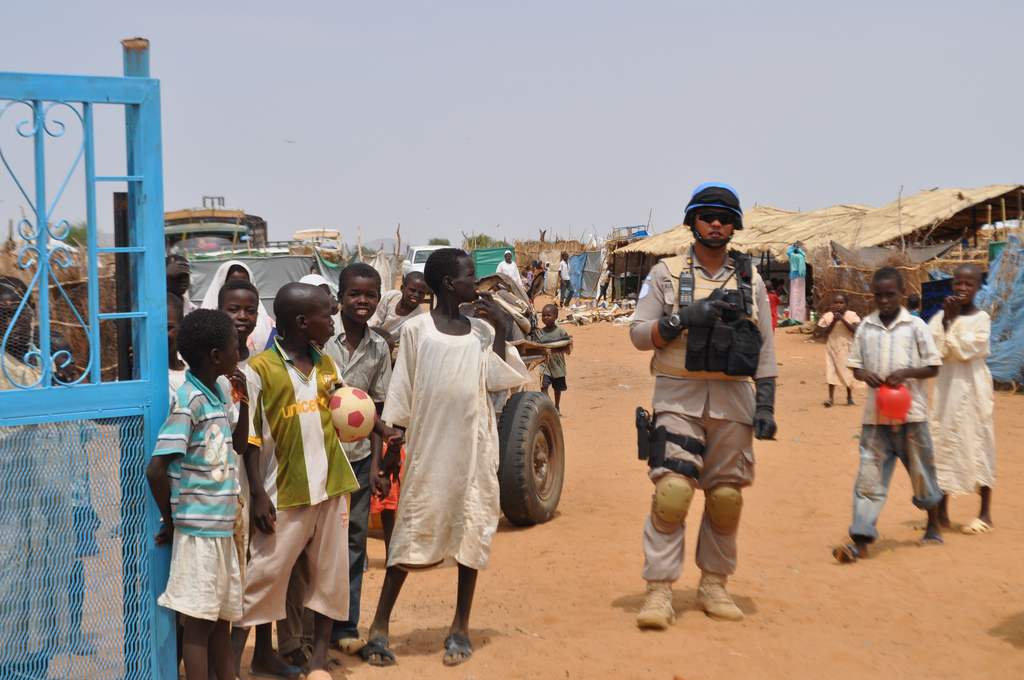
The UN on Monday welcomed the government of Sudan’s decision to keep the Adre border crossing open until September 30, though the organization warned about the rise in violence in El Obeid.
The UN spokesman Stéphane Dujarric commended the Sudanese government’s decision, highlighting that the Adre corridor remains critical for delivering humanitarian aid into Sudan amid ongoing armed clashes near the border with Chad. He emphasized that escalating violence impedes the provision of humanitarian assistance to those in need, with reports that some humanitarian partners have already suspended aid operations due to deteriorating conditions and communications disruptions.
Insecurity in El Obeid, the capital of North Kordofan state, is due to intensifying clashes and repeated drone attacks between the Sudanese Armed Forces (SAF) and the Rapid Support Forces (RSF) in recent weeks. Consequently, the UN spokesman renewed the UN’s calls for restraint and urged all parties to the conflict to ensure the protection of civilians and infrastructure in order to maintain the delivery of humanitarian assistance to needy communities. The UN has previously warned that ongoing escalation could lead to a human rights disaster, urging restraint from both warring parties.
In addition to escalating violence, West Kordofan is facing a cholera outbreak amid a collapsing healthcare system due to repeated targeted attacks, which increases the need for medical aid and requires the strengthening of surveillance and water chlorination currently provided by the World Health Organization (WHO) teams.
The armed conflict in Sudan continues across the wider Kordofan region, characterized by the growing use of drones, which increases civilian casualties and causes more damage to critical civilian infrastructure. In February 2026, the UN warned that air strikes in Sudan were killing children and destroying UN aid facilities. The UN also stated that the international community has abandoned Sudan, with a rollback of humanitarian assistance and an increase in the flow of weapons, as the country continues to experience an intensifying conflict and an exacerbating humanitarian crisis.
Sentinel — Human
The text exhibits characteristics consistent with human journalistic reporting, focusing on complex humanitarian issues with specific detail and contextual linkage, though one date warrants verification.