Equatorial Guinea
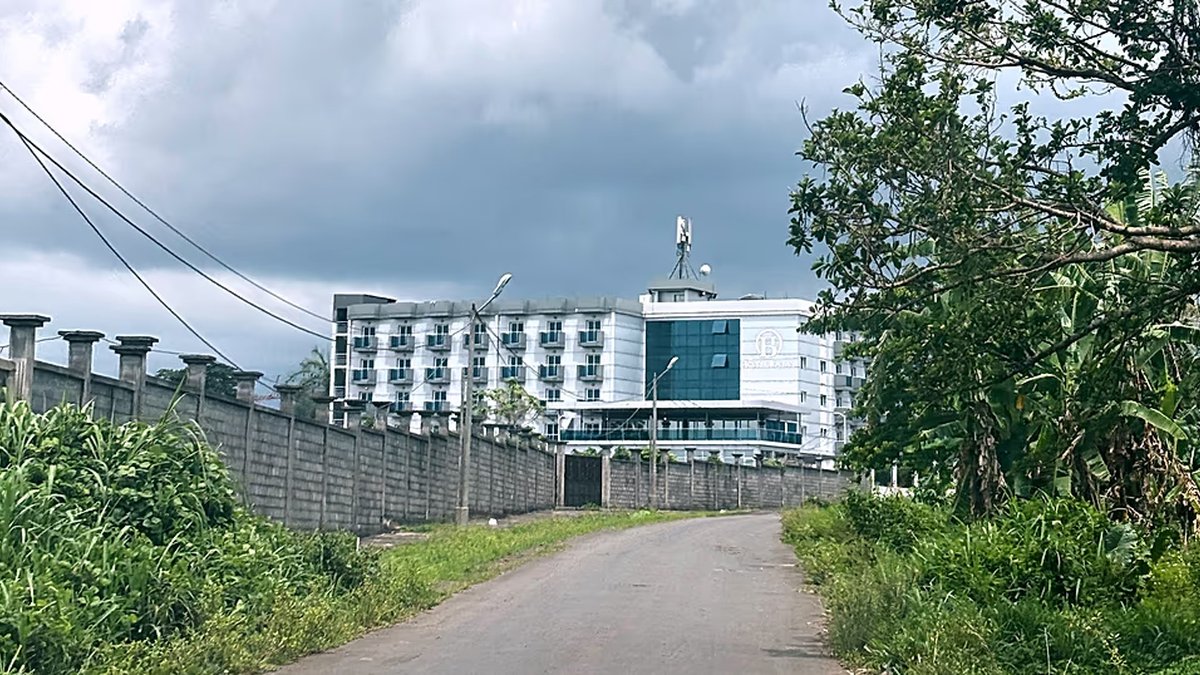
A group of 17 people deported to Equatorial Guinea from the United States said Thursday that they are being detained in a hotel in Malabo alongside at least one suspected Ebola patient.
Authenticated videos show medical personnel in hazmat suits appearing to disinfect themselves outside the Bamy Hotel and on one of the floors inside.
The migrants from nations including Angola, Mauritania, and Ethiopia were sent there under the Trump administration’s opaque third-country deportation deal.
International lawyers representing them and two of the deportees said a man suspected of having the deadly virus was brought to the hotel last week and placed on a floor below them.
In an interview, the migrants said they say they were told by a doctor that they should be careful, but were provided with no further details.
One of the deportees said a woman suspected of having Ebola was brought to the quarantine floor on Sunday.
The migrants spoke on condition of anonymity for fear of reprisals.
So far, no cases or suspected cases have been reported in the country which does not share a border with the Democratic Republic of Congo where the outbreak began and is roughly 1,425 kms away.
The DRC is currently battling a rare strain of the Ebola virus that has killed over 600 in an outbreak that was first announced in May.
Equatorial Guinea is one of at least eight other African nations that the US has struck agreements with to accept third-country deportees.
Following a $7.5 million deal, President Teodoro Obiang Nguema Mbasogo turned a hotel owned by his family in Malabo on Bioko island into a detention centre.
01:35
DR Congo says Ebola outbreak yet to peak as virus spreads to new areas
00:54
Ebola death toll in the DR Congo rises to 600 with over 1,700 confirmed cases
00:58
US military completes latest strikes on Iran after Trump declares ceasefire is ‘over’
01:01
Fourth group of deportees from US arrive in Eswatini
01:02
Health workers in DR Congo's Ebola outbreak go on strike over pay issues
01:15
Trump lashes out at NATO allies for not supporting the US war in Iran
Facts Only
* A group of 17 people deported from the United States are detained in a hotel in Malabo, Equatorial Guinea.
* At least one suspected Ebola patient is also detained in the hotel.
* Medical personnel in hazmat suits were seen disinfecting themselves outside and inside the Bamy Hotel.
* Migrants came from nations including Angola, Mauritania, and Ethiopia.
* The deportations occurred under a third-country deportation deal with the Trump administration.
* A man suspected of having the deadly virus was brought to the hotel last week and placed on a floor below others.
* A woman suspected of having Ebola was brought to the quarantine floor on Sunday.
* No cases or suspected cases of Ebola have been reported in Equatorial Guinea.
* The Democratic Republic of Congo, where the outbreak began, is currently battling an Ebola outbreak with over 600 deaths and over 1,700 confirmed cases.
* Equatorial Guinea is one of at least eight African nations with which the US has struck agreements for third-country deportees.
* President Teodoro Obiang Nguema Mbasogo turned a hotel in Malabo into a detention center following a $7.5 million deal.
Executive Summary
Full Take
The situation reveals a nexus where international migration policy intersects with public health crises and geopolitical agreements. The use of third-country deportation deals, established through large financial settlements, establishes a framework that prioritizes migratory flows over immediate public health containment, as evidenced by the detention of migrants near suspected Ebola cases in Equatorial Guinea. This pattern suggests that mechanisms designed for border management can inadvertently create sites for public health risk amplification, particularly when international agreements are opaque and divorced from on-the-ground epidemiological realities. The contrast between the organized movement of deportees and the active viral threat in neighboring regions underscores a failure in multilateral planning regarding transnational risks. Furthermore, the focus remains on external relations—US military actions and deals with African nations—while internal health responses, like those in the DRC, are simultaneously strained by resource issues. This framing shifts responsibility by focusing on administrative arrangements rather than shared accountability for infectious disease management across sovereign borders and migratory routes. The underlying implication is that established geopolitical and economic structures can be leveraged to manage populations in ways that introduce severe health vulnerabilities without adequately addressing the originating causes or the context of the suffering involved.
Bridge Questions: How do international legal frameworks governing deportation align with immediate public health responsibilities during migration? What mechanisms exist to ensure that agreements prioritizing deportations do not inadvertently facilitate disease transmission vectors? How can regional bodies better coordinate responses when transnational public health emergencies intersect with forced displacement policies?
Sentinel — Human
The article appears to be factual reporting on an unfolding international incident, characterized by direct citation of events and related external context.