The murderous rise of the Indian gang using Canada's lax immigration laws to expand its network
After years of record-high immigration rates, Canada is now the new battleground for Indian transnational violence
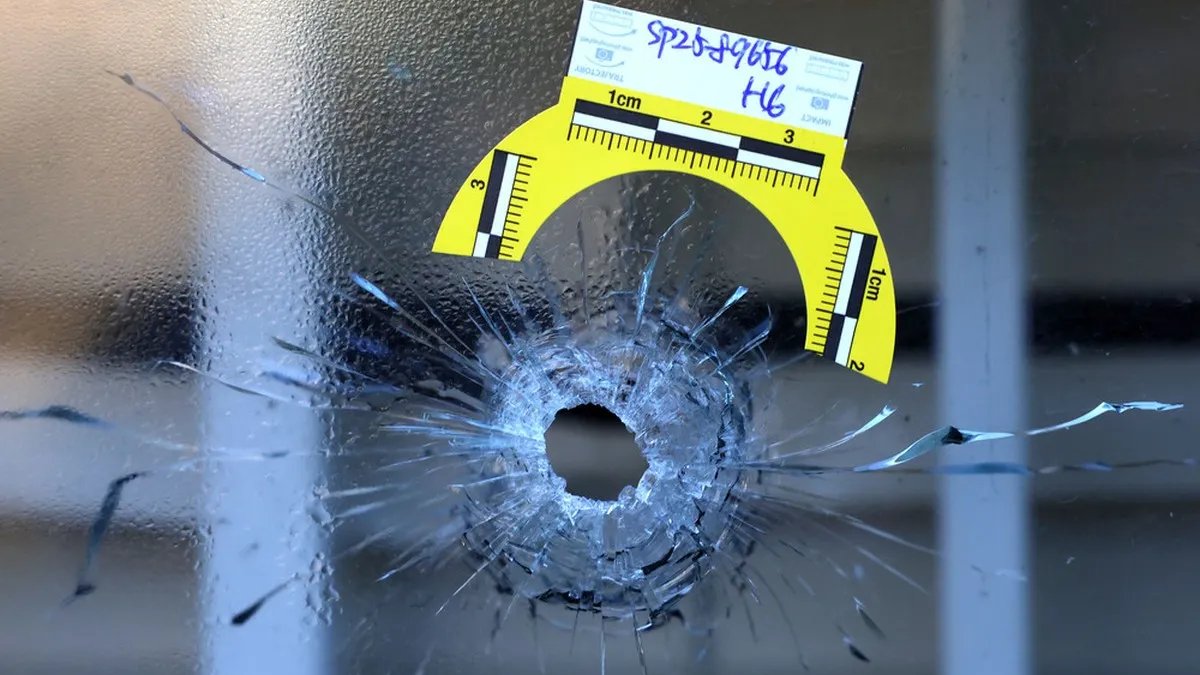
On May 4, a gunman strolled casually into a business complex in Surrey, B.C., in broad daylight and shot Gurvikramjeet Singh Warring, an Indian immigrant who was renting an office space there.
Warring, as the CBC’s Fifth Estate would later report, turned out to be a top handler for the Lawrence Bishnoi gang, a crime syndicate based in India that has a growing network in Canada spanning B.C., Ontario and Alberta. Witnesses told CBC that the shooter walked out of the facility as casually as he had entered. Warring, 35, died from his wounds.
The brazen act of violence was only the latest in a string of killings, arsons and extortions allegedly involving the Lawrence Bishnoi gang in Canada. A rival gang took credit for the killing, but Canadian authorities have connected the Bishnoi group to a widening ripple of crime, including the murder of a Punjabi hip hop artist and a shooting at the B.C. home of another Indian-Canadian musician. Canadian intelligence officials have also claimed that the group carried out the 2023 political assassination of Sikh leader Hardeep Singh Nijjar, who was gunned down in the parking lot outside of his Surrey, B.C., temple, allegedly at the behest of Indian state actors.
Led by Lawrence Bishnoi, who is said to run the outfit from a prison in western India where he’s been incarcerated since 2015, the Bishnoi gang has continued to expand its presence in Canada, taking advantage of the country’s lax immigration laws to grow its footprint on Canadian soil.
On Tuesday, Canadian and U.S. authorities announced the arrests of 24 suspects, many of them associated with the Bishnoi gang, as part of a sweeping international clampdown on rising Indian gang activity in both countries. Three of the arrests were made in Canada, with the RCMP saying it would apply to have the suspects extradited to the U.S. to face charges. One indictment, drawing from a joint investigation between the RCMP and Federal Bureau of Investigation, explicitly charged Lawrence Bishnoi in connection with the gang leader’s alleged involvement in the Nijjar killing.
Robert Huish, an associate dean at Dalhousie University and an expert on foreign interference matters, said the latest charges mark a substantial ramp-up in enforcement against the highest levels of the Bishnoi and other Indian gangs.
“This sounds like the FBI and RCMP are well co-ordinated, and they’re not just looking at maybe one or two acts, but actually trying to get to the whole network,” Huish said. “It does boil down to the killing of Hardeep Singh Nijjar in 2023 — that was the catalyst in terms of bringing witness testimony forward, and also identifying some of the foot soldiers of the Bishnoi gang.”
Huish said the Bishnoi gang’s Canadian presence has escalated from mere criminal threat to full-fledged national security risk as new allegations of its ties to India’s government emerge.
In January 2026, Global News obtained an internal RCMP report suggesting that the crime syndicate was working on behalf of Indian Prime Minister Narendra Modi’s Hindu nationalist government, which has actively sought to repress pro-Khalistan sentiments among India’s Sikh diaspora. That added to Canadian officials’ earlier accusation that India had used the Bishnoi gang to conduct the 2023 assassination.
“That’s not just violent crime, but that’s actually a proxy to another foreign government that’s interfering and operating on foreign soil,” Huish said.
Canada’s political establishment has only begun to respond, with Conservative Leader Pierre Poilievre announcing in early June that he would “find and deport all visiting criminals, gangsters and extortionists, including members of the Bishnoi gang,” if his party ever won power.
With Canada letting record-high numbers of Indian nationals into the country starting in the early 2020s, the Bishnoi group has tapped into Canada’s massive pool of largely undocumented temporary workers and foreign students to build an army of enforcers. The gang even sent a letter to the RCMP boasting about how its international network of foot soldiers now totals more than 1,000. (Warring, for his part, came to Canada in 2013 on a temporary work permit as an electrician.)
As its foothold in the country has grown, the Bishnoi gang has become the key conduit for what has become a rapid spread of Indian transnational violence in Canada. Amid a relentless string of the group’s shootings, arsons, murders and extortions of Sikh and other South Asian diaspora members, Canada is left to manage a security threat of its own creation, bred from a permissive immigration system that has yet to be meaningfully corrected. Canadian authorities, meanwhile, are struggling to subdue repeated violent outbursts.
The Bishnoi group’s activities often appear to target people aligned with India’s pro-Khalistan movement, under which Sikh separatists have for decades sought to establish an autonomous state called Khalistan in the country’s northern Punjabi region.
The separatist movement began in earnest in the 1940s, when the British drew India and Pakistan’s modern-day borders. India’s minority Sikh population has continued to clash with the majority Hindu population ever since, with tensions boiling over in 1984 when the Indian military raided the Golden Temple, the Sikh’s holiest place of worship.
The next year, Canadian-based Sikhs sympathetic to the separatist cause allegedly carried out the bombing of Air India Flight 182, killing 329 people, seemingly in response to the raid. Canadian investigators failed to prosecute all but one suspect in connection with the bombing, but later alleged that Sikh radicals were behind the attack.
The pro-Khalistan movement in India has ebbed since the 80s, but a massive migration of Sikhs to Canada, the U.S., U.K. and other nations has caused India’s repression efforts to spill over into the Western world. Relatively greater protections around free speech in Canada and other Western nations has encouraged more diaspora Sikhs to voice their opinions on the otherwise taboo subject of separatism, which has shifted the ire of India’s government overseas. Canada, now home to more than 800,000 Sikhs, has become the prime battleground for pro-Khalistan repression.
While the Bishnoi gang has been connected to high-profile contract killings, much of its activity has taken the form of extortion — often targeting South Asian and Sikh communities. The Financial Transactions and Reports Analysis Centre of Canada (FINTRAC), Canada’s financial watchdog, published a report in April detailing how the Bishnoi gang regularly targets small business owners in industries like construction and hospitality, demanding money and threatening those who refuse to pay.
Extortion often happens over WhatsApp or other encrypted chat platforms, where criminals demand payment in the form of e-transfers, cash or cryptocurrency, FINTRAC said. The gang has recruited an army of “money mules,” often aged 17 to 28 years old, the watchdog said, who typically own Indian passports and identify as international students when they first set up their online accounts.
Those who don’t pay are threatened by Bishnoi members who shoot up their homes or set their vehicles aflame.
“Extortion targeting South Asian communities in Canada has evolved from sporadic threats into a sustained campaign of coercion that blends intimidation, opportunistic violence, and trans provincial coordination, with notable concentrations in British Columbia, Alberta, Manitoba, and Ontario,” FINTRAC reported.
Rather than deny the extortion activities, the gang reportedly sent a letter to an RCMP detachment in Abbotsford, B.C., that, according to one officer’s testimony at a recent Immigration and Refugee Board hearing, suggested that the businesses that the gang targets “needs to pay their tax.”
The Bishnoi group’s recruitment of foreign students and, on occasion, temporary workers is a constant fixture in various public agency and media reports about the gang’s activities, describing how the it hones in on young and vulnerable Indian nationals to help it advance its criminal enterprise.
Those revelations come amid growing public discontent in Canada at the country’s porous immigration system, which has welcomed a flood of foreign students and temporary workers to the country with minimal systems that authorities can use to track their whereabouts. That has caused the country’s non-permanent resident population to soar, rising from 1.4 million to three million in the three years between 2021 and 2024 alone.
In a recent report, the Auditor General found that the federal immigration department had flagged 153,000 international students for being non-compliant with their visas between 2023 and 2024. Of those, the department only investigated 4,000 cases.
While the Bishnoi gang’s extortion and arson activities are the most widespread, the group has also become embroiled in threats and contract killings — most notably the high-profile assassination of Nijjar in 2023.
According to reports of the killing, first coming to light through U.K. intelligence channels and reported in detail by Bloomberg, the killing was allegedly part of a high-level effort by the Indian government to wipe out two prominent political opponents.
According to that same intelligence, officials within Modi’s government had allegedly ordered the Bishnoi gang to carry out the assassination. The killing of a Canadian citizen on Canadian soil by Indian state actors eventually soured relations between the two countries when the allegations came to light.
Prime minister Justin Trudeau accused New Delhi of orchestrating the killing in October 2024, saying that federal police had “clear and compelling evidence that agents of the government of India have engaged in, and continue to engage in, activities that pose a significant threat to public safety.” Canada also ordered the deportation of six Indian diplomats after they refused to partake in the RCMP’s investigation of India’s alleged involvement in the murder, according to statements from the Prime Minister’s Office and Global Affairs Canada.
Later, in September 2025, Canada would officially designate the Bishnoi gang as a terrorist organization.
“The Bishnoi gang engages in murder, shootings and arson, and generates terror through extortion and intimidation,” Public Safety Canada said in a statement announcing the designation.
Dalhousie University’s Huish said the Bishnoi gang’s growing threat of violence is a plain example of “how international politics can spillover onto our shores” in the absence of foreign policy that actively manages and responds to transnational influence over diaspora communities.
“We’re in the crosshairs of this combat zone, and we didn’t ask for that,” he said.
Canadian law enforcement is beginning to crack down on the Bishnoi gang’s activities. Huish said the Canada Border Services Agency has opened almost 400 immigration investigations, issued 70 removal orders and enforced 35 deportations in connection with the Bishnoi gang.
Three men — Taranveer Singh, Harjot Singh and Dayajeet Singh Billing — were recently sentenced for a February attack on a Surrey, B.C., home, for which they were paid $1,000 each by a subcontractor for the gang, according to a recording of court proceedings obtained by CBC News.
Taranveer Singh pleaded guilty to firing four shots at the home, for which he received a five-year prison sentence, while the other two received two years each for throwing molotov cocktails made out of Heineken bottles at the residence, where a two-year-old child was reportedly sleeping.
Meanwhile, four Indian men living in Canada, each of them in their 20s, were charged in 2024 in connection with the assassination of Nijjar, and are now awaiting trial. Kamalpreet Singh, Karanpreet Singh and Karan Brar had been living in Edmonton, police have said, while Amandeep Singh, the fourth man arrested in connection with the murder, had lived in Surrey and Abbotsford, B.C.
Police have not yet publicized whether they have found any suspects in the killing of Warring, the Bishnoi leader who was shot in Surrey last month.
In June, Calgary police released the photos of 15 suspects linked to a spree of extortion crimes against South Asian communities, but didn’t immediately confirm whether all or some were members of the Bishnoi gang.
All 15 suspects had been released on bail and were back at large in the community, while just one, a 16th suspect, remained in custody. Taken together, they face 56 charges. None of the suspects are Canadian citizens, police said, and most were in the country on either student or work visas.
Our website is the place for the latest breaking news, exclusive scoops, longreads and provocative commentary. Please bookmark nationalpost.com and sign up for our daily newsletter, Posted, here.
Postmedia is committed to maintaining a lively but civil forum for discussion. Please keep comments relevant and respectful. Comments may take up to an hour to appear on the site. You will receive an email if there is a reply to your comment, an update to a thread you follow or if a user you follow comments. Visit our Community Guidelines for more information.
Sentinel — Human
The text functions as a detailed investigative report, connecting organized crime with immigration policy and international political interference through reported events and official statements.