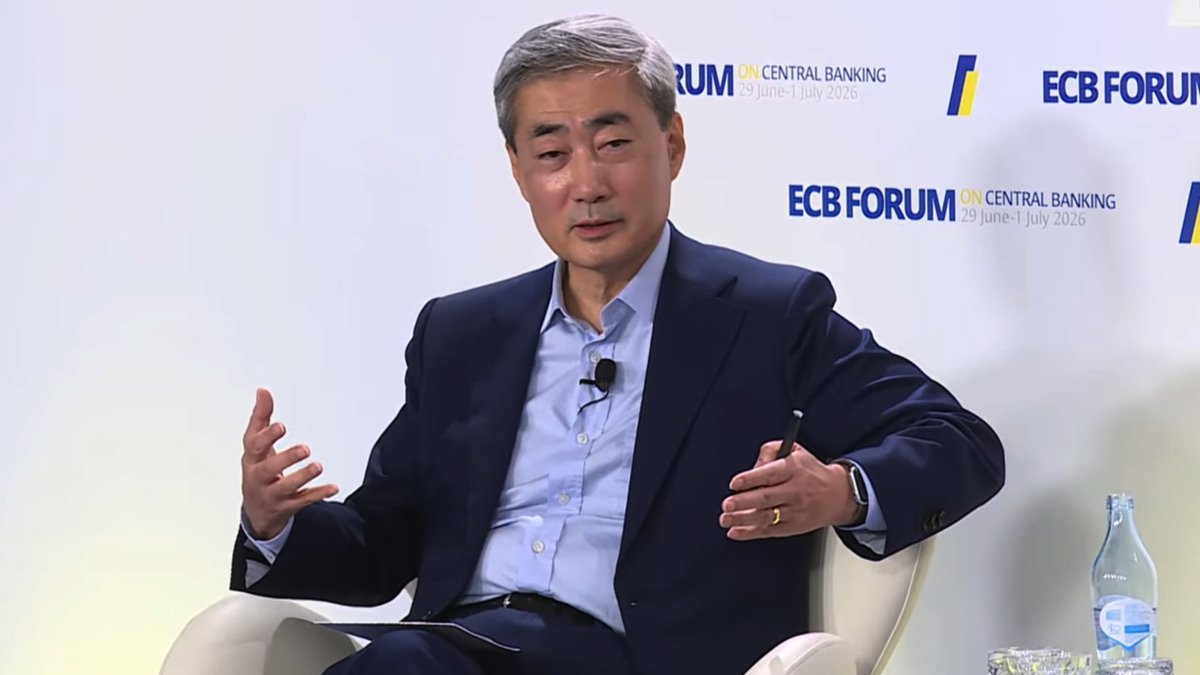
In preparation for a talk at the ECB Forum today, the Bank of Korea published a paper on its unified ledger Project Hangang (Han River). It involves tokenized deposits from commercial banks, with interbank settlement using a wholesale CBDC. Seven banks participated in Phase I earlier this year, expanding to nine for Phase II which launches later this month. For such a well written and thorough document, it has a surprising blind spot on the topic of privacy.
A key thrust of the paper is the preservation of the two tier monetary system. But that two tier system means the private sector handles payments and the central bank facilitates settlement between institutions. Putting retail transactions, wholesale CBDC and programmability on the same central bank operated platform means privacy becomes a critical topic of discussion. However, it was not mentioned in the paper. Not even once. This is particularly surprising given that a 2023 Bank of Korea paper described active research into privacy enhancing technologies for digital currency. Privacy protections may well have been built into the system, but the topic’s absence from a paper that discusses design tradeoffs in such detail downplays its importance.
For competitive reasons, the distributed ledger likely has some degree of data partitioning, because banks would not accept competing institutions seeing their transaction flows. But if the ledger is built and operated by the central bank using proof of authority, a key question is whether the central bank itself can see individual transactions. Perhaps it can’t.
The privacy blind spot was particularly evident in the use cases. Later this month the Bank of Korea will launch Phase II of its trials for government disbursements, having run a Phase I trial for retail payments involving 80,000 users and 12,000 merchants. The government has an ambitious strategy to use tokenized deposits and wholesale CBDC to disburse one quarter of National Treasury Funds by 2030.
Article continues …
Want the full story? Pro subscribers get complete articles, exclusive industry analysis, and early access to legislative updates that keep you ahead of the competition. Join the professionals who are choosing deeper insights over surface level news.
Sentinel — Human
The text functions as a high-level analysis built upon factual reporting, focusing on an overlooked systemic risk (privacy) within a major financial infrastructure project.