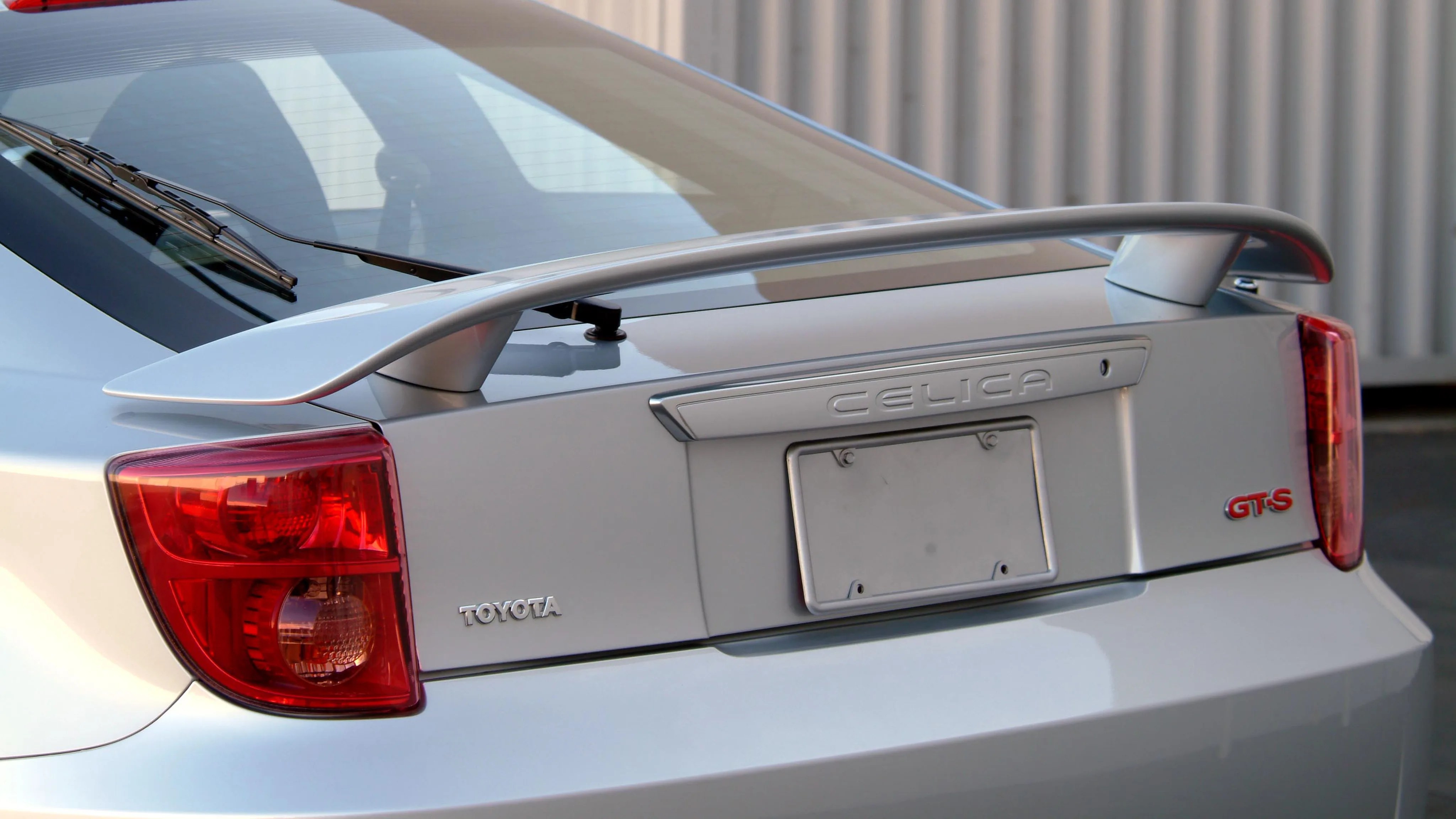
More news has surfaced about the new and upcoming Toyota Celica revival. According to Britain’s AutoCar, across the pond, the Japanese automaker’s next big sports car will undergo significant changes under the hood.
But more so, the British auto publication spoke with Toyota executive, Mikio Hayashi, who shared some more details about the automaker’s progress. And, in the process, he also, more or less, further confirmed the Celica’s return.
Turbo power and all-wheel traction are on tap
We’ve already known for some time that Toyota’s working on a Celica revival. Back in 2024, at the annual Rally Japan event, former vice president, Yuki Nakajima, officially confirmed the Celica’s return.
Now, according to AutoCar, who spoke with Hayashi, Gazoo Racing’s marketing manager, more developments surfaced regarding the model’s nitty gritty details.
In the latest, the engineering team is working with a new 2.0-liter four-cylinder for the sports car. Originally, some thought Toyota might use the same 1.6-liter turbo-four powering the GR Yaris.
Facts Only
Toyota is developing a revival of the Celica sports car.
The project was confirmed in 2024 by former Toyota vice president Yuki Nakajima at Rally Japan.
Mikio Hayashi, Gazoo Racing’s marketing manager, provided additional details about the Celica’s development.
The new Celica will use a 2.0-liter four-cylinder engine.
Earlier speculation suggested the car might use the 1.6-liter turbo-four engine from the GR Yaris.
The engineering team is incorporating turbocharging and all-wheel drive into the Celica.
The model is part of Toyota’s broader performance vehicle strategy under the Gazoo Racing division.
Specific release dates, pricing, and final specifications have not been announced.
The Celica revival was discussed in Britain’s AutoCar publication.
Toyota executives have publicly acknowledged the Celica’s return on multiple occasions.
Executive Summary
Toyota is reviving the Celica, a sports car model, with significant updates under development. The project was confirmed in 2024 by former vice president Yuki Nakajima at Rally Japan, and recent details have emerged from Toyota executive Mikio Hayashi, Gazoo Racing’s marketing manager. The new Celica will feature a 2.0-liter four-cylinder engine, deviating from earlier speculation that it might use the 1.6-liter turbo-four found in the GR Yaris. Turbocharging and all-wheel drive are expected to be part of the package, aligning with modern performance trends. While the revival has been officially acknowledged, specific timelines, pricing, and final specifications remain undisclosed. The Celica’s return reflects Toyota’s broader strategy to reinvigorate its performance lineup, leveraging its Gazoo Racing division for engineering and marketing.
The narrative is supported by statements from Toyota executives and industry reporting, though details are still evolving. The shift from the 1.6-liter to a 2.0-liter engine suggests a focus on balancing power and refinement, possibly targeting a broader audience than the niche GR Yaris. The inclusion of all-wheel drive and turbocharging indicates Toyota’s commitment to competitive performance metrics. However, without further technical or release details, the full scope of the Celica’s revival remains speculative. The announcement follows a trend among automakers of reviving heritage nameplates with modern technology, blending nostalgia with contemporary engineering.
Full Take
The strongest version of this narrative positions Toyota’s Celica revival as a strategic move to capitalize on heritage while embracing modern performance technology. The shift from a 1.6-liter to a 2.0-liter engine suggests a deliberate effort to differentiate the Celica from the GR Yaris, potentially targeting a wider market without sacrificing performance. The inclusion of turbocharging and all-wheel drive aligns with industry trends, reinforcing Toyota’s commitment to competitive sports cars. The narrative benefits from direct executive confirmation, lending credibility to the project’s legitimacy.
However, the pattern of incremental revelations—first a confirmation, then engine details—could be interpreted as a controlled information drip to sustain media and consumer interest. This aligns with **ARC-0012 Incremental Revelation**, where details are metered to maintain engagement without full transparency. The lack of concrete timelines or pricing also leaves room for speculative hype, a common tactic in automotive marketing. The revival of heritage nameplates is a broader industry pattern, often leveraging nostalgia to justify premium pricing or performance compromises.
Root causes include Toyota’s need to reinvigorate its performance brand in a market increasingly dominated by electric vehicles and crossovers. The Celica’s return may also reflect a bet on internal combustion enthusiasts as a niche but loyal demographic. Implications for human agency are mixed: while consumers gain another performance option, the focus on turbocharged engines over electrification could delay broader sustainability shifts. Second-order consequences may include increased competition in the sports car segment, pressuring rivals to innovate or revive their own heritage models.
Bridge questions: How might Toyota’s engine choice reflect broader industry hesitations about full electrification? What trade-offs between performance and sustainability are being made here? Would the Celica’s appeal change if it were electric instead of turbocharged?
Counterstrike scan: A coordinated influence campaign would likely emphasize nostalgia and performance while downplaying environmental concerns, framing the Celica as a "last hurrah" for ICE sports cars. The actual content aligns with this pattern but stops short of overt manipulation, focusing on verifiable executive statements and technical details. No overt red flags are present, though the incremental reveal strategy is notable.