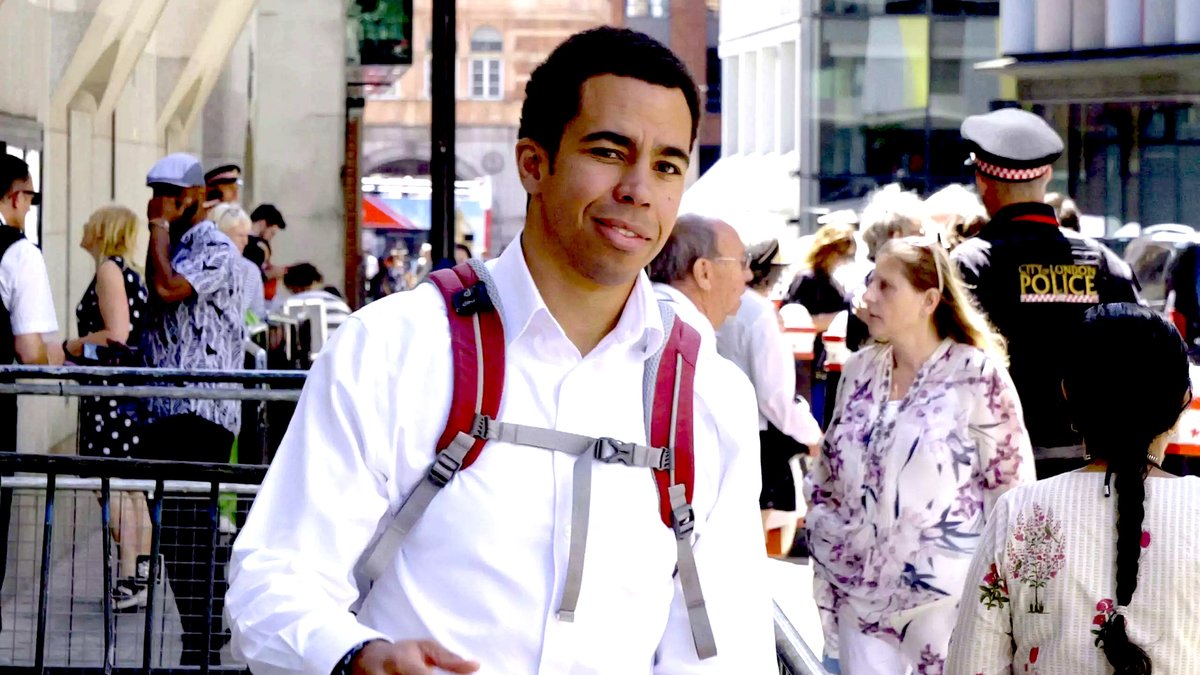
The U.K. judge said the prosecution failed to produce sufficient evidence on a charge linked to the break-in at an Israeli-owned arms factory in the Filton area of Bristol, Dania Akkad repots.
By Dania Akkad
Declassified UK
A jury has acquitted an activist of violent disorder at an Israeli-owned arms factory targeted by Palestine Action in August 2024.
William Plastow, 35, was acquitted at the Old Bailey due to what presiding Judge Patrick Field said was a lack of evidence over the incident in the Filton area of Bristol.
“The prosecution has not produced enough evidence against him to show that he intended that there would be a violent disorder at Filton or that he assisted anyone to commit that offence,” Field said.
Plastow, who is from Manchester, still faces a criminal damage charge alongside seven other defendants in their ongoing trial over the break-in at Elbit Systems.
The other defendants are Ian Sanders, 47; Aleksandra Herbich, 41; Teuta Hoxha, 30; Sean Middlebrough, 33; Julia Brigadirova, 33; Hannah Davidson, 53; and Madeleine Norman, 31.
They face criminal damage and violent disorder charges which they deny.
The prosecution contends that while they were not at the factory’s premises during the raid, their assistance, which allegedly included reconnaissance trips and purchasing tools, makes them “equally responsible” as those who carried it out.
Watch Declassified UK’s report from the Old Bailey
‘Felt Compelled’
Following Plastow’s acquittal, Monday’s six-hour hearing focused entirely on testimony from Norman.
After graduating from Oxford University with a degree in classics in 2018, Norman has worked for several organisations helping people with learning-disabilities and neuro-divergences.
Norman told the jury they had become interested in the Israeli-Palestinian conflict during anti-racism protests in 2020 and learned more while volunteering with the Refugee Council.
“I was hearing more about Palestine in that context as well. There is obviously a massive diaspora of refugees who have been displaced from their homeland by Israeli settlers,” Norman said.
In 2021, Norman signed up with the Palestine Solidarity Campaign and began to learn “more about Palestinians, the apartheid system in Israel and the long history of Palestinian resistance to their repression.”
Norman learned more about Elbit Systems, Israel’s largest weapons manufacturer, and began protesting at one of the company’s factories in Manchester each Tuesday.
“We would go and march around the perimeter carrying placards and chanting. It felt pretty futile to be honest but we kept going,” Norman said.
The following year, after an initial email to Palestine Action was ignored, Norman attended one of the group’s online training sessions and then began participating in actions.
The jury was told about four separate direct actions Norman was involved in as part of Palestine Action before the raid at Filton.
They included spray painting and smashing windows at UAV Engines, an Elbit subsidiary, in Shenstone and blocking an Elbit factory in Leicester.
Norman reported feeling “weird” before such actions. “I would normally feel sick beforehand. I get crippling migraines for days afterwards.”
“It’s not like people do this for the thrill. You do it because you are compelled to.”
‘Jumpy’
Ahead of the action in Bristol in the summer of 2024, Norman said that the group was “witnessing unspeakable events out of Gaza on a daily basis . . . that was the context.”
During early discussions about Filton about a month beforehand, an idea popped up about how a van might enter the factory compound.
Norman didn’t think the route was a good idea so wrote some notes on Cryptpad, an encrypted document-sharing platform, next to screenshots of the factory site.
But their suggestion was not discussed further. “No one was particularly convinced by it,” Norman said.
Norman was feeling “pretty burnt out” and had not planned to go to Bristol, but decided to go upon learning that another Palestine Action friend had hired a car and there was space in it.
Of the more than 20 people involved in the raid, Norman only knew a handful and was not introduced to new people once at the Airbnb in Bristol where activists gathered before the raid.
“Everyone was a bit jumpy. People already knew their friends. They weren’t really in a headspace for making new pals. Everyone was a bit stressed out,” Norman said.
The “red team” — the group of activists who would break into the factory — and the “black team” — another group meant to distract security guards from the red team – were “having meetings, but I wasn’t privy to them.”
‘Peripherally Present’
During a cross examination, prosecutor Deanna Heer KC repeatedly asked Norman, who identifies as they/them, if they accepted that their involvement in planning the action would involve damage to property at the Elbit site.
Norman said their personal contribution to the plan was the suggestion for the entry route for the van which was not taken up by the group.
“I’m going to suggest you were involved a bit more than that,” Heer said, again asking whether Norman accepted that their individual involvement in planning was carried out with the intention of helping others cause damage to property.
“I was and am incredibly supportive that weapons were damaged,” Norman said. “But as for my involvement, it was pretty minimal. I didn’t really have a role.”
Heer pushed on, asking Norman about a purchase they made for glue, gloves and tape. “Was that to help people carry out damage to property?” she asked.
“I didn’t ask what it was for. Somebody would say can you get these items and I did,” Norman said.
Heer asked once again whether Norman accepted that they were involved in planning an action that would involve causing damage to property at Elbit Systems.
“I knew that was the idea and I knew that was the plan. I was peripherally present … but I didn’t feel like it was my action. I wanted to go down to be an extra pair of hands on deck,” Norman said.
“I wish I had been helpful. I don’t think I was materially helpful.”
The trial continues.
Dania Akkad is an investigative journalist. She has won awards for her reporting on women’s rights in the Middle East, Saudi Arabian dissidents and California’s lettuce industry. She started her career covering crime and agribusiness at daily newspapers in California, and then reported from Syria as a freelance journalist before the war, including investigating the 2005 suicide bombing in Amman that killed members of her family. She served most recently as senior investigations editor at Middle East Eye.
This article is from Declassified UK.
Views expressed in this article and may or may not reflect those of Consortium News.
Please Donate to
CN’s Summer
Fund Drive!
Facts Only
* William Plastow, 35, was acquitted at the Old Bailey.
* The acquittal was due to a lack of evidence regarding intent or assistance related to an incident in Filton, Bristol.
* Plastow faces criminal damage and violent disorder charges related to a break-in at Elbit Systems.
* Other defendants include Ian Sanders, Aleksandra Herbich, Teuta Hoxha, Sean Middlebrough, Julia Brigadirova, Hannah Davidson, and Madeleine Norman.
* The prosecution contends the defendants are equally responsible for assistance like reconnaissance and purchasing tools.
* Madeleine Norman learned about the Israeli-Palestinian conflict and Elbit Systems through activism in 2021.
* Norman participated in direct actions including spray painting and smashing windows at UAV Engines and blocking an Elbit factory in Leicester.
* The group involved in the raid included a "red team" and a "black team."
* Madeleine Norman reported feeling physical symptoms before participating in actions.
Executive Summary
A jury acquitted an activist, William Plastow, of violent disorder related to a break-in at an Israeli-owned arms factory in the Filton area of Bristol in August 2024. The acquittal was based on the presiding judge’s finding that the prosecution failed to produce sufficient evidence regarding Plastow's intent or assistance in the incident. Plastow faces criminal damage charges alongside seven other defendants regarding the break-in at Elbit Systems. The prosecution argues that the defendants are equally responsible because their actions, including reconnaissance and purchasing tools, equate to assistance for those who carried out the raid, even if they were not physically present during the seizure.
The testimony of one defendant, Madeleine Norman, provided context regarding her involvement in the Israeli-Palestinian conflict, learning about Palestinian resistance and Elbit Systems through activism and protests. Norman detailed participation in various direct actions, including spray painting and window smashing at an Elbit subsidiary in Shenstone and blocking a factory in Leicester. She described feeling compelled to participate due to the context of ongoing events in Gaza and experienced physical symptoms before such actions. The proceedings also explored whether the defendants accepted responsibility for causing property damage or planning the action.
Full Take
The narrative structures the legal outcome around the evidentiary standard of intent, contrasting it with testimonial evidence of context and peripheral participation. The core tension lies between the legal requirement for direct culpability (intent) and the activist framework where involvement is defined by shared context and incremental action. Norman’s testimony introduces a framework of compelled action—feeling "compelled" rather than acting out of pure thrill—which challenges a strictly deterministic view of criminal agency. Furthermore, the prosecution's argument about "equally responsible" assistance suggests an attempt to shift focus from direct physical execution to the informational and preparatory role played by the group. The dynamic between Plastow’s acquittal on intent versus the collective responsibility claimed by the prosecution highlights how legal systems grapple with abstract motivation versus tangible acts. The subsequent interrogation of Norman demonstrates a process of attempting to define boundaries—whether peripheral presence constitutes material involvement, and whether emotional compulsion negates criminal intent. This raises questions about where moral obligation intersects with codified legal definitions of responsibility when group dynamics are involved.
Bridge Questions: If the court accepts that context, rather than explicit intent, is a relevant factor in assessing responsibility for collective actions, how should the law distinguish between intentional planning and compelled participation? What mechanisms exist to assess and incorporate the psychological state described by participants, such as feeling "compelled," into accountability structures? What are the long-term implications when legal proceedings attempt to balance individual culpability against the collective impact of activist motivations?
Sentinel — Human
The text reads like an investigative news report, relying on direct quotes and contextual detail drawn from a specific court case, indicating human journalistic provenance.