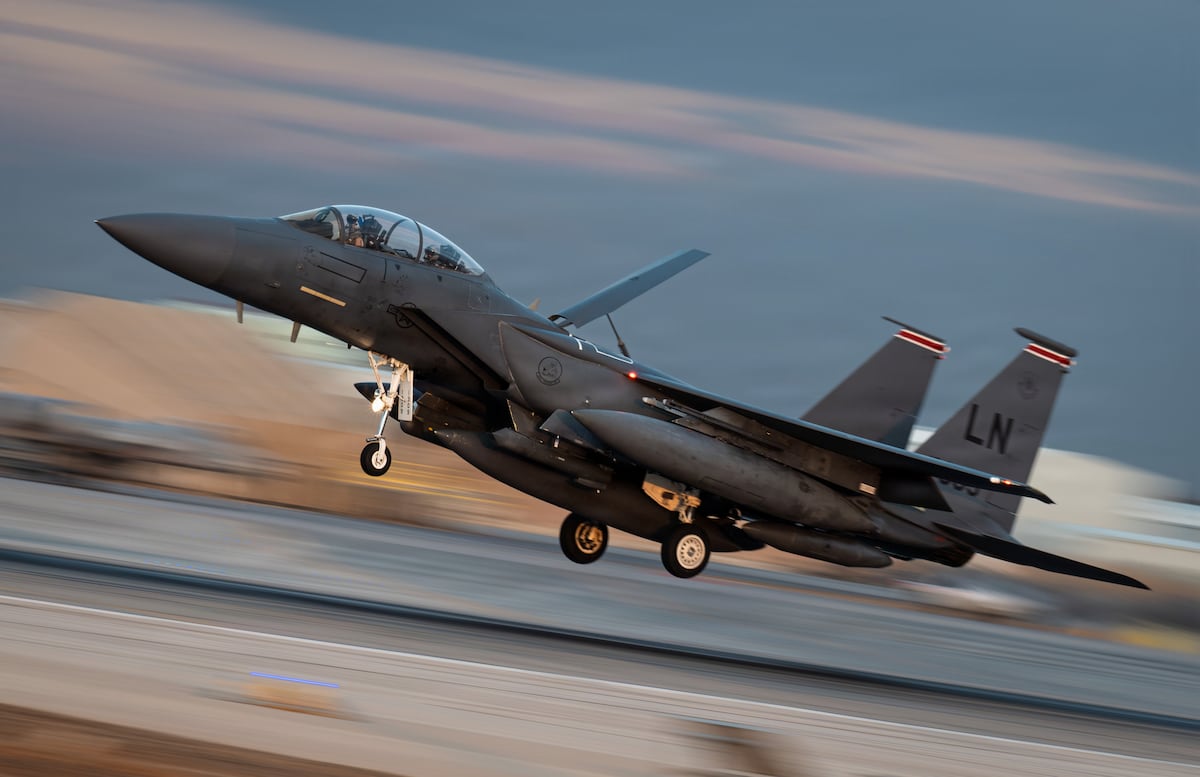
U.S. special forces rescued a downed airman in Iran in a complex operation that averted a potential crisis for President Donald Trump, as the war entered its sixth week with little sign of progress in diplomatic efforts for a resolution.
Trump announced the rescue in the early hours of Sunday in a social media post that described the operation, in a mountainous area of Iran, as “one of the most daring Search and Rescue Operations in U.S. History.”
The airman, the weapons officer of an F-15 jet shot down on Friday, was wounded but “will be just fine,” Trump said in a message on X posted by Press Secretary Karoline Leavitt. The pilot of the aircraft was rescued on Friday.
A U.S. official said the operation, which Israel said it had assisted, involved dozens of military aircraft and encountered fierce resistance from Iranian forces.
Iran’s military said several U.S. aircraft were destroyed during the operation, including two military transport planes and two Black Hawk helicopters. Footage posted on social media showed burned out aircraft wreckage, which Reuters verified was in the area.
RESCUE INVOLVED ‘DECEPTION CAMPAIGN’
A U.S. official told Reuters U.S. forces had to destroy at least one of the aircraft used in the rescue mission because it had malfunctioned.
The Wall Street Journal reported that two specially equipped MC-130Js aircraft used to carry out covert infiltrations and to remove troops from beyond enemy lines were blown up by U.S. forces after malfunctioning.
A senior administration official in Washington said the rescue had involved a CIA deception campaign spreading word inside Iran that U.S. forces had already found the missing airman and were moving him on the ground for exfiltration out of the country.
While the Iranians were confused and uncertain of what was happening, the missing weapons officer was located inside a mountain crevice and rescued, the official said in a statement.
The rescue of the airman offered some good news for Trump, who has faced mounting pressure over a war that has sparked a global energy crisis and threatens lasting damage to the world economy.
On Saturday, he renewed a threat to intensify attacks on Iran’s energy infrastructure, saying it had 48 hours to open up shipping lanes in the Strait of Hormuz, the vital conduit for around a fifth of the world’s oil and natural gas supply, which has been largely shut down.
In an expletive-laden social media post on Sunday, Trump said Iran must open the Strait “or you’ll be living in Hell - JUST WATCH!”
Adding to the pressure, a senior Israeli defense official said Israel, which attacked a major petrochemicals facility on Saturday, was preparing to attack Iranian energy facilities within the next week, and was awaiting approval from Washington.
But despite the heavy damage to its military and civilian infrastructure by weeks of U.S. and Israeli attacks, Iran’s chokehold over Hormuz has given it a powerful weapon and Tehran showed no sign of complying with Trump’s demand.
It has continued to launch missile and drone attacks against Israel and on Sunday, it underlined its ability to hit U.S. allies in the Gulf by launching a drone attack on petrochemicals plants in Bahrain and Abu Dhabi.
The Revolutionary Guards warned that more attacks would follow if civilian targets in Iran were hit.
PEACE EFFORTS PROVE FRUITLESS
Opinion polls show the war is viewed with skepticism by a majority of Americans, with the risks to U.S. service personnel among their major concerns, along with regional stability and the impact on their own finances.
The war, which has spread into Lebanon, where Israel has resumed its campaign against the Iranian-backed Hezbollah, has killed thousands, mainly in Iran and Lebanon, where a Lebanese soldier was killed on Sunday.
But efforts brokered by Pakistan to bring the two sides to an agreement have so far been fruitless. Iran’s Foreign Minister Abbas Araqchi said Tehran demanded a permanent halt to the U.S. and Israeli campaign launched on Feb. 28.
“What we care about are the terms of a conclusive and lasting END to the illegal war that is imposed on us,” he said in a message on X.
As the war has continued, the damage to vital economic infrastructure in Iran and neighboring Gulf countries has mounted and the impact is set to be felt months and even years after the fighting ends.
With oil coming through Hormuz down to a trickle, ministers from OPEC oil-producing countries were due to meet on Sunday. But the blockade of the Strait and the damage to infrastructure meant an immediate boost to oil production was not considered possible.
Israel and the U.S. have hit military and civilian infrastructure across Iran, including areas near its Bushehr nuclear plant, which Iran said posed a serious risk of radioactive contamination.
But they have not managed to suppress Iran’s ability to strike back and Iranian drone attacks have continued against industrial infrastructure in the Gulf including oil facilities, a major aluminum plant and petrochemical sites in recent days.
Earlier Iran also attacked an Israel-affiliated vessel with a drone in the Strait, setting the ship on fire, state media said, citing the commander of the Revolutionary Guards’ navy.
Facts Only
U.S. special forces rescued a downed airman in Iran on Sunday.
The airman was the weapons officer of an F-15 jet shot down on Friday.
The operation involved dozens of military aircraft and encountered Iranian resistance.
The airman was wounded but is expected to recover; the pilot was rescued on Friday.
Iran claimed to have destroyed U.S. aircraft, including two transport planes and two Black Hawk helicopters.
Footage verified by Reuters showed burned-out aircraft wreckage in the area.
The U.S. destroyed at least one malfunctioning aircraft during the rescue.
A CIA deception campaign was used to mislead Iranian forces about the airman’s location.
The airman was found in a mountain crevice and extracted.
President Trump threatened to intensify attacks on Iran’s energy infrastructure if the Strait of Hormuz is not reopened within 48 hours.
Iran has continued missile and drone attacks on U.S. allies and Israeli targets.
Diplomatic efforts brokered by Pakistan have failed to secure a ceasefire.
Iran demands a permanent halt to U.S. and Israeli strikes as a condition for negotiations.
The conflict has disrupted global oil supplies and caused significant infrastructure damage.
Executive Summary
U.S. special forces conducted a high-risk rescue operation in Iran to retrieve a downed airman, the weapons officer of an F-15 jet shot down on Friday. The operation, described as one of the most daring in U.S. history, involved dozens of military aircraft and faced fierce Iranian resistance. The airman was wounded but is expected to recover, while the pilot was rescued separately on Friday. The mission included a CIA deception campaign to mislead Iranian forces, allowing the airman to be located and extracted from a mountain crevice. Iran claimed to have destroyed several U.S. aircraft during the operation, including transport planes and helicopters, with verified footage showing wreckage in the area.
The rescue comes amid escalating tensions in a six-week war between the U.S., Israel, and Iran, which has disrupted global energy markets and threatened regional stability. President Trump has issued ultimatums to Iran to reopen the Strait of Hormuz, a critical oil shipping route, while Israel has signaled plans to intensify strikes on Iranian energy infrastructure. Iran has continued missile and drone attacks on U.S. allies and Israeli targets, defying demands to cease hostilities. Diplomatic efforts, including mediation by Pakistan, have failed to secure a ceasefire, with Iran insisting on a permanent end to U.S. and Israeli strikes. The conflict has caused significant damage to civilian and military infrastructure, with long-term economic repercussions expected.
Full Take
The strongest version of this narrative frames the U.S. rescue operation as a bold, successful mission that demonstrates American military prowess and resolve, while portraying Iran as an aggressive actor defying international norms. The inclusion of verified footage of destroyed U.S. aircraft adds a layer of credibility to Iran’s claims, balancing the narrative. However, the emotional language in Trump’s social media posts—such as the threat to make Iran "live in Hell"—introduces a pattern of provocation and fear appeals, which could escalate tensions rather than de-escalate them.
The narrative echoes historical patterns of proxy conflicts and energy-driven geopolitical struggles, particularly the U.S.-Iran tensions that have simmered since the 1979 revolution. The focus on the Strait of Hormuz as a choke point mirrors past crises where control over oil routes has been a flashpoint. The article also highlights the human cost of the conflict, with thousands killed and long-term economic damage, but the framing leans toward strategic and political implications rather than humanitarian concerns.
The implications for human agency are stark: civilians in Iran and neighboring countries bear the brunt of infrastructure destruction, while global energy markets face instability. The second-order consequences include potential food and fuel shortages, regional destabilization, and a deeper entrenchment of U.S.-Iran hostility. The narrative benefits those advocating for military solutions, while the costs are borne by ordinary citizens and global economies.
Bridge questions: What alternative diplomatic strategies could break the deadlock? How might the conflict reshape global energy dependencies? What perspectives from Iranian civilians or regional actors are missing from this account?
Counterstrike scan: If this were part of a coordinated influence campaign, the playbook would emphasize U.S. military success while downplaying Iranian resilience, using emotional language to rally domestic support for escalation. The actual content partially matches this pattern, particularly in Trump’s rhetoric, but the inclusion of Iranian claims and verified footage provides some balance. The overall tone leans toward escalation, but it stops short of outright propaganda.
Patterns detected: ARC-0024 Ambiguity (emotional language in Trump’s threats), ARC-0043 Motte-and-Bailey (shifting between military necessity and provocative rhetoric).
Sentinel — Human
The provided text shows low indicators of being artificially generated, suggesting it is likely written by a human journalist.