Being reviewed:
A Forgotten Migration: Black Southerners, Segregation Scholarships, and the Debt Owed to Public HBCUs
Advertisement
My first encounter with Crystal Sanders’s award-winning scholarship was in graduate school. An important addition to the fields of the history of Black education, Black women’s history, and civil rights history, A Chance for Change: Head Start and Mississippi’s Black Freedom Struggle (2016) was a must read for my own research on Black women educators during the 1940s through the 1960s. Years later, it has been a privilege to engage with her latest book, A Forgotten Migration: Black Southerners, Segregation Scholarships, and the Debt Owed to Public HBCUs. It is a timely history as the country deals with attacks on higher education, the rollback of civil rights legislation, and debates about the necessity of reparations for Black citizens.
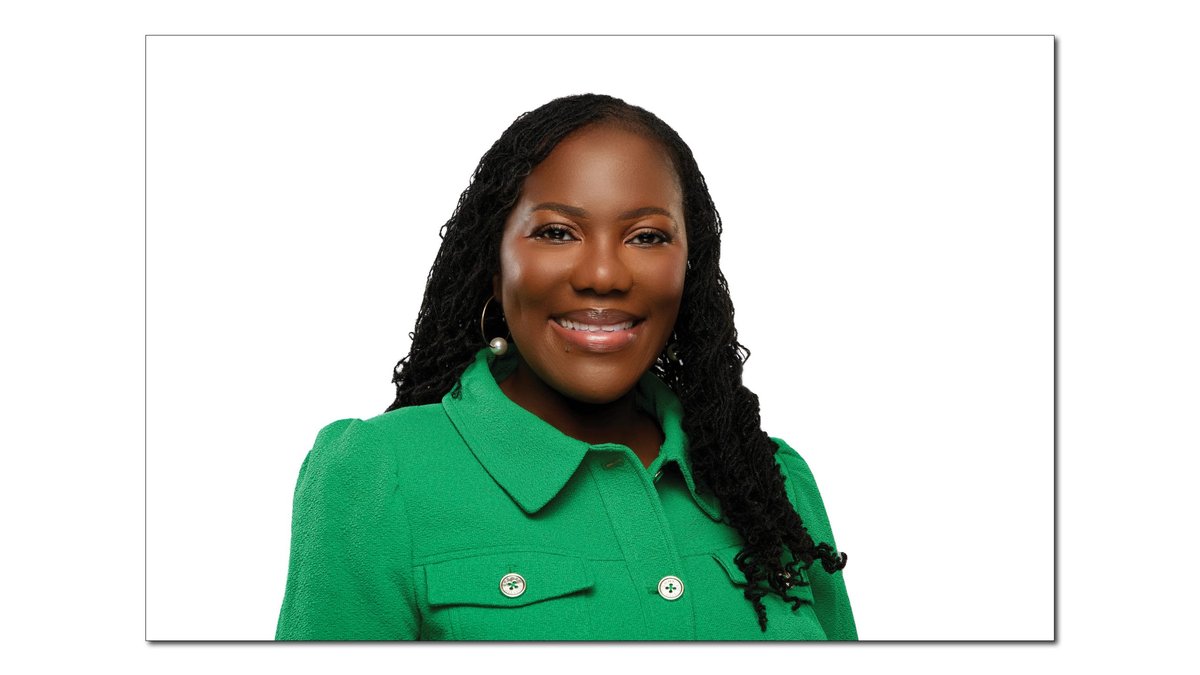
Sanders is a historian of the United States in the 20th century. She is a professor of African American studies at Emory University. Sanders also serves on the Executive Council of the Association for the Study of African American Life and History (ASALH) and as the assistant editor of the Journal of African American History.
A Forgotten Migration chronicles the experiences of Black southerners who received financial assistance from southern state governments to pursue graduate study in Northern, Midwestern, and Western states to maintain segregation until the late 1960s and early 1970s. Although Black citizens paid taxes to supplement graduate education at their historically white state-supported institutions, they could not attend them, and made financial, physical, emotional, and psychological sacrifices to pursue higher education hundreds of miles away from home. To make matters worse, this discriminatory policy led to the further underfunding of public Black colleges. Nevertheless, Black graduate students used their expertise upon returning home to fight inequality and empower Black residents.
A Forgotten Migration has already proven to be a tour de force across multiple disciplines, winning the Pauli Murray Book Prize from the African American Intellectual History Society; the Outstanding Publication Award from SIG 168 of the American Educational Research Association; the Lillian Smith Book Award from the Southern Regional Council, the University of Georgia Libraries, DeKalb County Public Library / Georgia Center for the Book, and Piedmont University; the Outstanding Book Award from the Association for the Study of Higher Education; and the Willie Lee Rose Prize from the Southern Association for Women Historians.
My interview with Sanders addresses how she came to the project, how Black Southerners weaponized their graduate education against inequality in their home states, and her book’s contribution to the Black reparations struggle.
Ashley Dennis (AD): I am very excited to be in conversation with you. First, I want to start with a hearty congratulations on all of the awards you have won so far for your newest book, A Forgotten Migration: Black Southerners, Segregation Scholarships and the Debt Owed to Public HBCUs. Can you start by telling us what brought you to this work?
Crystal Sanders (CS): In a nutshell, I got into this topic by being fascinated with the educational trajectories of retired public school teachers in North Carolina. During a trip home to North Carolina, I attended a Women’s Day event at my grandmother’s church. I noticed that several of the honorees were retired public school teachers who had earned master’s degrees in the late 1940s, early 1950s from places like NYU and Teachers College, Columbia University. I wondered: Why did they go so far away for graduate school? These women were not married, oftentimes they traveled alone, and they would have been traveling on segregated conveyances, whether they were using trains or buses. Did they have a choice? And so after I finished my first book, I came back to these women. I was interested in trying to figure out what types of choices they had.
After some research, it became evident that in the 1930s and 1940s, there were not opportunities for African Americans in North Carolina to pursue graduate study. I began to realize that the State of North Carolina was paying for Black students to go north as a way of preserving segregation. These were what I call “segregation scholarships” to study elsewhere. The more digging I did about this arrangement, I realized it wasn’t limited to public school teachers. Aspiring physicians, attorneys, pharmacists, graduate students in the social sciences, the natural sciences, the humanities—all of these individuals received segregation scholarships. And this pattern of forcing Black students to leave home for the same opportunities that white students received locally was not limited to North Carolina, but in fact 16 Southern and border states had these programs that would use tax dollars to preserve segregation.
AD: Comparing your first book to your second, did you find it challenging to switch focus from preschool centers to graduate education?
CS: It wasn’t challenging, but it was illuminating and special to be able to reflect upon my own experiences with graduate school as I was writing about the experiences of African Americans who were pursuing master’s degrees and doctorate degrees during a time of legal segregation. It was fascinating learning about everything from their journey to the North, Midwest, and West; to the way that they were treated at these supposedly “liberal institutions”; to the types of engagements they had with their classmates and advisors. All of that put my own experience in a new perspective. As I was writing about the graduate school experiences of people like Christine King Farris (Martin Luther King’s older sister) or historian John Hope Franklin, I was able to compare their experiences to my own. It was very humbling to realize all of the ways in which these earlier generations of scholars had really paved the way for me as a Black woman to pursue graduate study in the 21st century.
AD: Your book is titled A Forgotten Migration. How does this forgotten migration of Black Southerners traveling for graduate school differ from the more familiar Great Migration of the early to mid-20th century?
CS: Oftentimes when we talk about the Great Migration, we talk about the fact that migrants usually left the South under the cover of darkness to escape racial violence, never to return again. The forgotten migration that I write about is an educational migration, folks leaving home in pursuit of education. These migrations were not done under the cover of darkness. In fact, Southern state lawmakers were giving them money and saying “Go, here’s a plane ticket, here’s a railroad ticket, here’s bus fare, we want you to leave home.” Furthermore, most of the segregation scholarship recipients were very clear that they planned to return. They were not planning to build their lives and careers in the North, Midwest, and West. I find this to be a beautiful story because all too often we talk about migrants who left for higher wages, for better opportunities for their kids, and to be able to vote. With this educational migration, thousands upon thousands of Black Southerners are foregoing higher wages to come back and serve their native communities in the South. A Black attorney or a Black physician would have been able to make more in a place like Chicago, Detroit, or New York, but these people understood the great need for adequate legal representation and professional health care in the South. Over 90 percent of segregation scholarship recipients returned after completing their degree programs. So this is not a brain drain narrative but rather a story of African Americans equipping themselves with the credentials and know-how to come back to the South and work to dismantle white supremacy.
AD: I love this term in your book, “intellectual warfare.” Could you describe what intellectual warfare means and its importance in the history of Black education and civil rights?
CS: With intellectual warfare, segregation scholarship recipients are using education as a weapon to undermine and dismantle segregation. The story of Dr. John Hope Franklin offers a great example. Dr. Franklin was a segregation scholarship recipient from the state of Oklahoma. From 1935 to 1941, the State of Oklahoma wants to keep him out of the University of Oklahoma’s graduate program, so they give him $100 every academic year to offset his expenses at Harvard where he is pursuing his doctorate in history. First, the very presence of African Americans pursuing advanced degrees in the best universities in the world, the fact that someone like John Hope Franklin can go to Harvard University and excel academically and be heads and tails above his classmates, is a form of intellectual warfare because it defies the notion that Black people could not compete with white people academically. What we also see is segregation scholarship recipients acquiring world-class educations and then using the training, the skills, the credentials, the know-how to undermine white supremacy. After Franklin graduates, he goes on to become a renowned historian who masters the historian’s craft of using evidence to interpret the past and to expose contradictions at the center of our nation’s founding. His seminal work, From Slavery to Freedom, is a history textbook that exposes the gap between the ideals that the United States professed and its actual treatment of African Americans (and it’s still in print more than 60 years later).
We could also take the example of attorney Fred Gray, a native of Alabama, who goes to Western Reserve University Law School (now Case Western University School of Law). His form of intellectual warfare is using his legal training, for which he received a subsidy from the State of Alabama, to come back into Alabama and fight for quality education and voting rights in the courts. He helped desegregate all institutions of higher education in the state of Alabama. He represented the survivors of the Tuskegee Syphilis Experiment. He challenged gerrymandering. So his body of work kind of exemplifies intellectual warfare because he is taking the legal training that he received and he is using it to make life better for everyone but especially for other African Americans. He’s going to ensure that African Americans are not going to have to continue going out of state to receive the type of legal training that he received, that they are going to be able to receive that in state, where their tax dollars are subsidizing the University of Alabama’s law school.
So really, in the book, I’m trying to show how segregation scholarship recipients understood that their education was about more than being able to get a nice home and make a decent salary—it was about improving life for other people.
AD: A lot of readers may know about the Brown v. Board of Education ruling in 1954 that outlawed segregation in public schools, but your book covers another important Supreme Court case, Missouri ex rel. Gaines v. Canada. What is the significance of this case to the history you share about segregation scholarships?
CS: Oftentimes we focus so heavily on Brown without looking at all of the baby steps it took to get to Brown. The Gaines decision was the first successful legal challenge against segregation in public education. It started with a challenge to segregation scholarships.
In the mid-1930s, there was a young Black man by the name of Lloyd Lionel Gaines, who was a native of Missouri and wanted to be an attorney. The state of Missouri had one public law school, at the University of Missouri, that was off limits to African Americans. So Gaines wants to be an attorney, but there is not a public law school or even a private law school in Missouri that he can attend. Missouri offers him a segregation scholarship, but Gaines is also the first son of a widowed mother with several children at home, and he says, out of familial obligations, I need to be close to home. He also says, What sense would it make to go to law school out of state when I want to practice law in Missouri? I need to be at the University of Missouri Law School. So he says no, I want to go to the law school that’s being subsidized by my family’s tax dollars.
Gaines graduated at the top of his class from Lincoln University. He had the grades, he had the extracurricular opportunities, he was just a perfect plaintiff, so the NAACP takes his case. The NAACP’s argument was that Missouri was not in compliance with the 1896 Plessy v. Ferguson decision, which said separate but equal. They lose in the lower courts, but Charles Hamilton Houston, chief special counsel for the NAACP, was not discouraged, because his goal was the United States Supreme Court. And indeed, the Supreme Court sides with the NAACP, saying that segregation scholarships do not meet the separate but equal requirement of the Constitution because a state does not have jurisdiction outside of its borders. So the State of Missouri could not send Gaines to a law school in New York or Michigan and say that it has met its obligation for separate but equal because the State of Missouri does not have jurisdiction in New York or Michigan.
But the court fell short in compelling the University of Missouri to admit Gaines to its law school. The court said that the State of Missouri had three options: they could desegregate the law school at the University of Missouri, they could close the law school, or they could open a law school for African Americans. The State of Missouri chooses that last option. They decide that they’re going to open a law school like Lincoln University of Missouri, which at that time was the only public Black college in the state. The only problem was that Lincoln was underfunded, so when the state announces that they plan to open a law school at Lincoln University, Charles Hamilton Houston says, well, great. Get ready to see us back in court because as soon as that law school opens, we’ll prove that Lincoln University’s School of Law is not the equivalent of the University of Missouri’s Law School. Unfortunately, the NAACP never has the opportunity, because their plaintiff, Gaines, goes missing just months after that landmark December 1938 victory at the Supreme Court. Many historians, including me, believe that Gaines was killed for being the face of such a public and successful challenge to racial segregation in the United States. So oftentimes, you know, the Gaines decision is not remembered because the star plaintiff went missing.
AD: I want to talk about reparations. The subtitle of your book includes the phrase “The Debt Owed to Public HBCUs.” What is the basis of that debt, and who should pay the debt?
CS: Sixteen Southern and border states had segregation scholarship programs, meaning that 16 Southern and border states used tax dollars to preserve segregation through segregation scholarships. How did Southern states pay for this? In states like Missouri, Arkansas, Kentucky, Tennessee, and Florida, every dime used to pay for a segregation scholarship came out of the operating budgets of the public Black colleges in those states. So already underfunded Black colleges lost part of their annual operating budgets in order to preserve segregation.
The other reason I say that there is a debt owed is because Southern states had options. If they did not want to desegregate their flagship institutions, they could have invested in their public Black colleges. They could have created graduate and professional programs at these institutions. Rather than create programs at these institutions, states simply outsourced their responsibility to educate Black students. So because segregation scholarships were paid for out of the operating budgets of Black colleges and because Black colleges lost the opportunity to have revenue-generating graduate programs, I argue that there is this debt owed that needs to be paid by Southern and border state governments.
When we look at this history, we understand that the financial crises that HBCUs are in today are not problems of their own making. It is not the result of poor governance, but the result of state underfunding for generations. A school like Tennessee State would not find itself in a financial crisis in 2025 if the State of Tennessee would simply pay that institution what it is owed, what it has denied that institution over a span of more than 60 years.
AD: Continuing on that theme, do you think your research supports the idea of reparations from the state government to individual Black residents of that state? I’m thinking specifically of the double tax that you mentioned in your work, and wondering what reparations for this double taxation might look like today.
CS: I have not necessarily considered reparations to individual residents of these states that had segregation scholarship programs. But indeed, seeing that there was a double tax, seeing as how African Americans, you know, paid taxes that went to subsidize educational institutions, yet these same individuals found themselves having to leave home to reach their highest potential means, again, there is indeed a debt owed. So perhaps the way we go about settling the debt is having scholarships that are funded by the state and set aside for Black residents that could then be used at public institutions within the state. That would be perhaps one of the easiest ways to address the debt and to begin to remedy the harm caused.
AD: How might your readers use your book in the current war against public education, academic freedom, and the rollback of civil rights?
CS: Well, number one, I’m hopeful that friends, allies, and alumni of public Black colleges will read the book and perhaps say, well, this is another way that we can lobby our state government. The receipts are in the archive. You can clearly see that there is a debt owed by going into any Southern state archive and pulling these records, just as I pulled them to write this book. You will find boxes and boxes that list names, amounts, where these students studied, to get a sense of how much money is being spent annually to preserve segregation through segregation scholarships.
Number two, I’m hopeful that this will begin to help explain some of the disparity that students see when they are visiting various college campuses. All too often, you know, they will say, well, this school has all of the bells and whistles and this school doesn’t, so maybe I should go to the school with all the bells and whistles, and it’s key that we explain to people how we got here. It’s not coincidental; there’s a long history of underfunding that has allowed for the disparities that we can easily see today. A caveat is that despite the disparities in physical plans, we don’t see disparities in the education received. Indeed, some of these institutions that are underresourced are still punching above their weight, are still preparing their students succeed academically and be at the top of their chosen profession.
AD: I think your book also speaks to the debate about the relevancy of HBCUs, the necessity of HBCUs, and whether they deserve support in these times.
CS: Yes, oh, most definitely. HBCUs have always been relevant. HBCUs have always been institutions that practiced diversity, equity, and inclusion, long before DEI became a buzzword. I think we’re going to continue to see HBCUs be the desired educational institutions for large numbers of students because we’re in a period of time where there is such a rollback on civil rights that students are not interested in going to institutions that are not going to make them feel welcome and appreciated as full-fledged members of an incoming class. I think we’re going to see great demand for HBCUs in the coming years.
This article was commissioned by Dennis M. Hogan.