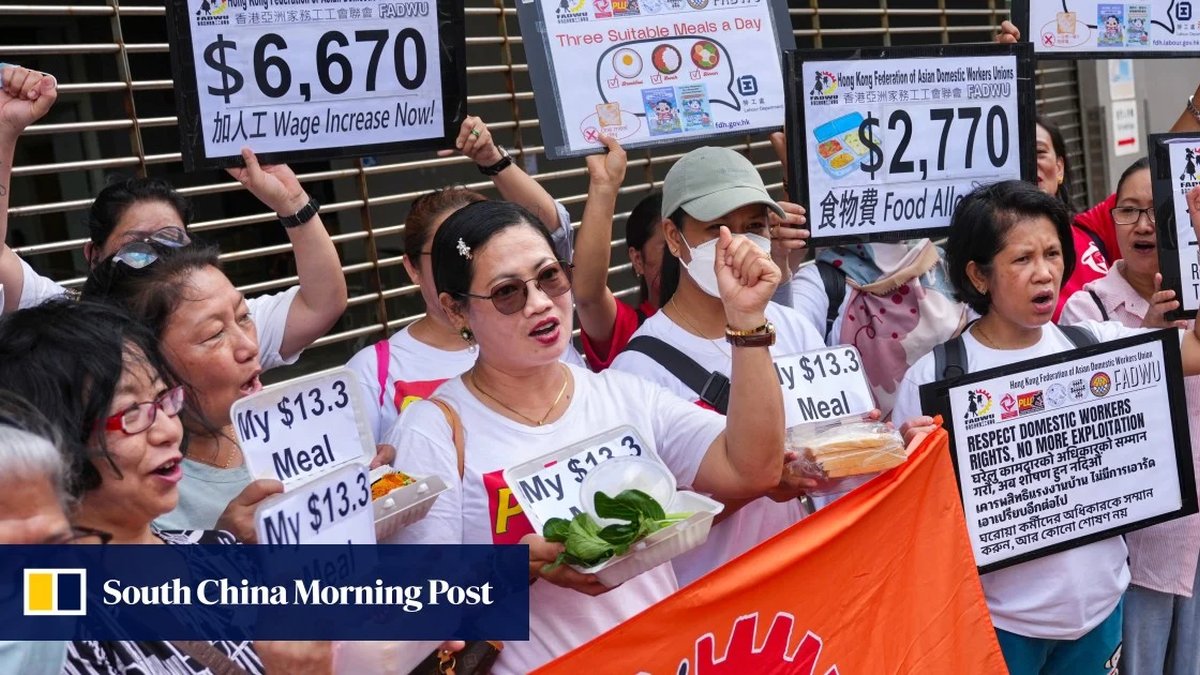
Federation of Asian Domestic Workers Unions representatives also demand increase in monthly minimum wage to HK$6,670 during Sunday rally
A union representing foreign domestic helpers in Hong Kong has urged authorities to more than double their monthly food allowance to HK$2,770 (US$350), saying the current stipend averaging HK$13.30 per meal is insufficient due to inflation.
Representatives from the Federation of Asian Domestic Workers Unions (FADWU) met Labour Department officials on Sunday after staging a protest. Besides the food allowance, the groups demanded an increase in the monthly minimum wage to HK$6,670 and contract modifications to protect helpers during periods of extreme heat.
Currently, the minimum salary of domestic helpers is HK$5,100. Employers who do not provide free meals must pay a monthly food allowance of HK$1,236, equivalent to HK$40.60 per day.
FADWU, which represents more than 1,000 helpers in Hong Kong, said the current allowance was detached from the rising retail food costs in the city and should be increased to HK$2,770 per month, equivalent to HK$91 per day.
During the rally in Central, unionists displayed sample meal boxes to visually demonstrate what a daily budget of HK$40.60 could buy: a single pack of instant noodles with an egg, or two packs of biscuits paired with an egg and instant coffee.
“We work from morning to night, but still do not have enough to eat, which makes us get sick easily,” said Phobsuk Gasing, the union’s chairwoman. “We need a better quality of life and to have energy to work.”
She noted that inflation had resulted in higher food prices, and a cha chaan teng meal now costs at least HK$40, equivalent to their daily allowance.
Sentinel — Human
The text functions as a human-centered report that effectively links macroeconomic inflation to the specific, tangible needs of domestic workers through direct testimonial evidence.