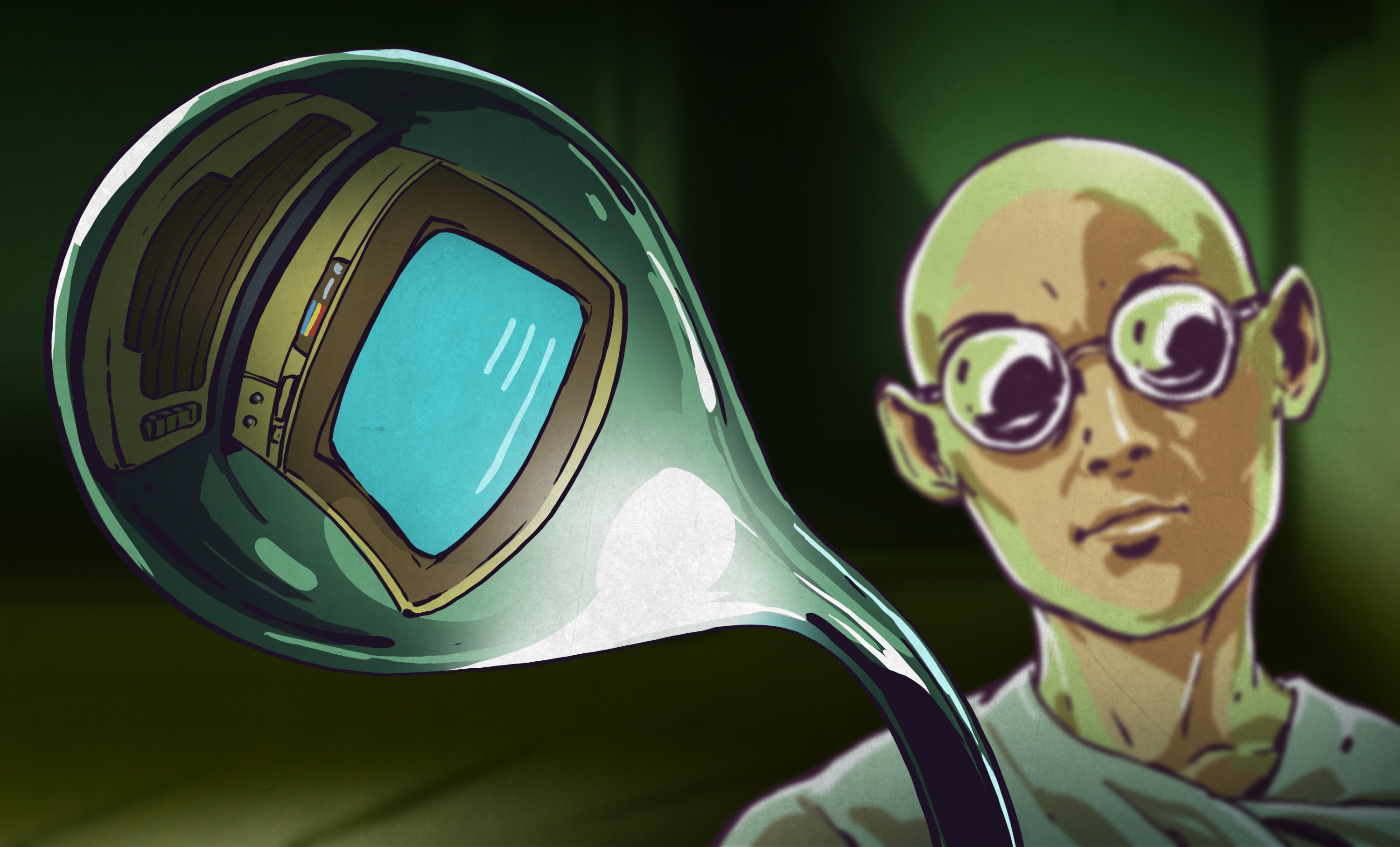
On the podcast, [Tom] and I were talking about the new generation of smartphones which are, at least in terms of RAM and CPU speed, on par with a decent laptop computer. If so, why not just add on a screen, keyboard, and mouse and use it as your daily driver? That was the question posed by [ETA Prime] in a video essay and attempt to do so.
Our consensus was that it’s the Android operating system holding it back. Some of the applications you might want to run just aren’t there, and on the open side of the world, even more are missing. Is the platform usable if you can’t get the software you need to get your work done?
But that’s just the computer-as-a-tool side of the equation. The other thing a computer is, at least to many of our kind of folk, is a playground. It’s a machine for experimenting with, and for having fun just messing around. Android has become way too polished to have fun, and recent changes on the Google side of things actively prevent you from installing arbitrary software. The hardware is similarly too slimmed-down to allow for experimentation.
Looking back, these have been the same stumbling blocks for the last decade. In 2018, I was wondering aloud why we as a community don’t hack on cell phones, and the answer then was the same as it is now – the software is not friendly to our kind. You can write phone apps, and I have tried to do so, but it’s just not fun.
The polar opposites of the smartphone-as-computer are no strangers in our community. I’m thinking of the Linux single-board computers, or even something like a Steam Deck, all of which are significantly less powerful spec-wise than a flagship cell phone, but which are in many ways much more suitable for hacking. Why? Because they make it easy to do the things that we like to do. They’re designed to be fun computers, and so we use them.
So for me, a smartphone isn’t a computer, but oddly enough it’s not because of the hardware. It’s because what I want out of a computer is more than Turing completeness. What I want is the fun and the freedom of computering.
Its more like locked down bootloaders and the walled gardens that are holding us back right? If a ti84 can run doom. My android could run macos or whatever
When I was young, “computer” was a job title. Youngsters should see and listen to the movie “Hidden Figures” :)
At school, it was something with up to 100V on the exposed ends of parch panel wires. Operator beware.
I now have Datron test equipment with many many exposed connections, with up to 1kV on them. Plus an example of school physics equipment with 250-500V on an external connector. Touching that causes dekatron counters to whizz round.
if i could just have two factor authentication on my laptop, i might just skip my crappy four year old cracked-screen android cellphone (and its stupid Cricket cellular plan) across the Caribbean like in that Corona ad. i would love a device that was the form factor of a cellphone, had G4 cellular service, and allowed me to run a proper windowing OS. but i would still need that crappy android phone for 2FA
We alaready had been there before.
The Nokia Communicator of 1996 had an 80386 based microchip and ran DOS and GEOS.
Same time, ’94-’96, 386DX40 bud-get PCs were still common and capable of running Windows 95 RTM.
The Nokia Communicator had 4 MB of RAM, which also same time was the bare minimum to run Windows 95.
Many 486 notebooks of mid-90s shipped with merely 4 MB and had to be upgraded via proprietary RAM modules..
I’ve seen many notebooks and PCs that struggled running Windows 95 on those 4 MB.
https://en.wikipedia.org/wiki/Nokia_Communicator
I would argue it is the hardware, because Linux is known to run on almost anything. What is missing is the basic hardware that everyone does not agree on — on purpose?? — so every jail break and every bootloader works differently.
Compare that to SBCs or anything “IBM compatible” since the 1980ies: burn a near generic ISO to a media, drop it in, install, run whatever you want.
My personal experience is that I treat phones like a toaster or microwave: I don’t change the firmware, ever. In contrast I will install a different OS on anything “computer” just for a weekend because the hardware does not get in the way.
Facts Only
* Tom and the author are discussing the capabilities of modern smartphones.
* Smartphones with RAM and CPU speeds comparable to laptops exist.
* Android is identified as a key limiting factor for smartphone use as a computer.
* Software availability is a primary concern, with a lack of apps for specific uses.
* Polished usability and software restrictions on Android hinder experimentation.
* The author cites a historical trend of software limitations on cell phones.
* Linux single-board computers and the Steam Deck are presented as more suitable alternatives.
* The author’s argument centers on the concept of “fun and freedom of computering.”
* The article references the Nokia Communicator (1996) and its DOS/GEOS operating system.
* The article discusses 4 MB RAM as a common specification in 90s notebooks.
* The author contrasts smartphone hardware with SBCs or IBM compatible computers.
* Two-factor authentication on a smartphone is mentioned as a desired feature.
Executive Summary
Full Take
Sentinel — Likely Human
The analysis suggests the text leans towards human authorship, exhibiting conversational flow and a focus on personal experience, though the frequent reliance on historical examples and potential for minor factual inconsistencies warrants careful scrutiny.