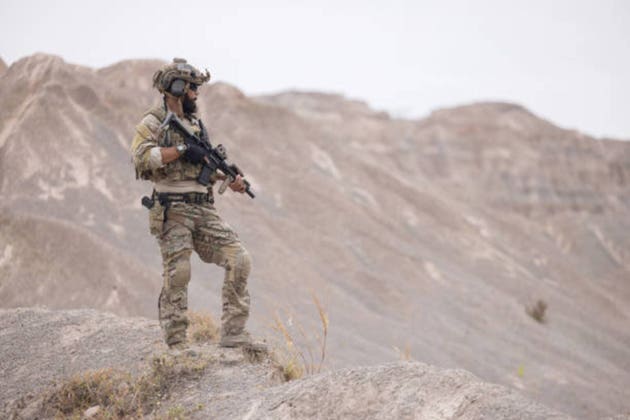
The Pentagon is developing plans for weeks of ground operations in Iran as thousands of American soldiers and Marines arrive in the Middle East, according to a Washington Post report citing U.S. officials speaking anonymously about sensitive military plans.
Rather
Facts Only
The Pentagon is developing plans for weeks of ground operations in Iran.
Thousands of American soldiers and Marines are arriving in the Middle East.
The information comes from U.S. officials speaking anonymously.
The plans involve sensitive military operations.
The Washington Post reported on these developments.
The timeline and specific objectives of the operations are not detailed.
The deployment is occurring in the Middle East.
The officials cited are not named, indicating the sensitivity of the information.
Executive Summary
Full Take
**STEELMAN:** The strongest version of this narrative is that the U.S. is preparing for a potential ground conflict in Iran, signaling resolve to counter perceived threats or deter further escalation. The anonymous sourcing, while limiting transparency, could reflect genuine operational security concerns. If accurate, this would mark a major shift in U.S. military strategy, possibly in response to regional instability or Iranian actions.
**PATTERN SCAN:** The use of anonymous officials raises questions about the intent behind the disclosure. Is this a strategic leak to shape public perception or a genuine warning? The lack of context—why now, what triggers, what endgame—leaves room for manipulation. The framing could exploit fear of conflict to rally support or justify preemptive action. The ambiguity also allows for plausible deniability if plans change.
**ROOT CAUSE:** The paradigm here is one of military deterrence and power projection, rooted in the assumption that visible force can shape adversary behavior. The unstated assumption is that Iran poses an imminent or unacceptable threat, though the article doesn’t specify what that threat entails. Historically, this echoes Cold War-era brinkmanship, where signaling capability was as important as actual deployment.
**IMPLICATIONS:** For human agency, this narrative reduces complex geopolitical dynamics to a binary of action vs. inaction, potentially sidelining diplomatic alternatives. The costs—human, financial, and strategic—would disproportionately fall on soldiers, Iranian civilians, and regional stability. Second-order consequences could include accelerated arms races, proxy conflicts, or erosion of international norms against unilateral military action.
**BRIDGE QUESTIONS:**
What specific Iranian actions or threats are these plans responding to, and how have diplomatic efforts been exhausted?
How might regional allies or adversaries interpret this deployment, and what unintended escalations could it trigger?
If this is a deterrence strategy, what metrics would indicate success or failure?
**COUNTERSTRIKE SCAN:** A coordinated influence campaign would use anonymous leaks to create urgency, frame the narrative as defensive necessity, and suppress dissent by invoking national security. The actual content aligns with this pattern—vague threats, unnamed sources, and a focus on military response over diplomacy. However, without evidence of orchestration, this remains a structural similarity rather than proof of manipulation.
Patterns detected: ARC-0024 Ambiguity, ARC-0043 Motte-and-Bailey (potential retreat to "just planning" if challenged)