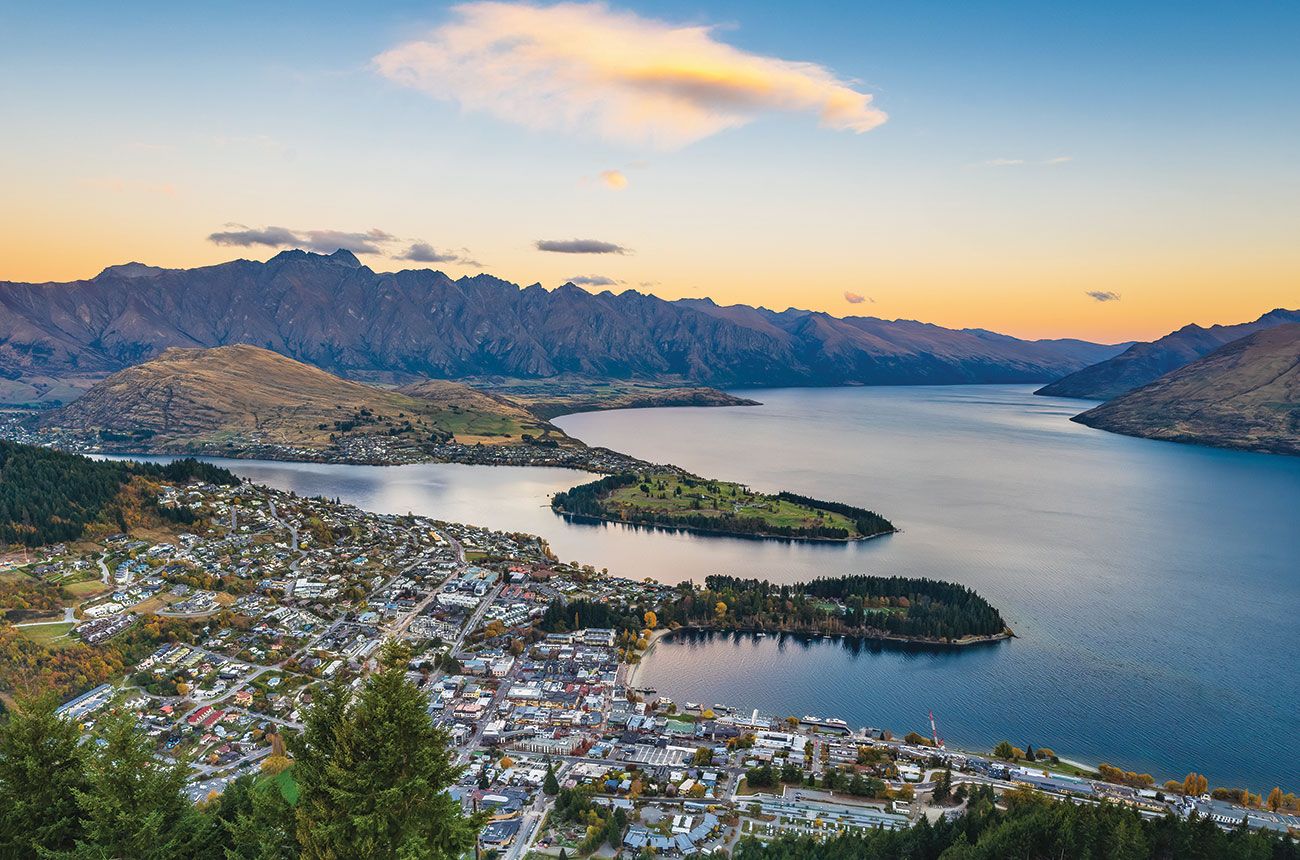
Located on New Zealand’s South Island, Central Otago combines jaw-dropping scenery with world-class wines. Read our expert travel guide to the world’s southernmost commercial winemaking region.
Get our daily fine wine reviews, latest wine ratings, news and travel guides delivered straight to your inbox.
You are now subscribed
Your newsletter sign-up was successful
Central Otago travel guide
The soaring mountains, dry highlands and glacial-blue braided rivers of New Zealand’s Central Otago region have long made it a favourite destination for adventure-seekers and filmmakers (most notably the lord of the rings himself, Sir Peter Jackson).
But the region’s celebrated wines have become a draw in their own right. Wine arrived here during the 19th-century gold rush, French immigrant Jean Désiré Féraud planting the first vines in 1864, but it wasn’t until the late 20th century that a commercial wine industry appeared in Gibbston Valley.
Today, the Central Otago wine region encompasses six sub-regions, all within 50km of the old gold-mining town of Cromwell. Pinot Noir dominates, but Chardonnay, Riesling, Pinot Gris and Gewurztraminer are well represented, too.
A world-class hospitality industry has sprung up to cater to Otago’s visitors. Queenstown is the central hub of activity, with Wānaka (at the southern tip of the eponymous lake) providing a gentler alternative, but Cromwell is probably the best place to base yourself if you’re there for the wine.
Accommodation ranges from budget hostels to luxury lodges, while excellent restaurants serve innovative menus based on local produce.
Activities on offer include everything from skydives to wine tours, and Ngāi Tahu, the South Island’s principal Māori iwi, or tribe, is involved in much of the region’s tourism, giving visitors the chance to learn about indigenous history and culture along the way.
How to get there
The nearest major international airport is in Christchurch (a five-hour drive from Cromwell), but you can fly direct to Queenstown airport (40 minutes from Cromwell) from New Zealand’s three largest cities and Australia’s main east coast centres.
Get our daily fine wine reviews, latest wine ratings, news and travel guides delivered straight to your inbox.
Around the vineyards
Greg Hay founded Wet Jacket Wines in 2015, having already established Chard Farm (1987) and Peregrine Wines (1998). ‘None of us knew what we were doing when we started,’ he says. ‘We all encouraged each other, swapping ideas about what worked. It’s that spirit that makes this region so special.
Greg founded Wet Jacket as a ‘bit of fun’ after the success of his two larger ventures. The original cellar door was a wool shed near Arrowtown (complete with a sheep-shearing room), but they’ve since opened one on the lakeside in Queenstown. Half of the revenue from wine tastings funds conservation projects, which Greg oversees himself.
Mountains and lakes
Rippon Vineyard is the northernmost of the region, overlooking lake Wānaka with a view of the glacier-topped peaks of Mt Aspiring national park (see map).
‘The mountains are key,’ says Hazel Nasta, the estate’s cellar door manager. ‘They’re a wall to weather from the west, giving us a dry, stable, continental climate with hot days and cold nights.
'Central Otago sits on free-draining schists, so the vines put all their energy into the fruit, producing intense, vibrant grapes.
'There’s no appellation control in New Zealand,’ Hazel continues. ‘So winemakers can experiment more freely. Our older vines are starting to express the terroir very clearly, so our Sauvignon Blanc is flintier than the lemongrass and tropical flavours of Marlborough.'
Just north of Cromwell, on a hill overlooking lake Dunstan, is Domaine Thomson Wines , the winery buildings clad and roofed with rustic, acid-washed, corrugated galvanised steel, to echo the region’s gold rush past.
Owners David and PM Hall-Jones also have vineyards in Burgundy, the spiritual home of Pinot Noir. ‘It’s a wonderful contrast,’ says PM. ‘We have a millennium of tradition in France, but decades of innovation in Otago, which is changing the way we think of that grape.’
Going for gold
Situated near the old gold sluicings in Bannockburn, Felton Road is probably the region’s most internationally renowned winery, having won awards from around the globe.
‘We were part of that second generation of Otago winemakers,’ says Nigel Greening, who took over the estate in 2000. ‘We’re biodynamic, which is a fancy way of saying we use the ecosystem, such as falcons chasing birds from the vines. But we do play music to the wines in the cellars!’
Felton Road’s cellar door is open on weekdays. You need to make an appointment, but it’s worth it for a place that’s considered one of New Zealand’s top producers, as the visit includes a detailed tour of the vines and winery, as well as samples of their wines.
The spectacular cellar door at nearby Te Kano (‘the seed’ in Māori) thrusts over the valley with views up Kawarau gorge. You can pick up snacks from the deli to accompany wines on the terrace or pack them up as a picnic to enjoy on the estate (60% of which is reserved for native vegetation).
My perfect day in Central Otago
MORNING
Work up an appetite by hiking Mt Iron, before tucking into wild mushroom toast and a flat white at Kai Whaka Pai. Then it’s a short drive to Rippon Vineyard (open from 11am by appointment) for a wine tasting with lakeside views of the Southern Alps.
LUNCH & AFTERNOON
Drive into the Crown Range mountains and pop into the Cardrona Hotel*, one of New Zealand’s oldest pubs, then stop for views of the Remarkables Range at Arrow Junction lookout point.
Down in Arrowtown, the Mora Wines* cellar door has a restaurant that specialises in local ingredients, and don’t miss the Lakes District Museum* for dioramas of the region’s gold rush history.
Swing through the adrenaline capital of Queenstown to Wet Jacket Wines (open from 11am), where Greg Hay will regale you with tales of his four decades of Otago winemaking.
If you’re still peckish, Fergburger (pictured above) has been dishing up gourmet burgers for a quarter of a century.
Cruise down the storied Kawarau gorge, home to Chard Farm, Peregrine (both founded by Greg Hay) and Gibbston Valley, the first commercial winery in Central Otago. If you’re feeling brave, throw yourself off a bridge with AJ Hackett.
EVENING
Finish in Bannockburn with a lamb shoulder dinner at the Bannockburn Hotel. Stay in one of the villas at Marsden Lake Resort*, close to Domaine Thomson and Felton Road For the following day.
For details of entries marked with an asterisk (*), see ‘Address book’.
Your Central Otago address book
Accommodation
Gibbston Valley was the first commercial winery in the region, and its lodge and spa are gorgeous. Rooms from NZ$674, including spa and restaurant.
This luxury boutique lodge, with beautiful gardens and a pool, sits just outside Wānaka. Rooms from NZ$395.
In Cromwell, the Marsden Lake Resort has self-contained villas opposite the entrance to Domaine Thomson. Studios from NZ$291.
Restaurants
Don’t miss this hotel located on the pass between Wānaka and Queenstown, to enjoy a perfect lamb shoulder in one of New Zealand’s true institutions.
In Wānaka, Kika blends excellent fine dining with modern sharing plates – its crayfish mole and roasted brassicas are remarkable.
Just outside Arrowtown, the winery at Mora has a fabulous terrace and excellent, colourful food. Great for lunch.
Activities
Hike to a glacier
The walk from Raspberry Flat to Rob Roy glacier in Mt Aspiring national park is one of the best short walks in the world. You can do it yourself, or alternatively Eco Wānaka provides transport, lunch and an excellent guided hike for NZ$420 per adult.
Lakes District Museum & Gallery
Located in Arrowtown and filled with dioramas and artefacts, the museum offers a fantastic insight into the region’s history, with a particular focus on European and Chinese gold miners (NZ$14).
Scenic flight & cruise
Southern Alps Air offers a spectacular four-hour day tour from Wānaka that crosses the Southern Alps for a scenic cruise along the 16-kilometre length of Milford Sound (pictured, p88; NZ$749 per adult). It’s a remarkable way to get a sense of the geography that influences Otago’s wines.
Related articles
A wine lover’s guide to Hawke’s Bay, New Zealand
A wine lover’s guide to Waiheke Island
Decanter's Dream Destination: Cap Rocat, Mallorca, Spain
An awarded journalist, broadcaster, author and speaker, Ash has reported from more than 50 countries for outlets including the BBC, The Telegraph and Condé Nast Traveller. His debut book Why We Travel (£11 in paperback, Bedford Square Publishers) blends memoir, travelogue and original research to help make travel more fulfilling.
Facts Only
Central Otago: Wine-loving travel destination in New Zealand's South Island
Wineries: Gibbston Valley, Mount Difficulty, Felton Road, Rippon, and Carrick
Wine Varieties: Pinot Noir, Chardonnay, Riesling, Pinot Gris, Gewurztraminer
Activities: Scenic flights, hikes to Rob Roy glacier, Lakes District Museum & Gallery visits
Author: Ash, journalist, broadcaster, author, and speaker
Executive Summary
Central Otago is a wine-loving travel destination located on New Zealand's South Island, known for its breathtaking landscapes and world-class wines. The region, famous for its mountains, dry highlands, and glacial-blue rivers, has attracted adventure-seekers, filmmakers, and now, wine enthusiasts. Wine arrived in the 19th century but commercial winemaking didn't begin until the late 20th century in Gibbston Valley. Today, Central Otago encompasses six sub-regions, with Pinot Noir being the dominant variety but Chardonnay, Riesling, Pinot Gris, and Gewurztraminer also well represented.
The article provides an overview of the region's wine scene, highlighting key wineries and experiences. It also offers suggestions for activities beyond wine tasting, such as scenic flights, hikes to Rob Roy glacier, and visits to the Lakes District Museum & Gallery. The piece is written by Ash, a journalist, broadcaster, author, and speaker who has reported from over 50 countries.
Full Take
This article serves as a promotional piece for Central Otago's wine scene. While it provides factual information about the region, wineries, and activities, it does not delve deeply into the history or unique aspects of the region that set it apart from other wine regions. Additionally, the article fails to address any challenges faced by the wine industry in Central Otago, such as climate change or sustainability issues.
Patterns detected: ARC-0024 Ambiguity (The article does not explicitly state whether it is an advertisement or a news piece), ARC-0043 Motte-and-Bailey (The article highlights the region's wine scene without critically examining its strengths and weaknesses).
Sentinel — Human
The analyzed text is likely human-written, exhibiting variable sentence lengths, idiosyncratic emphasis on personal voices, and a lack of signs pointing towards AI generation.