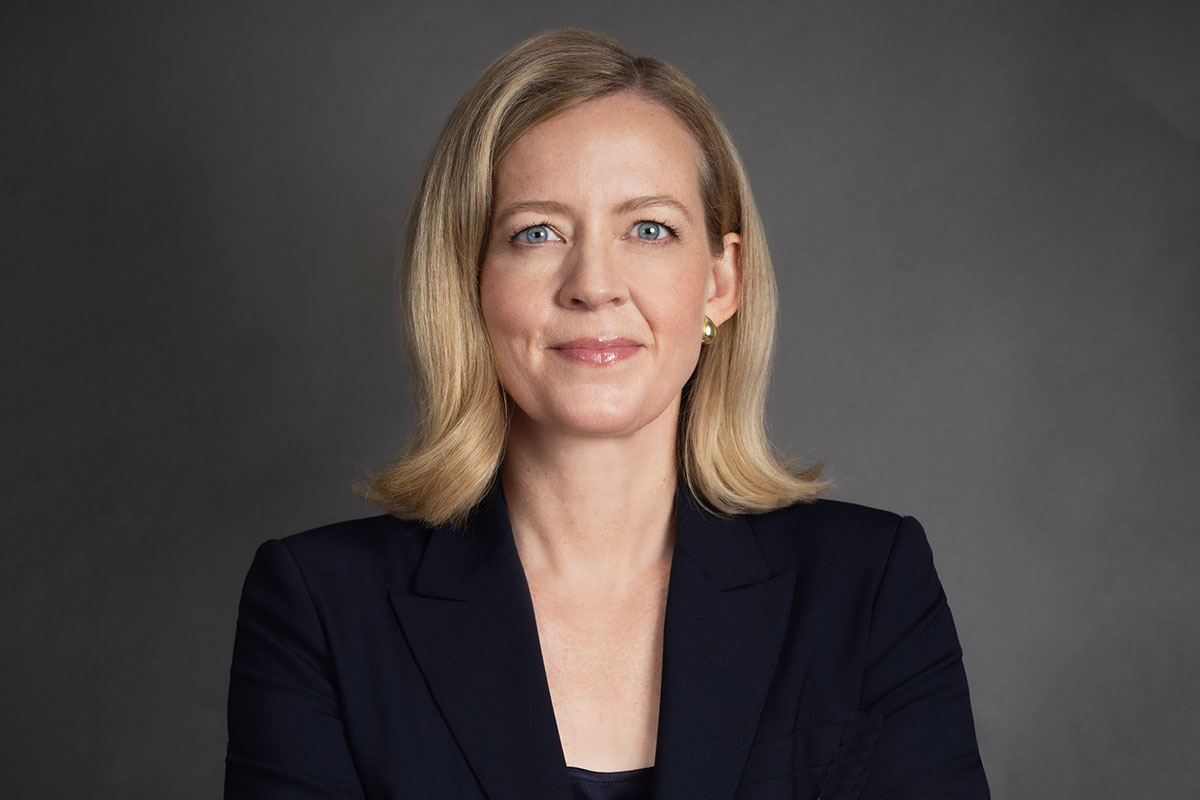
Cresset Capital Management LLC, a multi-family office and registered investment advisory firm with $235 billion in assets under management and advisement, announced the promotion of President Susie Cranston to CEO, effective April 15.
Since 2024, Cranston has served as president of the firm, founded by Eric Becker and Avy Stein. A statement from Cresset noted “her appointment to CEO reflects a natural and intentional evolution of Cresset’s leadership structure, aligning title with responsibility and reinforcing the firm’s commitment to thoughtful succession planning and long-term stewardship.” As part of the leadership transition, Cranston also will join Cresset’s board of directors.
“When Eric and I founded Cresset, our goal was to build a firm designed to serve families with care, alignment, and integrity for generations,” said Stein in a statement. “Susie embodies those principles and leads with clarity, sound judgment, and deep respect for the trust families place in our firm. Formalizing her role as CEO reflects the leadership she has already been demonstrating and positions Cresset well for the future.”
Stein and Becker will continue to be involved with the firm as executive co-chairs. The duo will continue to be engaged in Cresset’s culture, client relationships, investment platform and growth initiatives, according to the firm.
Before joining Cresset, Cranston was managing director, chief operating officer and head of integration for heritage First Republic Bank business units during their integration into JPMorganChase & Co. She was chief operating officer at First Republic Bank, where she also worked as an executive vice president of private wealth management. She spent 12 years as a consultant at McKinsey & Co. advising financial clients.
She earned a bachelor of science degree in industrial engineering from Stanford University and an MBA from the Stanford University Graduate School of Business.
“Cresset is a remarkable firm, entrepreneurial at its core and grounded in stewardship,” Cranston said in a statement. “I feel deeply grateful for the trust placed in me and for the opportunity to continue working alongside Avy, Eric, and our extraordinary team as we serve clients and build a firm designed to endure for generations.”
| University of Iowa Selects Northern Trust Family Office Executive as CIO | |
| How Family Offices Should Tackle Hiring, Retention Challenges | |
| Family Offices Lean Further Into Alts, Crypto |
Tags: Family Offices
Facts Only
Cresset Capital Management LLC is a multi-family office and registered investment advisory firm with $235 billion in assets under management and advisement.
Susie Cranston has been promoted from president to CEO, effective April 15.
Cranston joined Cresset as president in 2024.
The firm was founded by Eric Becker and Avy Stein.
Cranston will join Cresset’s board of directors as part of the transition.
Becker and Stein will continue as executive co-chairs, focusing on culture, client relationships, investment platforms, and growth initiatives.
Cranston previously served as managing director, COO, and head of integration for First Republic Bank units during their integration into JPMorgan Chase & Co.
She was COO and executive vice president of private wealth management at First Republic Bank.
Cranston spent 12 years as a consultant at McKinsey & Co., advising financial clients.
She holds a bachelor’s degree in industrial engineering and an MBA from Stanford University.
Cresset’s statement describes the promotion as part of a planned leadership evolution.
Executive Summary
Cresset Capital Management LLC, a multi-family office and registered investment advisory firm overseeing $235 billion in assets, has promoted President Susie Cranston to CEO, effective April 15. Cranston, who joined Cresset in 2024 as president, will also join the firm’s board of directors. The transition reflects a planned leadership evolution, with founders Eric Becker and Avy Stein remaining as executive co-chairs, focusing on culture, client relationships, and growth initiatives. Cranston’s background includes roles as COO at First Republic Bank and a consultant at McKinsey & Co., with degrees from Stanford University. The firm emphasizes her alignment with its values of stewardship and long-term client service.
The announcement highlights Cresset’s commitment to succession planning and continuity, positioning Cranston’s promotion as a natural progression. Stein and Becker’s continued involvement suggests a structured transition rather than a abrupt change. Cranston’s prior experience in wealth management and integration roles at major financial institutions underscores her operational and strategic expertise. The firm’s messaging frames the move as reinforcing stability and client trust, though the long-term impact of the leadership shift remains to be seen.
Full Take
This leadership transition at Cresset Capital Management reflects a deliberate strategy to balance continuity with evolution, a pattern common in family offices and wealth management firms where trust and long-term relationships are paramount. The promotion of Susie Cranston to CEO, while retaining the founders as executive co-chairs, signals a structured succession plan designed to reassure clients and stakeholders. The narrative emphasizes stewardship, integrity, and generational alignment—values that resonate in an industry where stability and discretion are critical. However, the absence of external perspectives or potential challenges (e.g., client reactions, market pressures) leaves the analysis somewhat one-dimensional.
The strongest version of this narrative is that Cresset is proactively managing leadership transitions to ensure longevity, leveraging Cranston’s operational expertise and alignment with the firm’s culture. Yet, the framing leans heavily on institutional credibility (Stanford, McKinsey, First Republic) and founder endorsements, which could be seen as an appeal to authority. The lack of dissenting voices or critical scrutiny might reflect a controlled messaging strategy, but it doesn’t necessarily indicate manipulation.
Root cause: The paradigm here is the tension between institutional continuity and innovation in wealth management. Family offices often prioritize stability, but leadership transitions can test client trust. The unstated assumption is that Cranston’s background and the founders’ ongoing involvement will suffice to maintain confidence.
Implications: For human agency, this transition could empower Cranston to shape Cresset’s future while preserving its core values. The costs—if any—might emerge if the dual leadership structure creates ambiguity or slows decision-making. Second-order consequences could include shifts in investment strategies or client expectations as the firm evolves.
Bridge questions: How might clients perceive the division of responsibilities between Cranston and the co-chairs? What challenges could arise from a leadership model that blends operational control (CEO) with strategic oversight (co-chairs)? What would it take for this transition to be deemed unsuccessful?
Counterstrike scan: A coordinated influence campaign might exaggerate the seamless nature of the transition or omit potential risks to project unwavering confidence. However, the content here appears straightforward, with no signs of forced narratives or evasion. The focus on credentials and continuity aligns with standard corporate messaging rather than manipulative tactics.
Patterns detected: none
Sentinel — Human
This article exhibits strong human characteristics, with specific details and natural phrasing typical of corporate announcements. No significant synthetic signals detected.