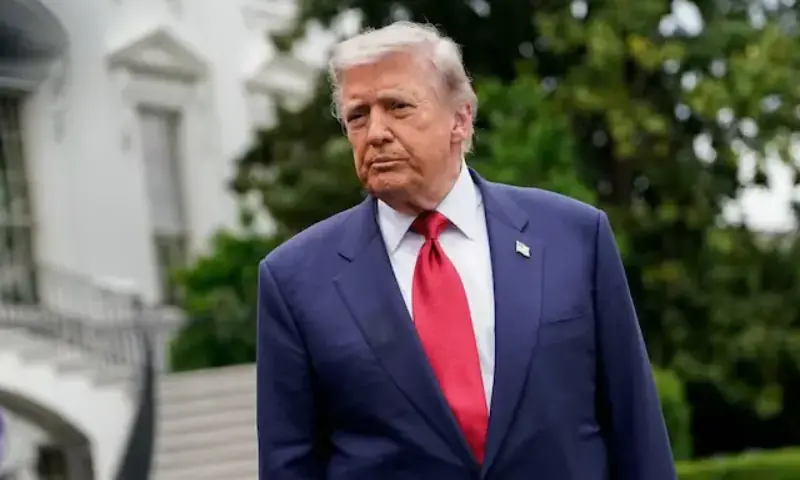
Presidenti Donald Trump tha të martën se Kuba po kërkon ndihmë dhe “ne do të flasim”, pa dhënë më shumë informacion rreth planeve të SHBA-së.
Trump ka ushtruar presion mbi kombin ishullor të Karaibeve që kur u rikthye në detyrë vitin e kaluar dhe kërcënoi se Kuba “është e radhës” pasi forcat amerikane kapën Nicolas Maduron, presidentin e hershëm të aleatit kubanez Venezuelën, në janar.
“Asnjë republikan nuk më ka folur ndonjëherë për Kubën, e cila është një vend i dështuar dhe po shkon vetëm në një drejtim – poshtë! Kuba po kërkon ndihmë dhe ne do të flasim!!! Ndërkohë, unë do të shkoj në Kinë!” shkroi Trump në një postim në platformën e tij Truth Social.
Trump nuk pranoi të jepte informacione të mëtejshme kur foli me gazetarët në Shtëpinë e Bardhë ndërsa u nis për një udhëtim në Kinë.
“Kuba nuk po shkon mirë. Është një komb i dështuar dhe ne do të flasim për Kubën në kohën e duhur”, tha Trump.
Trump ka vendosur sanksione të reja financiare ndaj Kubës dhe ka zgjeruar të tjera. Administrata e tij ka vendosur gjithashtu një bllokadë karburanti, ka kufizuar udhëtimet dhe dërgesat e parave nga SHBA-të në Kubë dhe është përpjekur t’i dekurajojë aleatët rajonalë nga kontraktimi i mjekëve kubanë.
I pyetur në lidhje me bisedimet e planifikuara, një zyrtar i Shtëpisë së Bardhë nuk dha detaje përtej komenteve të Trump, por tha: “Brenda një periudhe të shkurtër kohore ata do të bien dhe ne do të jemi atje për t’i ndihmuar.”
Përfaqësuesit e Departamentit të Shtetit të SHBA-së dhe qeverisë kubaneze gjithashtu nuk u përgjigjën.
Trump po udhëton për t’u takuar me Presidentin kinez Xi Jinping. Kina i ka bërë thirrje Shteteve të Bashkuara që të heqin menjëherë embargon dhe sanksionet ndaj Kubës. Trump u tha gazetarëve në Shtëpinë e Bardhë se pret të ketë një takim të mirë me Xi.
Facts Only
Donald Trump stated that Cuba is seeking aid and that "we will talk."
Trump threatened that Cuba "is next" because US forces captured Nicolás Maduro in January.
Trump called Cuba a "failed country" and stated that "we will talk for Cuba in due time."
The US administration imposed new financial sanctions against Cuba.
The US implemented a fuel blockade against Cuba.
US restrictions were placed on travel and money transfers to Cuba.
The administration attempted to discourage Cuban doctors from leaving.
A State Department official and the Cuban government representatives did not respond to questions about planned discussions.
Trump is traveling to China to meet President Xi Jinping.
Executive Summary
Full Take
The communication surrounding the Cuba situation reveals a strategic interplay between rhetorical pressure and concrete policy actions. Trump's public statements framed the issue using moralistic and fear-based language, positioning the US as a benevolent mediator while simultaneously leveraging the geopolitical context of capturing Maduro to justify aggressive policy implementation. This pattern of using high-stakes language ("failed country," "we will talk") serves to mobilize domestic support and project an image of decisive action, often bypassing nuanced policy discussion.
The simultaneous imposition of economic measures—sanctions, fuel blockades, and restrictions on movement—demonstrates a commitment to coercive diplomacy over open negotiation. The silence from official bodies further distances the public from the underlying mechanisms and uncertainties of the strategy. The context of Trump's trip to China and his meeting with Xi Jinping suggests that this narrative is part of a broader pattern of external power projection, where bilateral relations are leveraged for strategic advantage rather than consensus-building.
The core implication is the use of manufactured urgency and emotional appeals to mask complex geopolitical maneuvering. This strategy relies on establishing a simplistic narrative of good versus failed, which simplifies complex systemic issues and redirects attention away from accountability regarding the costs and consequences of the imposed policies on the Cuban population and its partners.
Sentinel — Human
This text functions as a direct report of political statements and administrative actions, showing characteristics of standard journalistic reporting rather than sophisticated AI generation.