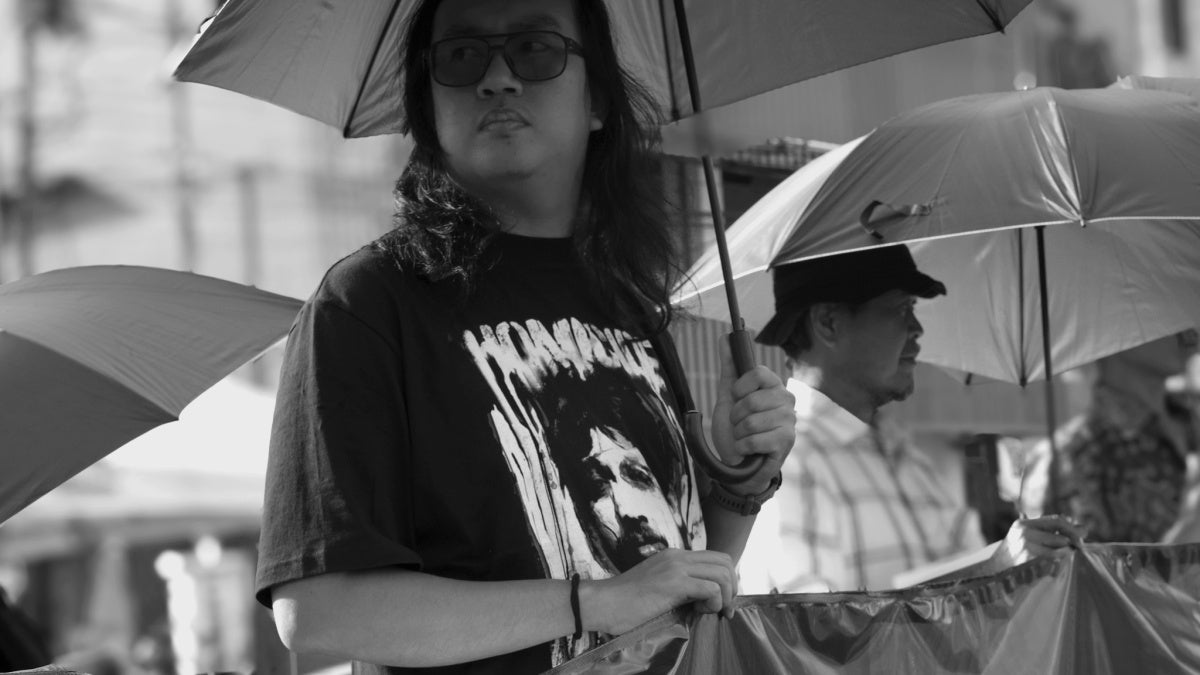
(Sydney) – Indonesian President Prabowo Subianto should immediately issue a presidential decree setting up a fact-finding team independent of the military to fully investigate the acid attack against a prominent human rights activist who has criticized the military, Human Rights Watch said today. While the military police have arrested four soldiers in connection with the attack, the Indonesian armed forces’ long history of impunity for serious rights violations raises accountability concerns.
At about 11 p.m. on March 12, 2026, at an intersection in the Menteng area of Jakarta, two men on a motorcycle threw acid at Andrie Yunus, a 27-year-old deputy coordinator at KontraS, the nongovernmental Commission for the Disappeared and Victims of Violence. Yunus had just finished recording a podcast interview at the Indonesian Legal Aid Foundation and was traveling home by motorcycle. He has 24 percent burns to his face, chest, and hands, and has possibly lost his right eye.
“The brutal acid attack in downtown Jakarta against a prominent rights activist by alleged military intelligence members raises grave concerns for Indonesia’s entire human rights community,” said Elaine Pearson, Asia director at Human Rights Watch. “President Prabowo should set up an independent fact-finding team to investigate the attack against Andrie Yunus to ensure that all those responsible are brought to justice.”
On March 18, Indonesian military police arrested a military captain, two lieutenants, and a sergeant, all of whom work for the Indonesian Strategic Intelligence Agency (Badan Intelijen Strategis, BAIS). The agency handles military intelligence under the command of the National Armed Forces.
The National Police earlier released CCTV videos of the acid attack, showing two men following Yunus on his motorcycle, making a U-turn, and throwing the acid. They also released more than 2,000 images from 86 CCTV cameras around Jakarta that captured Yunus up to a week before the attack. The images ranged from Jakarta’s National Monument Park, where Yunus attended a protest to Bogor, to where he was visiting his parents.
The National Police released the initials of two suspects apparently derived from the CCTV images. The military police provided the initials of the four military personnel arrested, but these differed from the police list, raising concerns that all involved in the attack were not accounted for.
Yunus has been an outspoken critic of the Indonesian military, particularly since Indonesia’s parliament passed an amendment to the Armed Forces Law that expands the military’s role in civilian sectors. He also participated in a report about possible involvement of BAIS officers in arson attacks during nationwide protests over the economy in August and September 2025. He had told close friends and his parents that unidentified people were threatening him and putting him under surveillance.
More than 420 organizations have issued statements condemning “invisible hands” for planning the attack on Yunus and calling for a full and independent investigation. KontraS denounced the attack as “brutal and evil.”
On March 19, President Prabowo told journalists and commentators: “This is a barbaric act, we must pursue it. We must investigate. Who ordered them, who paid.”
Under Indonesian law, civilian police cannot investigate military personnel, with only a few rarely invoked exceptions. The 1997 Law on Military Courts provides that the military will investigate crimes by soldiers and military tribunals have jurisdiction to prosecute all alleged crimes by soldiers. The military justice system in Indonesia lacks transparency, independence, and impartiality, and has failed to properly investigate and prosecute alleged serious human rights abuses by military personnel.
In one example, Papua police investigated an October 2024 attack in Jayapura in which two men on a motorcycle threw a gasoline bomb at the newsroom of Jubi news. The January 2025 police report, based on interviews with nine witnesses and CCTV recordings, implicated two Indonesian soldiers. But the military returned the report to the police, saying that there was insufficient evidence to proceed.
KontraS has long been the target of attacks. In 2001, a bomb was sent to the home of the organization’s founding coordinator, Munir Thalib, when KontraS was investigating the role of a Special Forces team in abducting activists. On September 7, 2004, Munir was poisoned during a Garuda Indonesia flight from Singapore to Amsterdam, resulting in his death. Two civilians were convicted in the case, but a Jakarta court in 2008 acquitted a former deputy at the State Intelligence Agency who was initially charged with premeditated murder.
Since taking office in October 2024, the Prabowo administration has adopted laws and policies that undercut human rights, creating an atmosphere hostile to civil society, Human Rights Watch said. Amendments to the Armed Forces Law enacted in March 2025 permit military officers to hold more positions in government. Activists have expressed concern that a bill on Combatting Disinformation and Foreign Propaganda could be used to target government critics. Prabowo has repeatedly raised concerns over “foreign puppets,” raising fears of a crackdown on civil society groups that receive international assistance.
“It’s crucial for the Indonesian government to uncover and prosecute everyone responsible for the horrific acid attack on Andries Yunus,” Pearson said. “President Prabowo needs to demonstrate to the Indonesian people that such violence won’t be tolerated, no matter who commits it, and regardless of their rank and title.”
Facts Only
Target: Andrie Yunus, human rights activist
Location: Menteng area, Jakarta, Indonesia
Date: March 12, 2026 (acid attack); March 18, 2026 (arrests)
Actors: Indonesian Strategic Intelligence Agency (BAIS), Indonesian military police, President Prabowo Subianto
Event: Acid attack on Andrie Yunus
Executive Summary
Full Take
This acid attack is part of a troubling pattern in Indonesia, where human rights activists who criticize the military are targeted. The incident raises questions about the military's role in civil affairs and its history of impunity for serious rights violations. The Prabowo administration's actions since taking office in October 2024 have created an atmosphere hostile to civil society, with laws and policies undercutting human rights.
Patterns detected: ARC-0024 Ambiguity (the article does not clarify whether the four arrested military personnel were directly involved in the attack); ARC-0043 Motte-and-Bailey (there is a strong narrative against the military, but it is balanced by President Prabowo's pledge to investigate).
As this incident unfolds, it is crucial to consider the root cause of such attacks on civil society and the implications for human agency and dignity. Who benefits from silencing critics, and who bears the costs? What assumptions go unstated about the military's role in Indonesian politics?
Bridge questions: How can an independent fact-finding team be established to investigate the acid attack on Andrie Yunus? What is the role of the Indonesian military in civilian affairs, and should it be expanded further as per recent legislative amendments?
Sentinel — Human
The article appears to be written by a human journalist. The text shows variability in sentence structure and length, and includes passionate language. There are no fabricated historical references.