Billy Walsh didn’t have his own bedroom until he was 30 years old. Now he presides over his own private Eden. Walsh’s journey—from his hardscrabble youth in Boston’s Jamaica Plain neighborhood to his ascendancy as a top songwriter and music impresario—has all the makings of a modern-day Horatio Alger story. He spent years hustling as a dancer, nightclub promoter, celebrity stylist, and fashion designer. He collaborated with Rihanna and Dua Lipa on award-winning shoe and clothing designs for Puma, and he was a partner in the LA-based menswear brand Mr. Completely.
His peregrinations through the intersecting worlds of nightlife, music, and fashion eventually led him into the recording studio, where Walsh’s gifts as a poet and lyricist effloresced into a phenomenally successful career working with superstars on the order of Post Malone, The Weeknd, FKA Twigs, Alicia Keys, and the Kid Laroi. Earlier this year, he launched a music label with partner Jacob Kasher, Eastbound Records, signing actor Odessa A’zion and model turned musician Reign Judge as his first two artists. This fall, he’ll debut his new line of fragrances, Shopa Perfumes, with partner Sam Jarou, at Dover Street Market in Paris.
All perfectly fascinating, and worthy of a proper biography. But this is a story about a house—specifically a midcentury gem by architect Robert Thorgusen nestled quietly in a lush garden in the bohemian splendor of Laurel Canyon. “Explaining your creative vision is really difficult. This house is the biggest physical, experiential manifestation of the things that are meaningful to me,” Walsh states. “There’s a spiritual aspect to it. This is a full expression of my soul.”
Walsh’s home odyssey began roughly six years ago, when he saw the listing for the property and was immediately bewitched by the house’s spruce modern lines, its compact footprint, and its cloistered setting in the landscape. He made sure he was the first person at the open house, arriving before the scheduled start and staying throughout the day to experience the home’s shifting moods, textures, and light, all while keeping an eye on other potential bidders. “You walk up a steep driveway and enter this still, silent world. There’s a real shift in energy,” he says, describing the home’s siren call.
Walsh enlisted the AD100 firm Marmol Radziner and designer Mark Haddawy—both renowned for their expertise in the restoration of classic midcentury homes—as his cicerones for the renovation. “The Marmol Radziner team was involved in early architecture decisions, and they were also the general contractors. Mark and I plotted all the major design moves and details together, and Mark designed the garden. Working with him for four years was like going through college—a true education,” the songwriter says of the division of labor.
“For Billy, the most important part of the project was to preserve the soul of the house and amplify the best aspects of the property while tailoring it to his specific needs. I think there’s a parallel to his work in music. When Billy goes into the studio with an artist, he’s not there to make a Billy song. He’s there to make the best song for that artist. This is Billy’s house, and my job was to help realize his dream,” Haddawy explains.
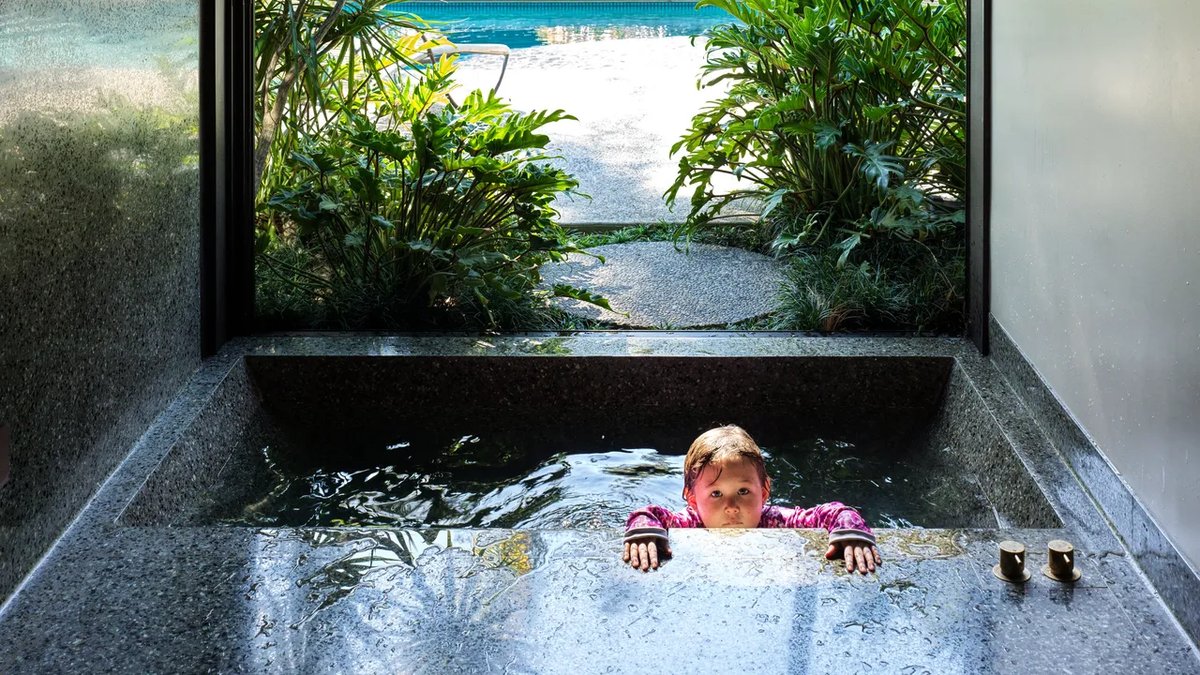
The main architectural moves were fairly straightforward: reorienting the entry door and finessing circulation; upgrading building systems; unifying the original structure and later additions; and expanding the square footage to accommodate a larger kitchen and primary suite. But all modernist boxes are not created equal, and only a rare few manage to traverse the chasm between vin ordinaire and sublime. Here, the magic resides in the home’s exquisite subtlety of detail, finish, and atmosphere, from the rich caviar color of the posts and beams to the green terrazzo floors to the impeccable walnut cabinetry. “We put so much time and care into every decision. The house isn’t gaudy or expensive-looking, but it feels luxurious and nurturing,” Walsh says.
Of course, all of that time and care and discreet luxury comes with a price tag. In the middle of the renovation, Walsh sold part of his catalog to complete the project with no compromise in quality while continuing to support his extended family. “My business manager almost had a heart attack, but there was never a moment when I questioned the expense. Money is just an instrument to fulfill your vision of how you want to live. The house was always the goal, not fancy cars and jewelry,” he maintains.
That same attitude guided Walsh’s selection of furniture, including unimpeachable classics by George Nakashima, Jean Prouvé, Charlotte Perriand, and Jorge Zalszupin. Again, the songwriter credits Haddawy for lessons in curating and connoisseurship. “I’ve worked with creatives across so many mediums, and Mark is one of the real visionaries. I was blown away by the way he manipulates the physical world and his layered understanding of construction, furniture, and landscape,” he raves.
Walsh’s commitment to the collaboration and his belief in the power and meaning of home should gladden the hearts of all true design aficionados. The project provides elegant proof that form follows function not just for carrot peelers and tea kettles but for lives—this is a place formed to function as both sanctuary and crucible, retreat and catalyst, playground and park. “The house has been an invaluable boost to my life,” he insists. “I cannot believe that this is where I get to live and raise my daughter.”
This story appears in the July/August issue. Never miss a story when you subscribe to AD.