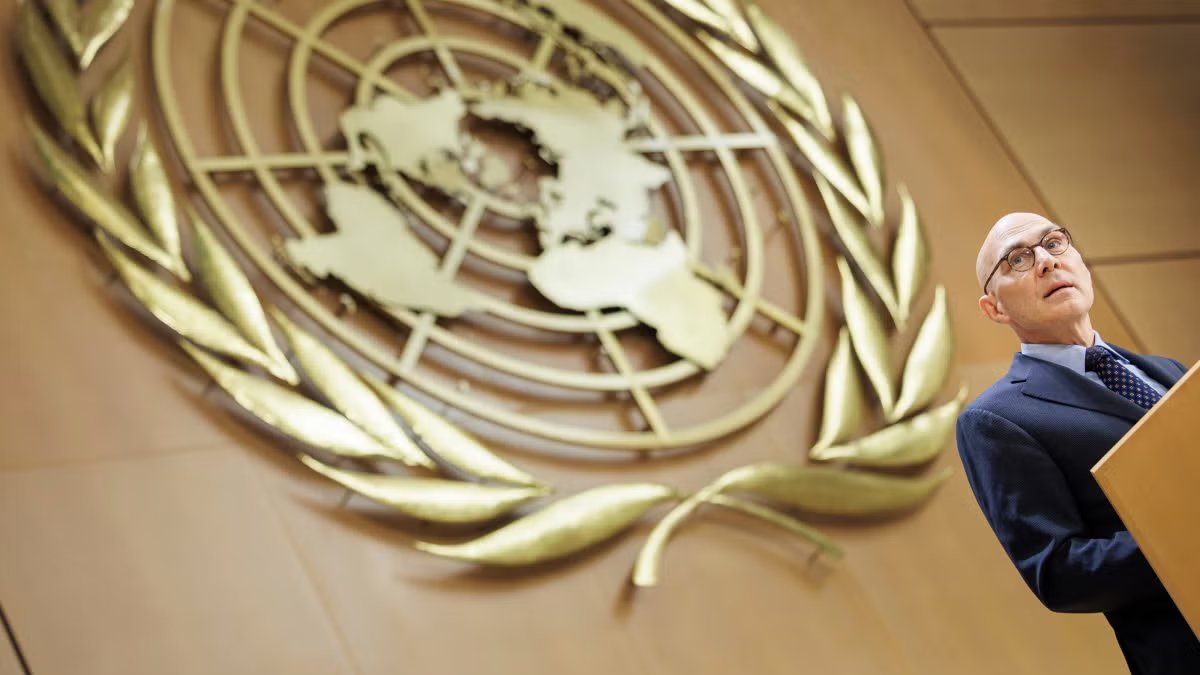
After months of silence from Burkina Faso’s military junta, the United Nations Human Rights Office announced on June 30 that it would permanently close its operations in the country, ending its ability to monitor, document, and report on human rights abuses at a time when conflict continues and violations are rampant.
The government suspended the UN Human Rights Office’s local operations in February just weeks after UN High Commissioner for Human Rights Volker Türk urged authorities to end the repression of civic space and abandon plans to ban political parties. The UN Human Rights Office subsequently sought clarification on the duration of the suspension numerous times but received no response.
During a June 30 meeting with the Resident Coordinator Maurice Azonnankpo in Ouagadougou, Burkina Faso’s capital, Foreign Minister Karamoko Jean Marie Traoré accused international organizations of behaving like “super police,” saying they had overstepped the country’s sovereignty.
The UN Human Rights Office has operated in Burkina Faso since 2019, expanding into a fully mandated country office in 2021 under a host-country agreement signed with the government. With offices across the country, the UN monitored abuses, supported victims and human rights defenders, advised authorities, and helped create one of the few remaining channels for dialogue on human rights. Its departure means there will no longer be an independent international presence documenting what is happening in the country where abuses are widespread. An April report by Human Rights Watch documented war crimes, crimes against humanity by all parties to the conflict, and the government’s ethnic cleansing of the Fulani community.
Since the military seized power in 2022, the junta has steadily restricted civic and political space. Authorities have suspended media outlets, unions, and hundreds of civil society organizations, dismantled multiparty politics and subjected critics to threats, arbitrary detention, enforced disappearances, unlawful conscription, and torture. A law adopted in July 2025, presented by the authorities as a measure to regulate the nonprofit sector and combat money laundering, has further tightened government control over nongovernmental organizations through burdensome and costly registration requirements.
The closure of the UN Human Rights Office is just the latest casualty in the junta’s campaign against independent scrutiny. Burkina Faso is becoming a country where grave abuses can increasingly unfold without witnesses, reinforcing the cycle of impunity that fuels future atrocities.
Sentinel — Human
This text functions as a well-structured news report synthesizing events and evidence concerning human rights monitoring in Burkina Faso, exhibiting the typical complexity found in human investigative journalism.