Posted: 13 March 2026 | Gabriel Higgins | No comments yet
€1.03 billion contract will deliver new commuter and regional trains for Portugal while creating a new manufacturing facility and hundreds of jobs.
Credit: Alstom
Alstom has secured a €1.03 billion contract with Comboios de Portugal to supply 153 Adessia Stream trains as part of the largest train acquisition in Portugal’s history.
This project supports CP’s vision to deliver more reliable and accessible rail services for passengers while preparing the network for future demand.”
The agreement supports the renewal of the country’s ageing rail fleet and will increase capacity across suburban and regional passenger routes. The base contract, signed in October 2025 for 117 trains, has now been expanded to include 36 additional units while also accelerating the delivery schedule. The first trains are expected to enter service in 2029.
Strengthening commuter and regional services
Under the contract, 98 commuter trains will operate on suburban routes serving Lisbon, Porto and Cascais, while 55 trains will be deployed on regional services. The new fleet is designed to improve reliability, comfort and accessibility for passengers while helping to meet growing travel demand across the Portuguese network.
Each three car train will accommodate up to 450 passengers and is based on Alstom’s Adessia single deck commuter platform. The trains are designed specifically for Portugal’s rail network and incorporate features to improve passenger experience and operational efficiency.
Accessibility has been a key design priority. The trains will include step free access, level floors throughout the trainsets, spaces for wheelchairs and bicycles and enhanced passenger information systems. Onboard Wi Fi and digital monitoring systems will also support improved connectivity and maintenance.
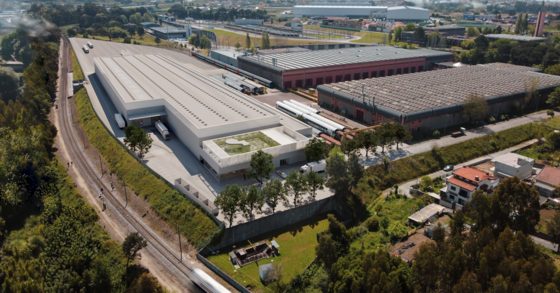
Alstom will establish a new train manufacturing facility in Matosinhos near Porto to deliver the project. The site will cover more than 20,000 square metres and will be equipped with modern production technologies. Construction will be carried out in partnership with Portuguese civil engineering company DST Group.
The new facility is expected to create close to 300 direct jobs, including engineering, technical and skilled trade positions. Around 15 per cent of roles will be reserved for young unemployed people, the long term unemployed and individuals with health conditions or impairments.
David Torres, Managing Director of Alstom Portugal, said the project supports the national operator’s vision to deliver more reliable and accessible rail services while preparing the network for future demand.
Bruno Florence, Project Director for the contract, added that renewing regional and suburban rolling stock is essential to support Portugal’s wider goals for sustainable mobility, industrial development and job creation.
Stay Connected with Global Railway Review — Subscribe for Free!
Get exclusive access to the latest rail industry insights from Global Railway Review — all tailored to your interests.
✅ Expert-Led Webinars – Gain insights from global industry leaders
✅ Weekly News & Reports – Rail project updates, thought leadership, and exclusive interviews
✅ Partner Innovations – Discover cutting-edge rail technologies
✅ Print/Digital Magazine – Enjoy two in-depth issues per year, packed with expert content
Choose the updates that matter most to you. Sign up now to stay informed, inspired, and connected — all for free!
Thank you for being part of our community. Let’s keep shaping the future of rail together!
Related topics
Electric/Hybrid Rolling Stock, Funding & Finance, Infrastructure Developments, Passenger Experience/Satisfaction, Procurement, Rail Interiors, Rolling Stock Orders/Developments, Sustainability/Decarbonisation, Technology & Software, The Workforce
Facts Only
Alstom signed a €1.03 billion contract with Comboios de Portugal to supply 153 Adessia Stream trains.
The contract was initially for 117 trains in October 2025 and later expanded to 153 units.
The first trains are expected to enter service in 2029.
98 trains will serve commuter routes in Lisbon, Porto, and Cascais; 55 will operate on regional services.
Each three-car train can accommodate up to 450 passengers.
The trains feature step-free access, wheelchair spaces, onboard Wi-Fi, and digital monitoring systems.
Alstom will build a new 20,000-square-meter manufacturing facility in Matosinhos, near Porto.
The facility will create nearly 300 direct jobs, with 15% reserved for young unemployed people, long-term unemployed, and individuals with health conditions.
The project is part of Portugal’s effort to modernize its rail fleet and increase capacity.
David Torres is the Managing Director of Alstom Portugal.
Bruno Florence is the Project Director for the contract.
Executive Summary
Full Take
This narrative presents a compelling vision of infrastructure modernization, job creation, and sustainable mobility—all framed as unalloyed progress. The strongest version of this story is that Portugal is making a strategic investment in its rail network, addressing aging infrastructure while fostering local industry and social inclusion. The emphasis on accessibility and job reservations for marginalized groups adds a layer of equity to the economic argument.
However, the pattern scan reveals subtle elements of **ARC-0024 Ambiguity** and **ARC-0043 Motte-and-Bailey**. The article celebrates the project’s scale and benefits but omits critical details: How will the accelerated delivery timeline affect quality? What are the long-term maintenance costs, and who bears them? The claim that this will "prepare the network for future demand" assumes demand will materialize—a classic **ARC-0012 Assumption of Inevitability**. The focus on job creation and sustainability could also be a form of **ARC-0031 Virtue Signaling**, where positive outcomes are asserted without evidence of their durability.
Root cause: The narrative aligns with a broader paradigm of infrastructure-led economic growth, where large-scale projects are positioned as solutions to systemic challenges (aging fleets, unemployment, climate goals). The unstated assumption is that centralized investment in rail will inherently drive equitable outcomes—a belief that echoes mid-20th-century modernization theories.
Implications: If successful, this could reduce car dependency and improve regional connectivity. But if ridership doesn’t grow as projected, the financial burden could fall on taxpayers. The job creation is laudable, but 300 roles in a €1 billion project raises questions about labor intensity versus automation.
Bridge questions: What independent studies validate the projected demand for these trains? How will Portugal ensure the facility’s jobs remain stable after the initial production phase? What trade-offs exist between speed of delivery and long-term reliability?
Counterstrike scan: A bad actor pushing this narrative might exaggerate job numbers, downplay risks, and frame dissent as opposition to progress. The actual content doesn’t match this pattern—it’s a straightforward corporate announcement. No structural alignment with manipulation detected.
Patterns detected: ARC-0024 Ambiguity, ARC-0043 Motte-and-Bailey, ARC-0012 Assumption of Inevitability, ARC-0031 Virtue Signaling
Sentinel — Human
The article shows strong signs of human authorship, with specific technical and social details that are unlikely to be AI-generated. Minimal stylometric or coherence red flags.