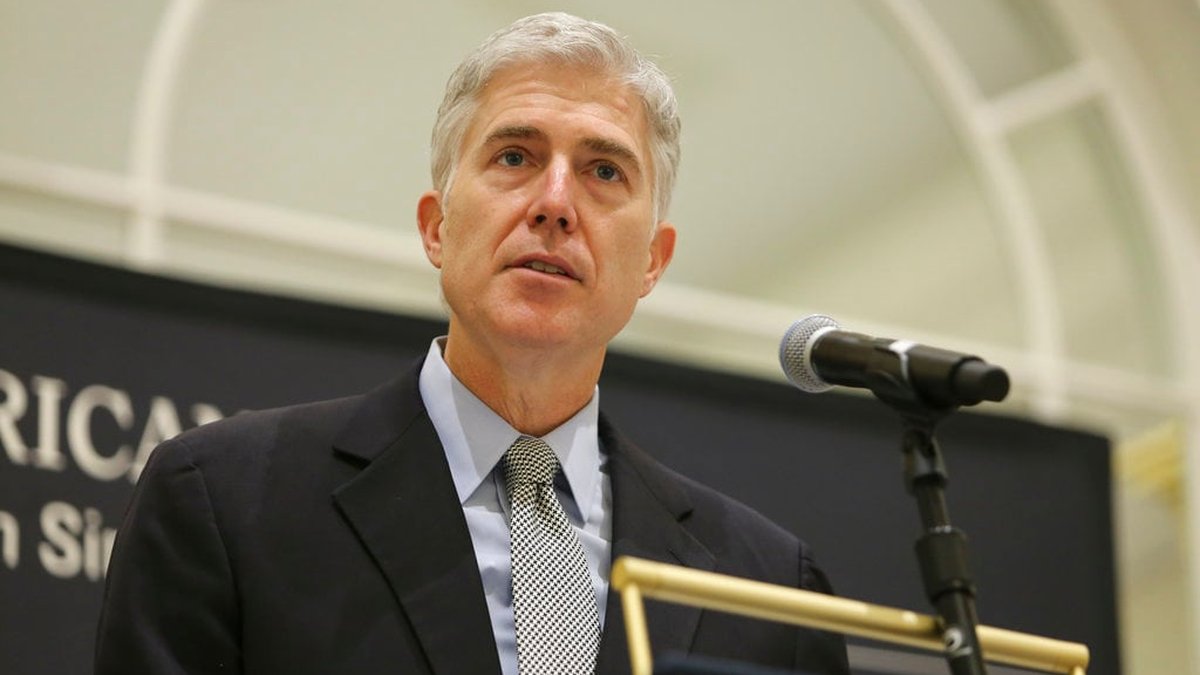
“While more work may lie ahead to bring coherence to our Fourth Amendment jurisprudence, perhaps this is a start.” Justice Neil Gorsuch sounded optimistic notes at the end of his concurrence in the Supreme Court’s decision in Chatrie v. United States. I find more to lament, mostly from the justices who could have but didn’t see clear to improve Fourth Amendment law through the case.
Chatrie dealt with geofence warrants. That is the distinctly modern type of warrant requiring online service providers housing customers’ location data to go through it and say who was near a location when a crime occurred. At a more general level, the case asks whether online service providers can be required to search customer data for information to use against those same customers.
I filed an amicus brief arguing that the most important legal issues weren’t ripe for the Court to decide. After observing oral argument, I predicted a dog’s breakfast of a result.
There appear to be enough votes for a privacy-protective decision, but it’s likely to fall back on “expectations of privacy,” the sensibility that location data should be private. With the most ardent textualists sitting the case out, Justice Gorsuch will not prevail on others to rely on the legal reasons why people expect privacy. (It’s because they still own the things placed in storage. Whether tangible or digital, they’re bailments.)
The majority decided that a geofence warrant is a Fourth Amendment search because people expect privacy in their location data—that predictable privacy-protective fallback. And it sent the case back to the Fourth Circuit Court of Appeals to decide whether the search complied with Fourth Amendment standards such as particularity. The Court’s search finding is a win for privacy but a lost opportunity to place privacy on firmer legal footing.
Justice Gorsuch alone argued for a better approach to Fourth Amendment jurisprudence. Other judicial conservatives mostly sat the case out. That, I think, is the most important “story” of Chatrie in terms of development of the law.
I don’t like the characterization of judges as conservative, liberal, or otherwise, but there is a conservative legal philosophy that has substantial currency—not only for Republican presidents’ appointees. That is to use the text of the law—more precisely, its original public meaning—to interpret it. As I wrote last year,
Law guides individuals in conducting themselves and arranging their affairs. It’s a strange kind of scam, serving a parasitic legal industry, if people can’t read a legal text and know what it means. . . .
Textualism is also the most democratic way of doing law. Justice Antonin Scalia preferred textualism because of the “danger” that “judges will mistake their own predilections for the law.”
So where were the textualists in Chatrie? I’ll pick on Justice Clarence Thomas, who has the strongest track record in this area. He would seem most inclined to apply the terms of the Fourth Amendment as understood at the founding, even in a high-tech case. He could be the successor to Justice Scalia in moving Fourth Amendment jurisprudence away from that embarrassing improvisation, the “reasonable expectation of privacy” test, and back onto the solid footing of law. But he simply joined the section of Justice Samuel Alito’s dissent arguing that the Court should not have taken the case.
Justice Alito himself exhibited simple conservatism—not judicial conservatism—in seeing the practices of the past as disposing of the legal issues. People did not contract to control information of theirs held by others in the past, Alito appears to believe, so they cannot do so now. I don’t think that’s right historically, as there were many roles at the founding which required housing others’ confidential information.
But originalism does not preserve past practice. It preserves the meanings of words. If evolution in technology and contract practice makes a person’s digital material in a third party’s hands their “papers and effects” today, the Fourth Amendment applies to government seizures and searches of them. Let the chips fall where they may.
That’s what Justice Gorsuch would do, I wrote before. He would apply the law. Though winning no alliances in Chatrie, he was optimistic because he found phrasings in the majority opinion supporting his thesis that personal information lodged with a service provider can be an “effect” for Fourth Amendment purposes. “Entrusting your effects to a third party for certain agreed purposes doesn’t mean they are no longer yours,” he wrote. Interestingly, Gorsuch didn’t use the word that describes what that is: bailment.
For the Chatrie case, the action moves back to the Fourth Circuit. For more solid legal privacy protection, it’s a conservative effort in at least one state, enjoying bipartisan support, to recognize bailments of personal information.